Headphone amplifiers have a cult-like status in the global hi-fi headphone communities. Let’s find out why and how we can use this knowledge to get better results when working on headphones.
Key Facts about Headphone Amplifiers:
- Headphone amplifiers ensure the consistency of signal quality and power sent to studio headphones, improving the monitoring accuracy for tracking, mixing, and mastering applications.
- Popular open-back studio headphones like the Sennheiser HD-600*(300 ohms) require more amplification than is provided by the headphone jacks of most laptops and budget audio interfaces.
- It’s important to differentiate between single-channel headphone amplifiers for impedance matching and multichannel distribution amps for sending headphone signals to multiple performers.
- High-end headphone amplifiers offer high headroom and low distortion solutions that improve transient articulation and dynamics, helping you trust your decision-making when mixing.
We’ve discussed studio headphones previously, but let’s look at the difference between these and hi-fi headphones.
Understanding Headphone Amps:
Studio vs. Hi-Fi Headphones
Studio headphones are designed with two main applications in mind:
- Isolation is key while tracking, so a closed-back design is generally preferred for monitoring.
- When mixing, the translation properties of your headphones are essential, and you want to minimize ear fatigue. So, an open-back or a semi-open design generally suits this best.
Hi-Fi headphones are selected based on a different set of criteria:
- If you need a particularly discrete listening solution, a closed-back headphones design offers better isolation.
- While studio headphones aim to provide a degree of neutrality, hi-fi headphones may add a distinctive colour or character to the sound to enhance the listening experience.
Impedance
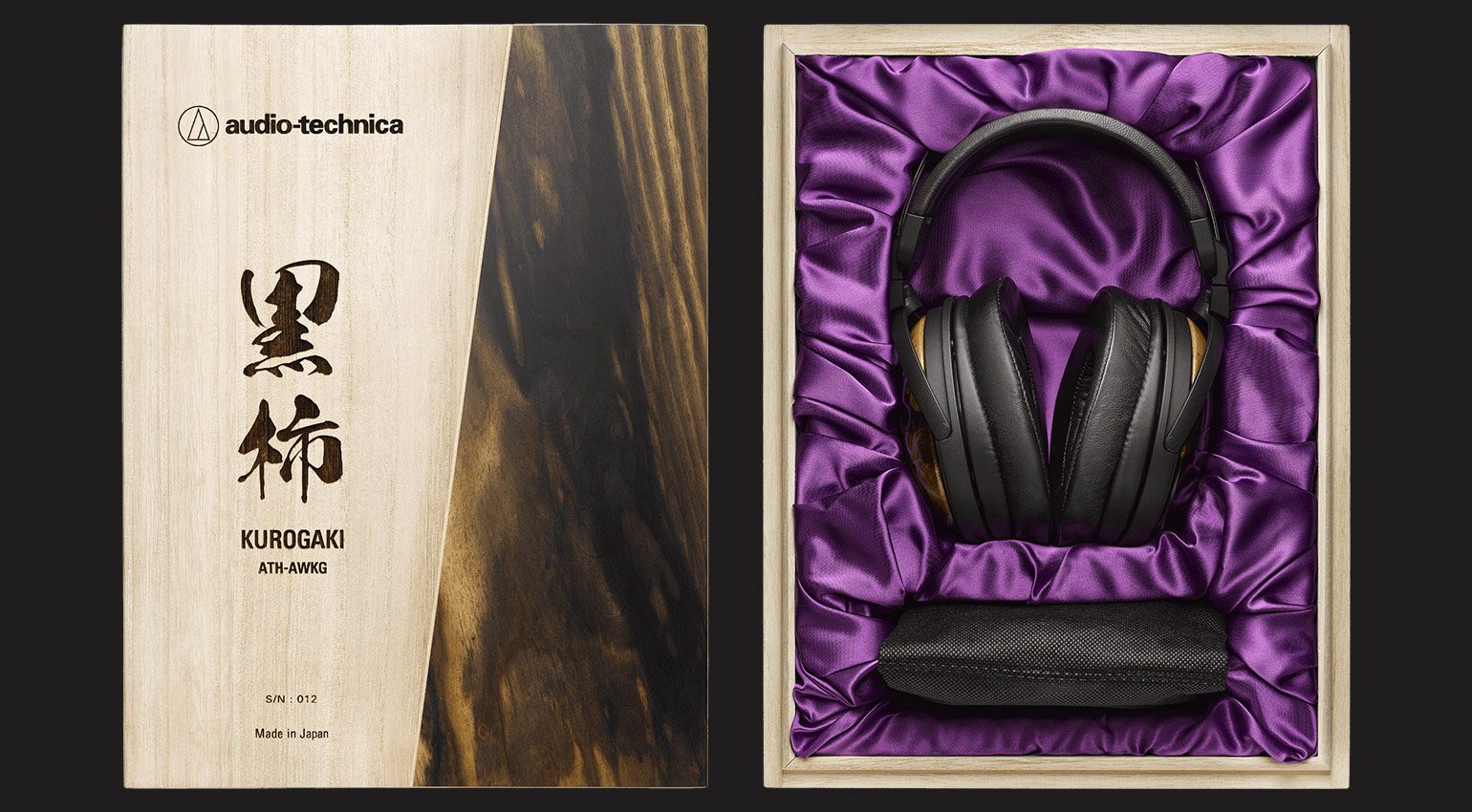
You’ll find that each model of headphones has its own impedance rating, usually in the range of 8 and 600 ohms. Headphone impedance is determined by the design of the voice coils and plays an essential role in the overall performance of a set of headphones. Headphone amplifiers usually provide a minimum impedance rating within their specifications.
This will help you avoid mismatched impedance, which can result in two scenarios:
- The headphone impedance may be below that of the headphone amp’s minimum rating, which can produce distortion at higher volume levels.
- Higher impedance headphones (250-600 ohms) may be underpowered by your headphone amp, which makes them underperform. The signal might be soft and lacking in clarity, even with the volume turned way up.
Headphone Amplifiers vs Distributors
Another possible point of confusion is the difference between headphone amplifiers and distributors:
Headphone amps ensure that the integrity and dynamics of a signal are maintained and easily controlled when using headphones with different impedance ratings. Alternatively, headphone distributors split the signal and provide level controls for multiple sets of headphones.
While you can find decent multichannel headphone amps on the upper end of the market, it’s important to note that these are two separate functions and applicable to different situations.
Choosing Headphone Amplifiers:
Almost every audio interface is equipped with a built-in headphone amp, but not all of them are created equal, unfortunately. We’re going to look at solutions that provide the means to drive high-impedance headphones at different price ranges. So we’ll take a look at headphone amps for practice, monitoring, mixing, and hi-fi listening.
Headphone Amplifiers: Darkglass Element
The Element is a pedal from Darkglass Electronics that provides a headphones solution for electric guitar and bass players while practicing, but it offers plenty of other useful features too.
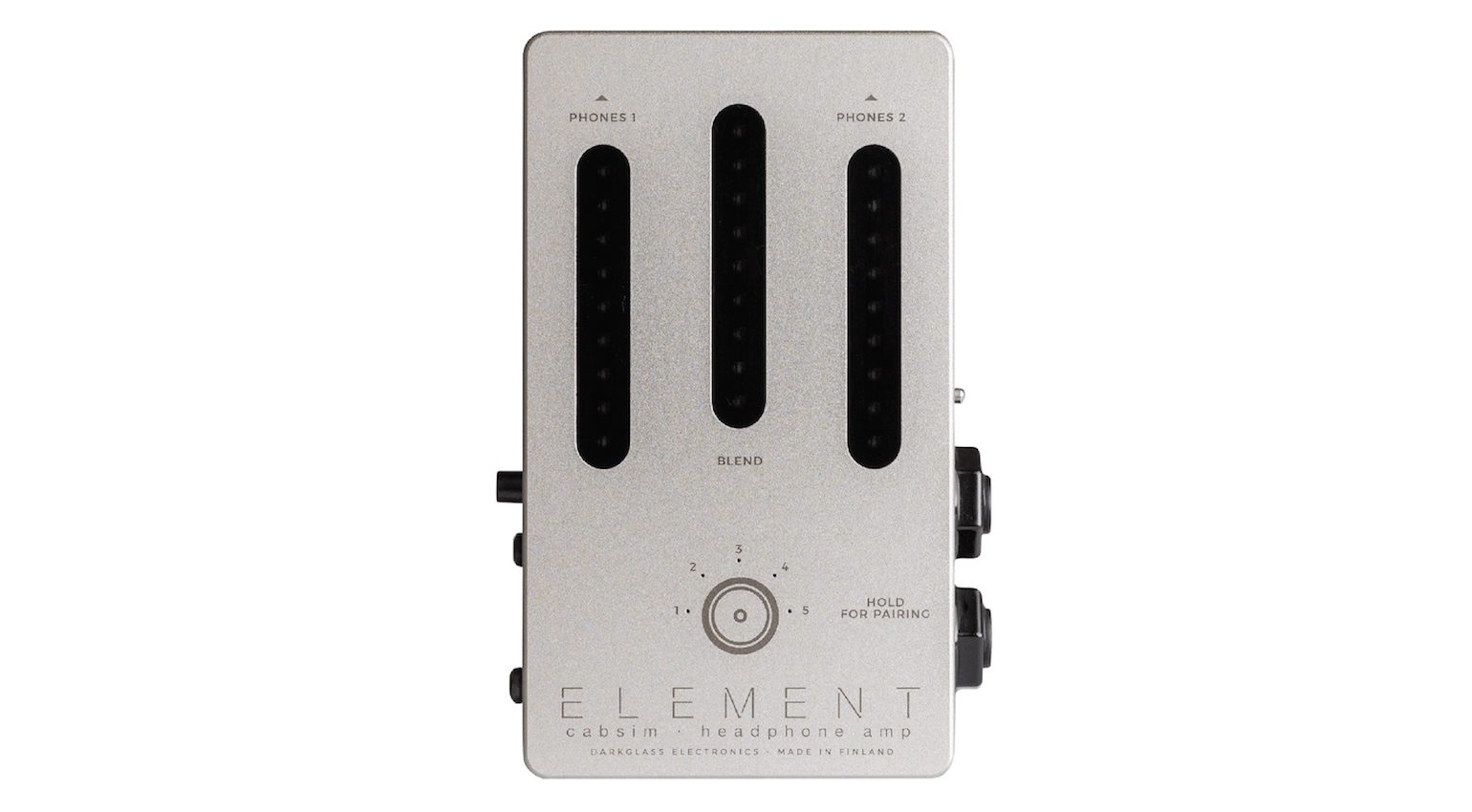
It has two headphone outputs, an aux-in, and Bluetooth for playing along with another song. This makes it useful too for both collaboration and teaching, and the choice of five cabinet simulations means you won’t blow your neighbours away with your Marshall stack.
Additional cab sim IRs can be loaded via USB-C, and the Element also functions as a DI-box with a balanced XLR output for recording. Get it at Thomann.*


Headphone Amplifiers: Heritage Audio O.H.M Amp
The O.H.M Amp is a straightforward desktop headphone amplification solution for unbalanced (RCA), balanced (XLR combo), and Bluetooth signals, dressed in the familiar Neve 1073-style Heritage Audio theme. With an Alps “Blue Velvet” output gain control, you can precisely control your levels for recording, production, and mixing applications.
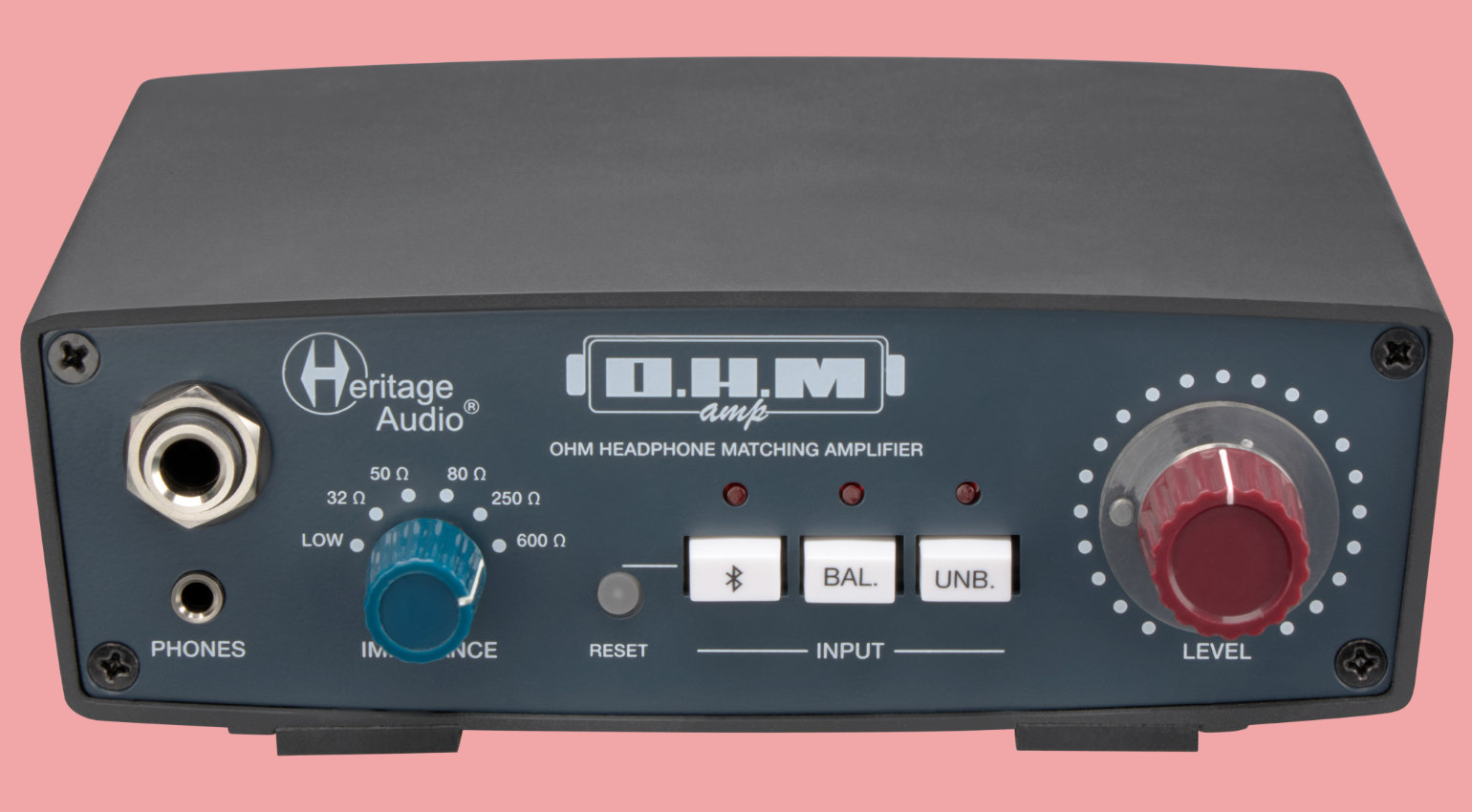
Meanwhile, there are six impedance settings, including 600, 250, 80, 50, and 32 ohms, as well as a low mode for low impedance-rated headphones. This allows you to optimize the performance and gain staging of a wide range of headphones. What’s more, the Bluetooth input runs through a Burr Brown DA conversion stage, and supports codecs such as APTX, APTX LL, AAC, APTX HD, and SBC.
The O.H.M Amp is at home on your studio’s desktop, but you can also mount it on a mic stand, using the 5/8-inch fitting. Also, there is a pair of TRS through ports for chaining multiple headphone amps together. Overall, the O.H.M Amp provides a great combination of studio-grade quality, modern compatibility, and vintage styling. Get it at Thomann.*

Headphone Amplifiers: Lake People
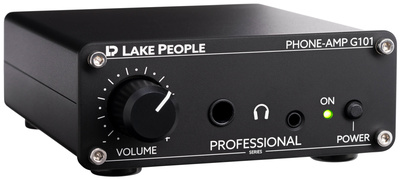
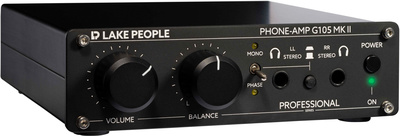
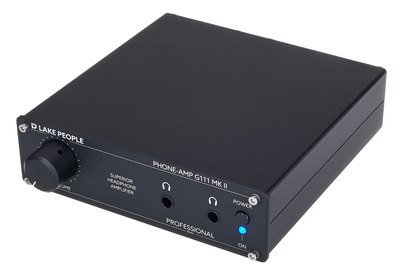
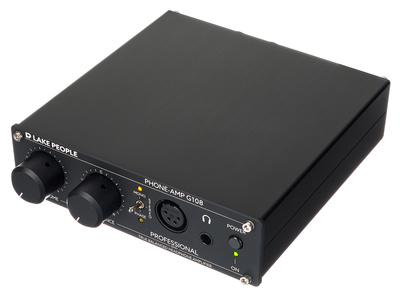
The Lake People G-series is a range of highly-regarded headphone amplifiers that spans from high-end home audio to studio-grade units used in professional studios. With high internal operating voltage, models in the G-series can drive headphones with high impedance ratings (up to 600 ohms). Meanwhile, the discrete transistor circuitry delivers heavy current for planar magnetic headphones.
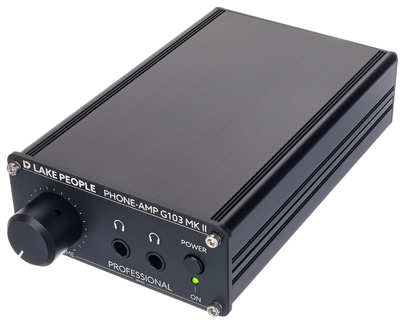
The phrase “built like a tank” is certainly applicable here, with the signature black anodised aluminium housings that can also be opened to access the internal pre-gain jumpers for accurately matching the gain sensitivity, whether you’re using IEMs or open-back headphones. Unlike some precise, analytical studio designs, the G-series delivers an organic, neutral sound, without colouring the response of your headphones.

The Lake People lineup starts with the bus-powered G101 for multimedia use, while the G103 MKII is a basic pro model with unbalanced (RCA), balanced (XLR), and Dante versions. Meanwhile, the G105 MKII expands on this platform, with a balance control, polarity invert, and mono mode switches.
From the G108 upwards, all models add a 4-pin XLR input, while the G111 MKII adds premium components like an Alps RK27 volume control and a toroidal transformer on the power supply. Finally, the G118 tops the range, taking this design into rackmount format, while the MC50 adds monitor control. Get it at Thomann.*


Headphone Amplifiers: SPL
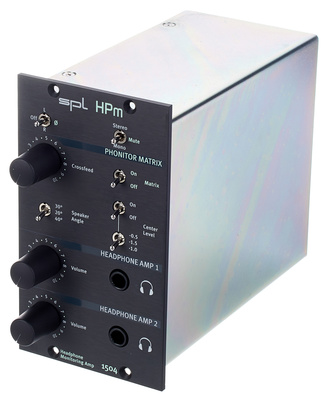
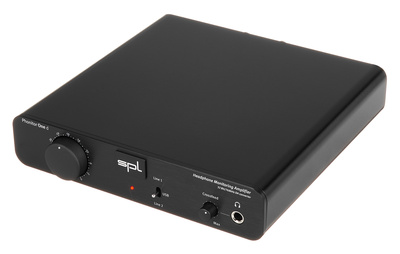
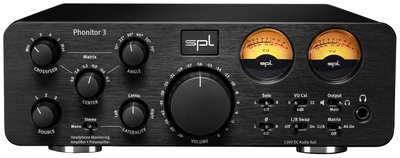
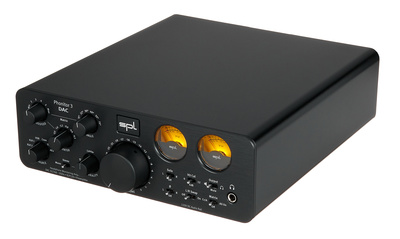
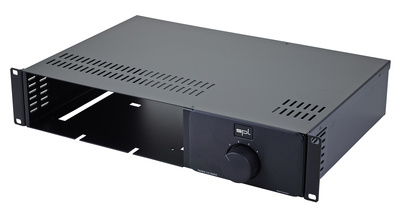
The SPL Phonitor series represents a gold standard in headphone amplification, with precision engineering and unique features that set it apart from other available options. Possibly the most interesting thing about the Phonitor series is the Phonitor Matrix, an analogue signal matrix that compensates for the discrepancy in the stereo image between studio monitors and headphones.
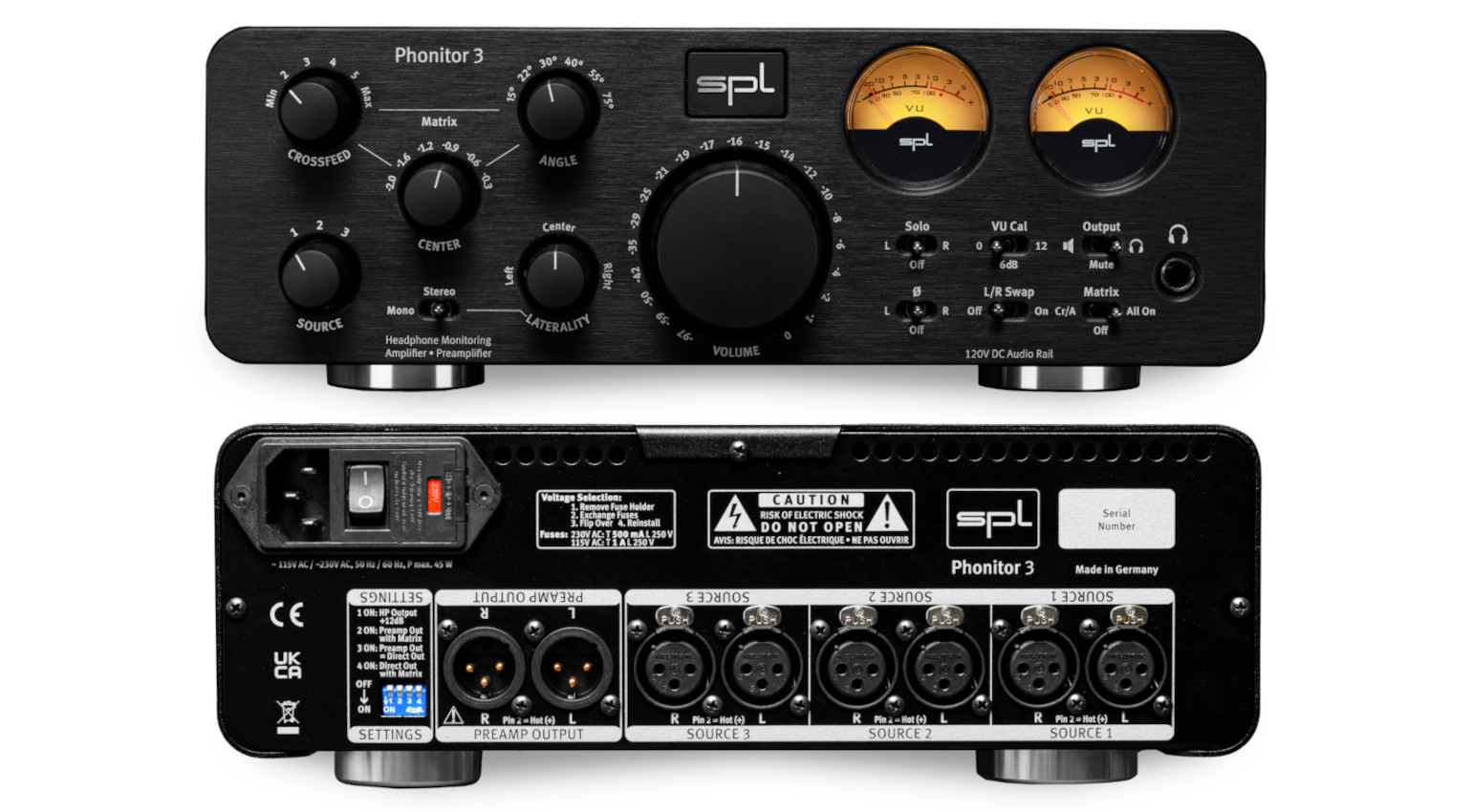
With the crossfeed control, you can adjust the bleed between the channels for a more familiar stereo image that translates better onto other systems. Also, at the top of the range, models like the Phonitor three are designed with SPL’s VOLTAiR 120V rail technology with custom op-amps, providing the highest possible headroom and the lowest distortion levels.
SPL’s range of headphone amplifiers starts with the HPm 500-series module, while the Phonitor One is a perfect solution for most home studios. Meanwhile, the Phonitor 3 is the most complete solution, as it also has a DAC version, and its monitor control system can be expanded for up to four sets of stereo speakers. Get it at Thomann.*

Headphone Amplifiers: Rupert Neve Designs RNHP
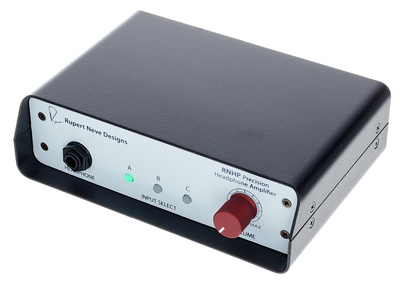
For those looking for console-grade audio quality, the RNHP is based on the RND 5060 Centerpiece headphone amp section. It’s a 24V precision reference headphone amp with multiple input formats, including XLR, RCA, and mini-jack.
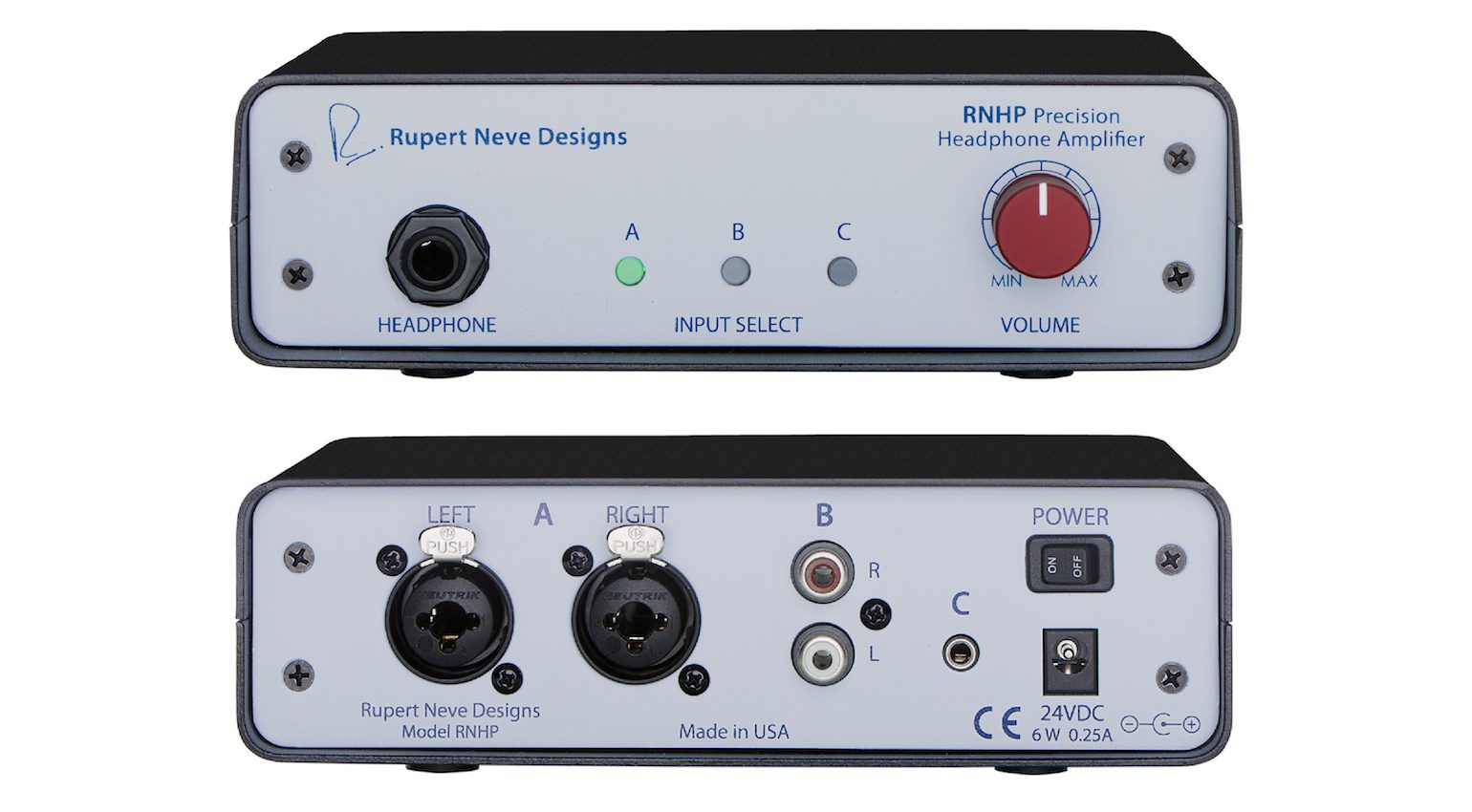
When complete transparency is a requirement, the RNHP is built with the highest-grade materials to ensure the integrity of the audio you’re listening to, with any set of headphones up to 600 ohms.
The rugged steel chassis is also VESA 100 mounting compatible, so you can easily incorporate the RNHP into your desktop setup or vocal booth. Get it at Thomann.*

Headphone Amplifiers: elysia xpector
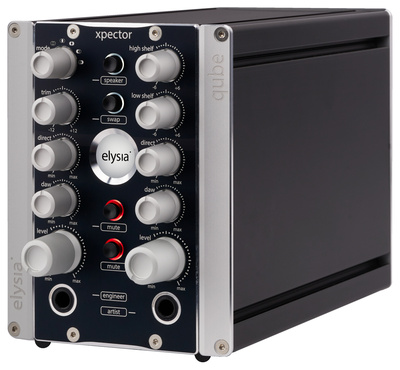
While “elysia xpector” does sound like something Harry Potter would say, there is certainly some magic behind the design of this particular headphone amp. In fact, the xpector isn’t only a headphone amp, it’s a complete monitor management system for your home studio.
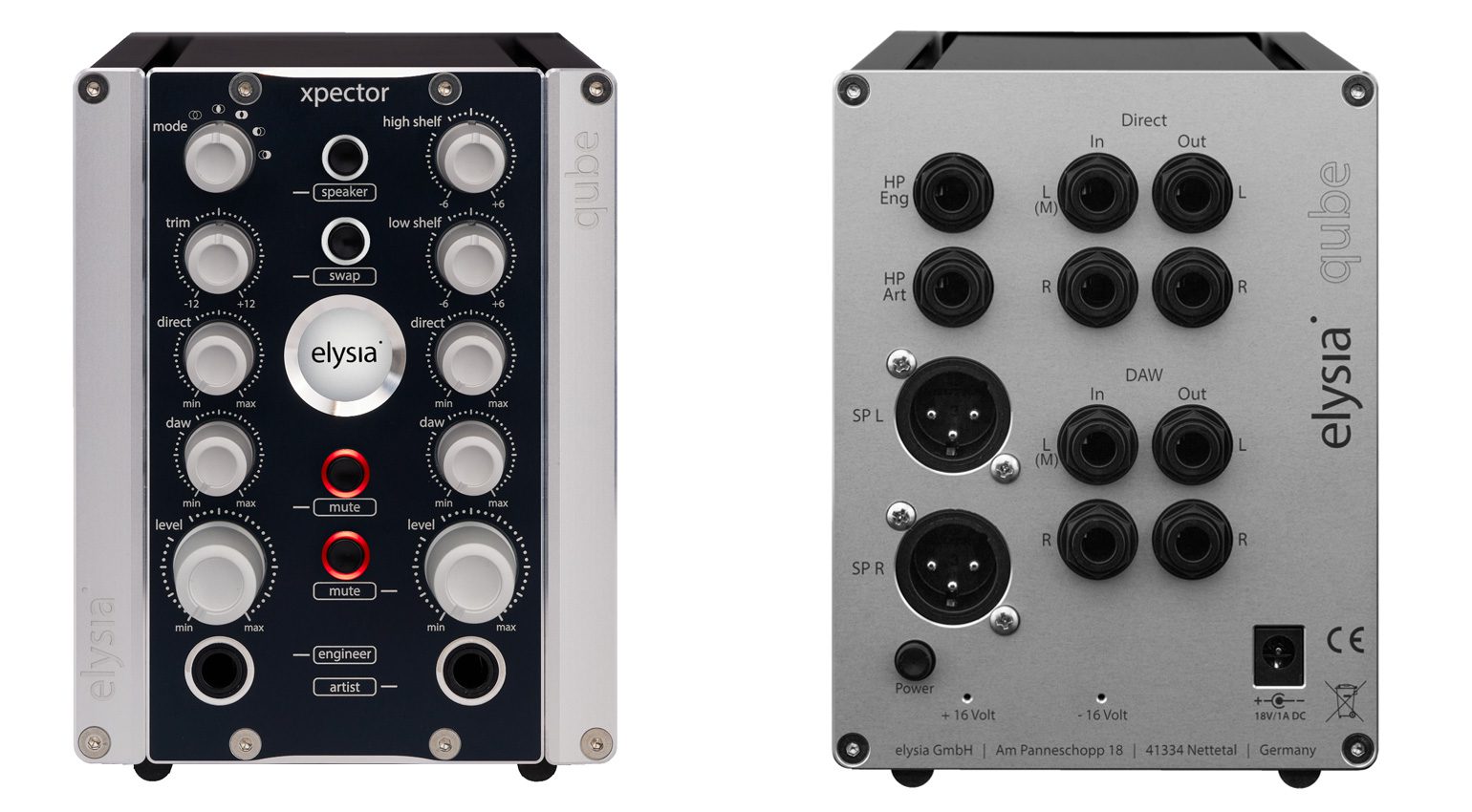
There are two headphone channels, one for the engineer and one for the artist, and each channel can be fed from either Direct or DAW input signals. The xpector also has five different operating modes, including a mid-side monitoring mode, and there’s a two-band shelving EQ for the artist’s mix.
Overall, the xpector is a complete solution that offers far more routing functionality than any other headphone preamp. However, having this almost console-like box in your studio will set you back a pretty penny. Get it at Thomann.*

FAQ: Headphone Amplifiers
- What does a headphone amplifier do in a recording studio?
A headphone amplifier ensures the audio signal sent to your headphones has consistent quality and power, especially for high-impedance headphones (150 ohms and above). This improves monitoring accuracy during tracking, mixing, and mastering.
- Do I need a headphone amplifier for studio headphones?
This depends on the impedance rating of the headphones and the audio interface you intend to use. High-impedance open-back headphones usually require a dedicated preamplifier for optimum performance.
- Can a headphone amplifier improve mixing decisions?
Yes. By improving the overall performance of your headphones, a premium headphone amplifier can increase monitoring accuracy by ensuring the headphones are fed a consistent, distortion-free signal.
- What’s the difference between a headphone amplifier and a headphone distributor?
A headphone amp ensures your headphones are sufficiently powered, while a distribution amp splits the signal, allowing multiple headphone feeds to be sent to each musician in a band during a recording session.
- Can a headphone amplifier reduce headphone bleed?
Headphone bleed typically occurs during vocal recording when the monitoring level is loud enough to leak from the headphones and be picked up by the mic. While a headphone amp doesn’t eliminate this, it can improve the listening clarity, even at lower levels.
More about Headphone Amplifiers:
Videos:
*Note: This article contains promotional links that help us fund our site. Don’t worry: the price for you always stays the same! We will receive a small commission if you buy something through these links. We appreciate your support!
The post What are Headphone Amplifiers and Why do we need them? appeared first on gearnews.com.