The guitar world is full of hyperbole, but only one piece of gear has achieved a level of mythic status that borders on religious devotion: the Klon Centaur. In this weekend’s article, I’ll discuss some history, my own personal experiences, and some suggested ways to use it, plus some modern alternatives you can try.
Contents – Klon Centaur
The Myth in the Box
I have owned two original Klon Centaur overdrive pedals myself (and at the same time), which meant I got to A/B them and compare them to some early clones of the circuit.
In this article, I’m going to discuss some history and reasons why this pedal took the guitar world by storm and led to it becoming a much-coveted item by many guitarists.
The Horsie
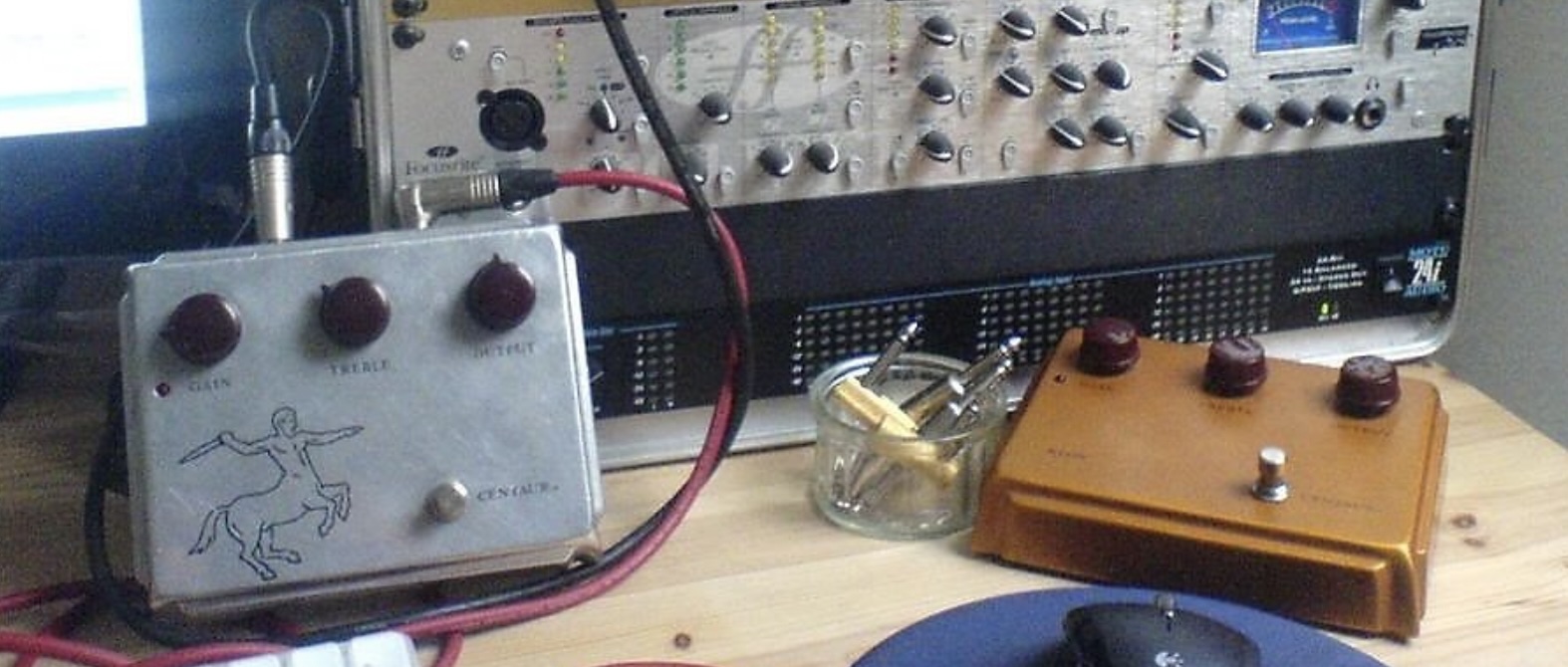
What started in 1994 as a builder’s quest to solve a personal tonal frustration evolved into an industry-shaking phenomenon. Today, an original hand-wired “horsie” Centaur commands prices well north of $5,000 on the used market.
Here is the story of how an oversized aluminium box built on a folding card table became the most coveted guitar pedal in history.
The Birth of a Myth: Bill Finnegan’s Quest
In the late 1980s, Boston-based guitarist Bill Finnegan had a problem. He loved playing his Fender Telecaster through a cranked Fender Twin Reverb amplifier, but at smaller venues, he couldn’t turn the amp up loud enough to hit that sweet, natural tube saturation without blowing the audience’s ears out.
When he tried using the industry-standard overdrive of the era—the Ibanez Tube Screamer—he was deeply unsatisfied. To his ears, it compressed his picking dynamics, choked out his guitar’s low end, and forced a heavy, unnatural “mid-range hump” onto his tone.
Finnegan wanted a pedal that sounded completely open, as if the pedal wasn’t even there. Enlisting the help of his friend and MIT graduate Fred Fenning, Finnegan spent four and a half years meticulously prototyping a brand-new circuit from scratch.
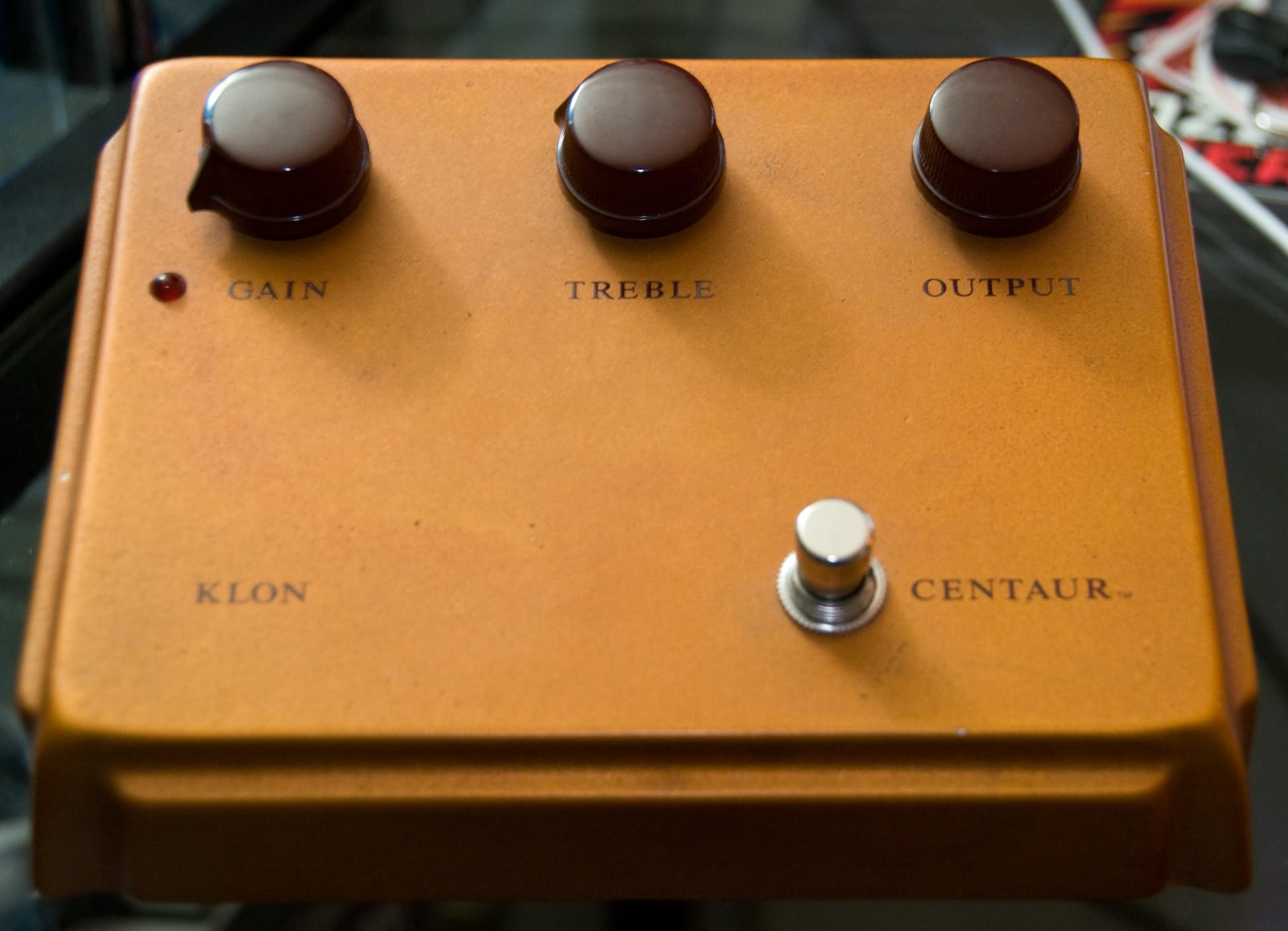
In late 1994, the Klon Centaur Professional Overdrive was born. Finnegan hand-built every single unit himself on a cheap folding table, executing a slow, painstaking process that included custom-cast enclosures, custom knobs, and rigorous audio testing. Over a 15-year run ending in 2008, Finnegan produced only around 8,000 units.
You had to contact Bill by phone to get one; he would then ask you about your guitar setup. I spoke with Bill myself a few times over the years, and he was always helpful. The buying process was a mini interview, and he would let you know if the Klon would work for your setup or not.
The Mystery of the “Gloop”
As the Klon’s reputation swept through the guitar community, other builders desperately wanted to know how Finnegan had achieved such an uncoloured, dynamic drive. Because electronic circuits cannot be patented under U.S. law, Finnegan resorted to an industrial espionage defence: glooping.
Solvents and X-rays
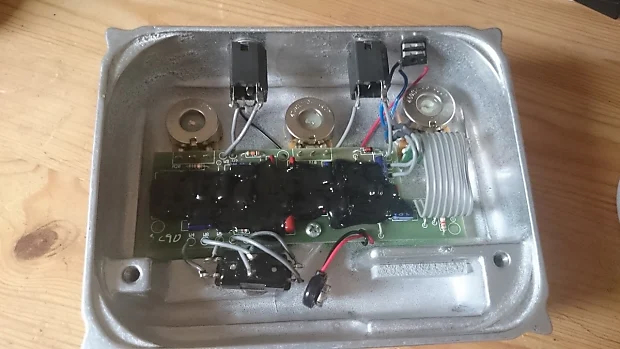
He poured black epoxy resin over the circuit boards, completely encasing the components in a hard, opaque shell. If a competitor tried to scrape the goop off to read the part numbers, they risked tearing the resistors and capacitors clean off the board.
For over a decade, the “gloop” fueled wild conspiracy theories. Was there a secret, magical component hidden inside? The mystery was finally broken in 2008 when a few dedicated gearheads successfully reverse-engineered a unit using specialised solvents and X-rays, posting the schematic online for the world.
Defining “Transparent Overdrive”
The ungooped schematic revealed that the Klon wasn’t just a slightly modified Tube Screamer; it was a highly sophisticated piece of engineering that effectively birthed the category of transparent overdrive.
The Klon achieves its magical, dynamic feel through three distinct design choices:
- The Dual-Gang Gain Pot: Unlike standard drive pedals, the Klon’s gain knob is actually two controls wired together. As you turn it up, it seamlessly blends your clean guitar signal with the overdriven signal while subtly shifting the EQ. At low settings, it is purely clean; at high settings, it gets gritty, but it never loses your guitar’s core identity.
- The 18V Charge Pump: The pedal takes a standard 9-volt power supply and internally doubles it to roughly 18 volts. This massive increase in electrical “headroom” gives the pedal its famous amp-like response and dynamic range.
- Germanium Clipping Diodes: When the pedal does distort, it utilises rare New Old Stock (NOS) germanium diodes to clip the audio wave softly and smoothly, mimicking the warm, harmonic breakup of a real vacuum tube.
Best Ways to Use a Klon
If you plug a Klon into a bedroom-level, pristine digital modelling amp with the gain maxed out, you will likely be disappointed; it can sound harsh and honky.
To get the “magical” sound that John Mayer, Jeff Beck, or Joe Perry rely on, you have to use it the way Finnegan intended. I would also state that mine only really came alive at gig-level volumes, where they really came into their own compared with many other drive pedals I owned.
The Clean Boost
This clean boost is often referred to as the ‘secret sauce’ and is a popular way to use the Klon. It stays very amp-like and natural, with great touch sensitivity.
- Settings: Gain at 0 (or barely cracked), Treble at noon, Output high (around 1 to 2 o’clock).
- The Result: This hits the front of your tube amplifier with a massive, clean signal volume, forcing the amplifier’s tubes into a natural, glorious overdrive. It adds a subtle harmonic three-dimensionality to your tone that players describe as “unlatching a window.”
The Dirty Boost
I would often use this setting live with my band. Either into an old JMP Marshall or Plexi, or sometimes a Mesa Lonestar Special, depending on the gig. My main two guitars for this setup were my Fender Kotzen Telecaster and a Les Paul fitted with a set of Bare Knuckles Mules.
- Settings: Gain at 9 o’clock to 11 o’clock, Output to taste.
- The Result: Run the Klon into an amplifier that is already slightly breaking up, or place it right before another overdrive pedal (like a Tube Screamer or Bluesbreaker). The Klon will tighten up the low end, add sustain, and push your mids just enough to cut right through a loud band mix during a solo.
Modern Klon Alternatives
When Finnegan stopped producing the original Centaur, an entire sub-industry of “Klones” emerged to satisfy the guitar world’s unquenchable thirst for the circuit. Today, you don’t need to remortgage your house to get the sound. The Klon KTR was released by Finnegan himself in 2014, utilising modern manufacturing but featuring the same magic germanium diodes.
It famously features the snarky text: “Kindly remember: The ridiculous hype that offends so many is not of my making.”

Top Klon-Style Pedals for all Budgets
I’ve compiled a short list of Klon-style overdrive pedals, and they all offer variations on the ‘transparent overdrive’. Thankfully, there is a wide range of pedals available at the time of writing, and they start at under $100, so there is something for all budgets in this list.
There are five alternatives below that I think are worth checking out (there are many more, and I’ll link to more of our Klon articles below if you need more help). I actually own both the Behringer and the Warm Audio versions on this list, and have tried all the pedals out that I am recommending.
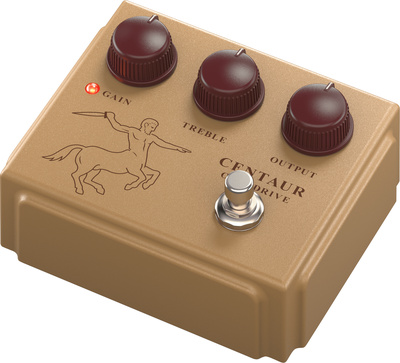
Behringer Zentara Overdrive
One of the more affordable Klones, the Behringer Zentara Overdrive does a good job of recreating the tone of the boutique overdrive. It also shrinks down the pedal into a smaller format, perfect for cramped pedalboards.


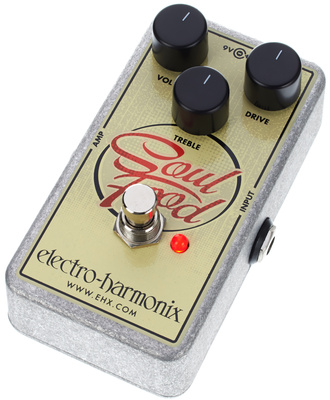
Electro Harmonix Soul Food
Another great budget option is the Electro Harmonix Soul Food, which was one of the first affordable takes on the circuit.

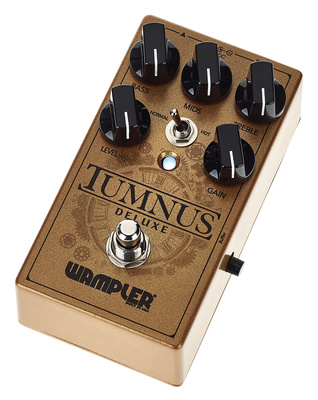
Wampler Tumnus Deluxe Overdrive V2
Brian Wampler’s Wampler Tumnus Deluxe Overdrive V2 tackles the Klon and adds some more useful features.

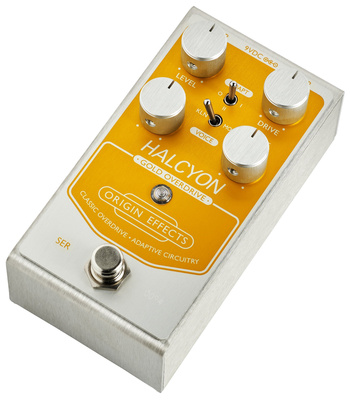
Origin Effects Halcyon Gold Overdrive
This Origin Effects Halcyon Gold Overdrive is a boutique modern recreation with high-end build quality and a solid reputation with fans of the Klon.

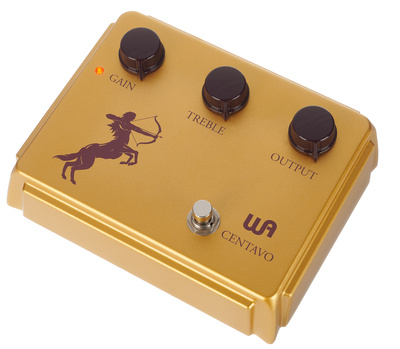
Warm Audio Centavo Overdrive
The Warm Audio Centavo Overdrive looks like an original Klon and has two distinct modes for added flexibility. It is also at a reasonable price point, but you need some space to fit one onto modern pedalboards, as it is a large format.

Boutique Genius?
The original Klon Centaur remains a masterclass in boutique design. While the collector prices are driven entirely by scarcity and hype, the underlying circuit remains one of the most brilliant, expressive, and foundational puzzle pieces in modern rock guitar history.
Having owned originals and modern recreations, I will state for the record that my two original Klon Centar pedals sounded different from each other. Make of that what you will.
I will say that I am more than happy with my two budget Klon clones, and that I happily gig with either and have used both on recordings.
- More Klon news
- For more of our Klon-related articles, click here.
The post The Myth in the Box: Inside the Klon Centaur Phenomenon appeared first on gearnews.com.