As monitoring is one of the most important aspects of music production, we’re going to look at some of the Best Monitor Controllers for audio setups ranging from laptops to consoles.
Key Facts About Monitor Controllers:
- Monitor controllers manage the levels and routing of your studio’s monitor system, providing quick, convenient access to functions like speaker volume, source selection, mute, dim, and sometimes mono functions without adjusting levels in your DAW.
- With these essential features at your fingertips, a monitor controller can improve your workflow, allowing you to easily switch between multiple pairs of studio monitors and headphones, as well as different sources.
- While passive monitor controllers use attenuation to reduce the level from unity gain, active controllers have their own gain circuits and often include extra routing and monitoring features.
- Some monitor controllers also have headphone preamplifiers that allow you to use high-impedance open-back headphones, known for their excellent translation properties.
In this Article:
These are by no means the latest or the most sophisticated monitor controllers available. Instead, they are tried and tested recommendations based on my experience with studios I’ve worked in and different artists I’ve collaborated with.
Choosing the Best Monitor Controllers
Everyone has different demands when it comes to music. While few home recording setups even require talkback, it’s important to be aware of what is available and why certain products are favoured over others.
The Best Monitor Controllers: Palmer Monicon
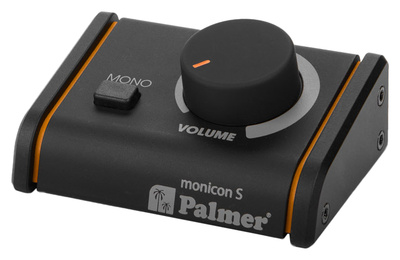
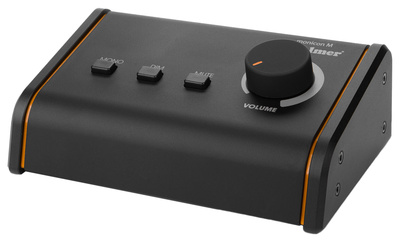
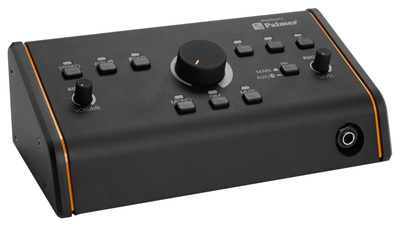
The popular Palmer Monicon series is an affordable range of active and passive studio monitor controllers, perfect for home studios. The range starts with the Monicon S G2, a simple, compact desktop monitor controller with unbalanced RCA I/O and a mono switch. From here, the next step up is the Monicon M G2, which offers XLR combo inputs, XLR outputs, and additional dim and mute switches.
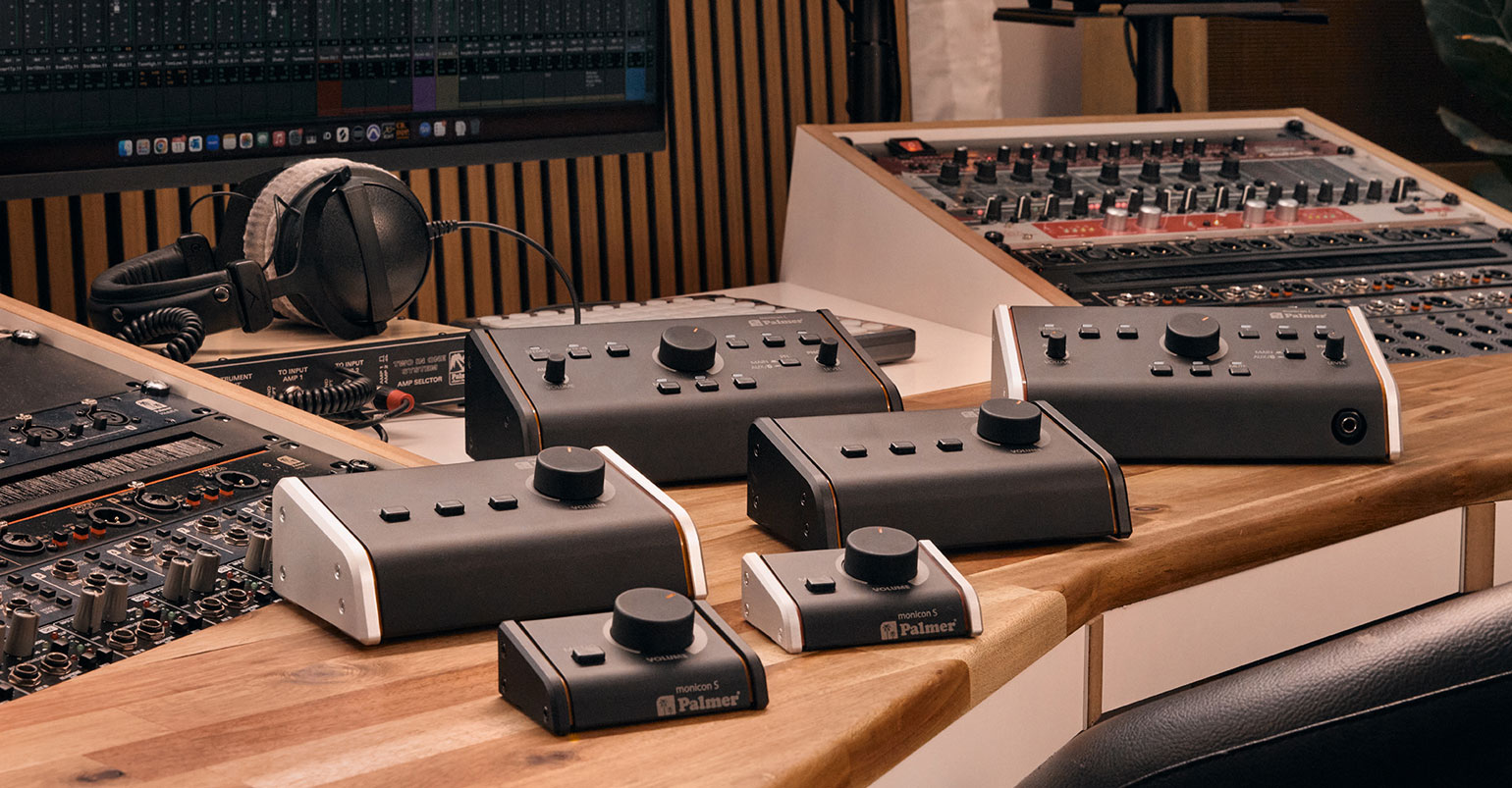
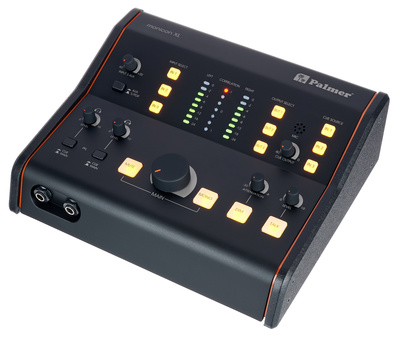
Further up the line, the Monicon L G2 offers active and passive operation, outputs for two pairs of monitors and a sub, as well as unbalanced RCA, minijack, and Bluetooth aux inputs and a dedicated headphone preamp. On the main control panel, you’ll find controls for quickly switching sources and monitors, and, of course, the level controls for your speakers and headphones.
Finally, the flagship Monicon XL expands the feature set even further, with level and correlation metering, talkback function, outputs for three sets of monitors, digital S/PDIF input, and dual headphone outputs with cue path. This allows you to take control of all the basic monitoring functions of your studio from a single hub on your desktop.


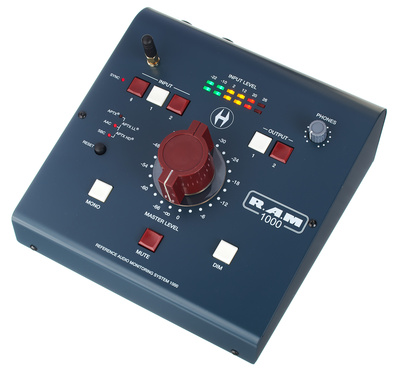
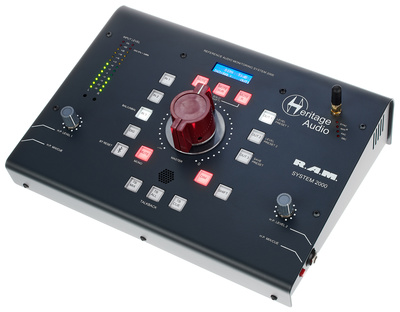
The Best Monitor Controllers: Heritage Audio Baby RAM
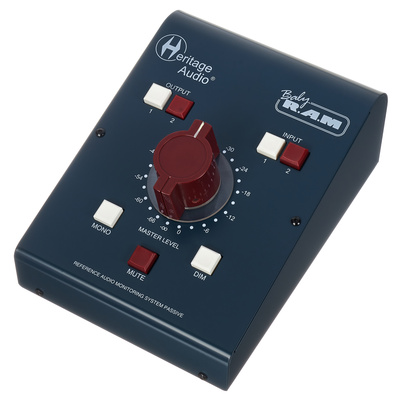
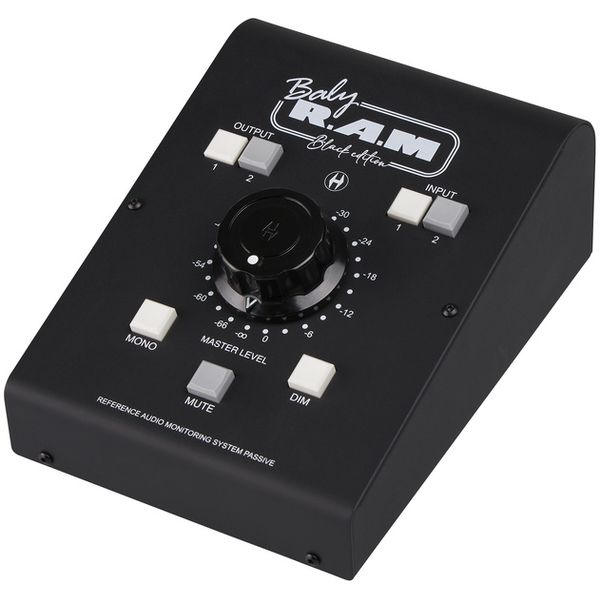
The Baby RAM is a passive desktop monitor controller. Like all things from Heritage Audio, the design combines quality components, analogue signal path, and a retro sensibility.
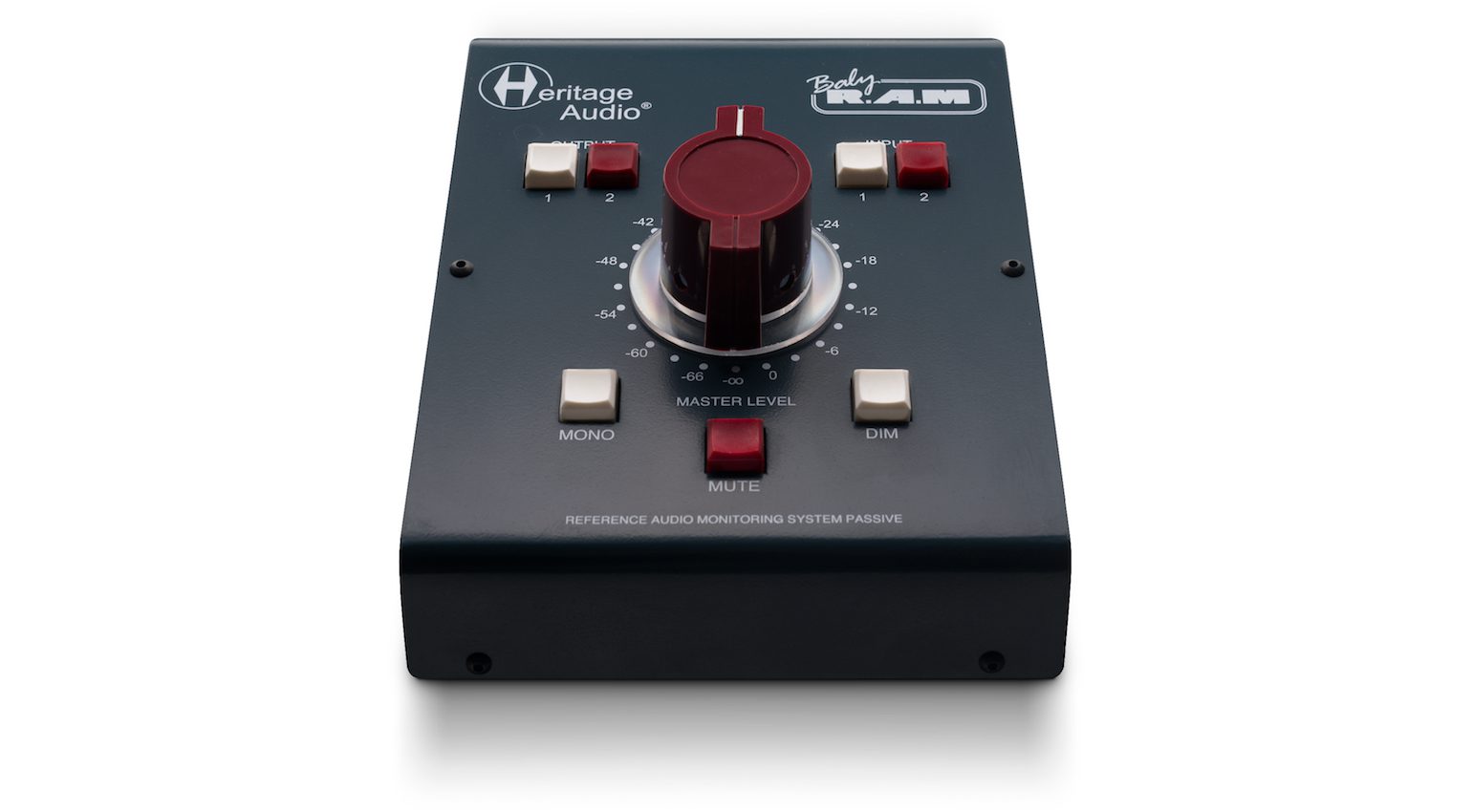
This is a perfect monitor controller for those still new to the world of audio. Also, a solution when you’re running low on desktop space. The vintage Neve console look might not be for everyone. However, the large red stepped pot makes it easy to precisely control your monitoring levels.
Overall, the feature set gives you all the essentials like mono, dim, and mute switches. The Baby RAM provides uncoloured signal path at an affordable price.


The Best Monitor Controllers: PreSonus Monitor Station V2
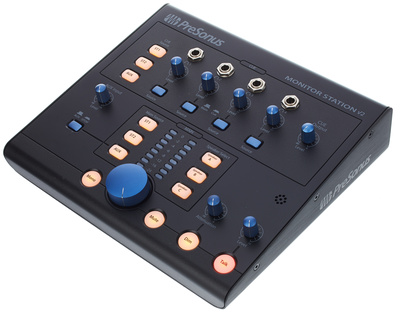
With the success of the first-generation model, it only makes sense to find the Monitor Station V2 on this list. PreSonus didn’t change much in the design between the two versions. However, there are a few features that set them apart.
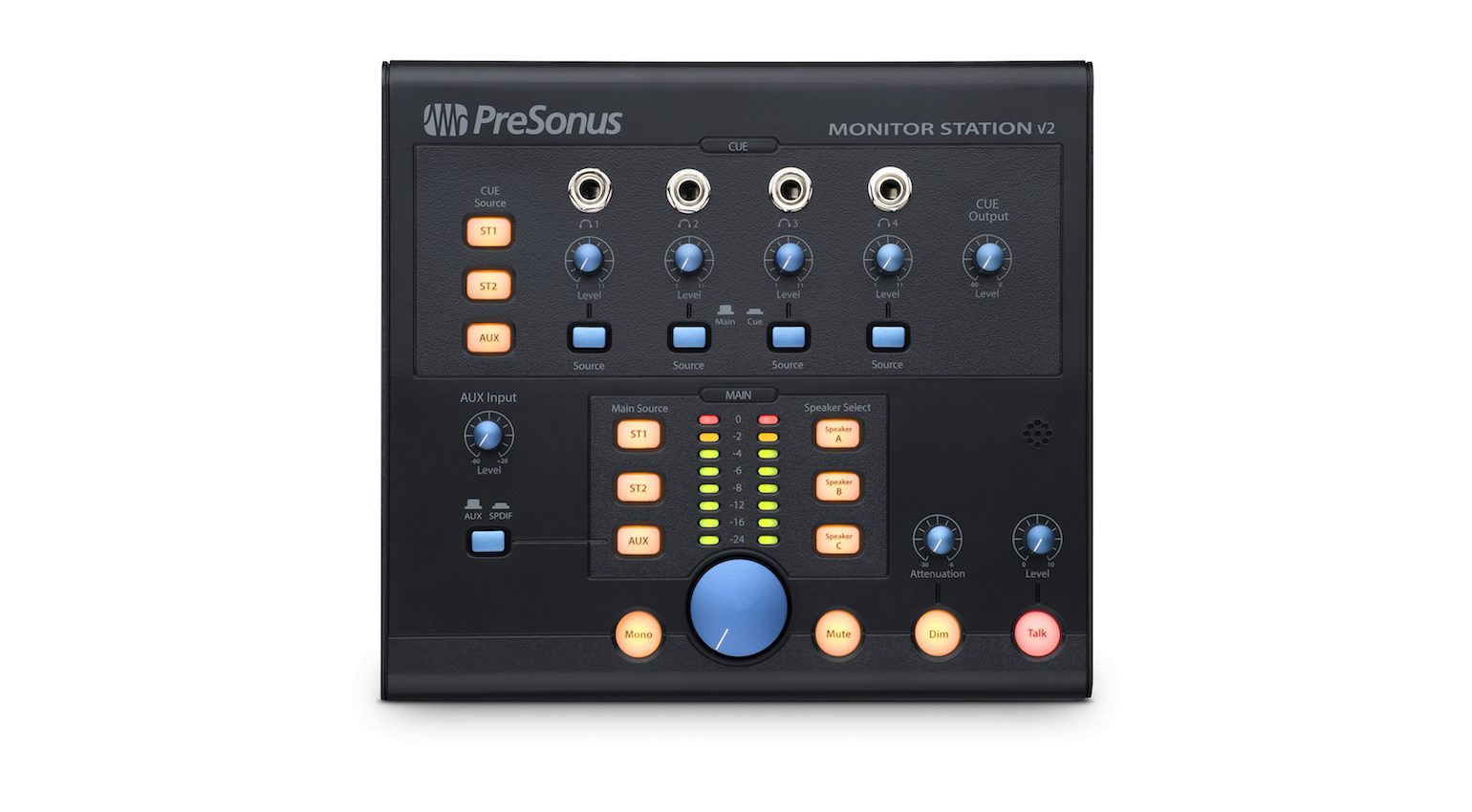
The layout has changed slightly, with the main source and speaker select buttons placed on either side of the LED meter. In addition to this, features like the Phono aux input have been replaced. Instead, you now have SPDIF and a mini-jack input for mobile devices.
There is also no longer the option to use an external talkback mic, so you’ll have to make do with the integrated one. Otherwise, it’s the same trusty centerpiece with two I/O paths, four headphone outs, and support for three sets of monitors.

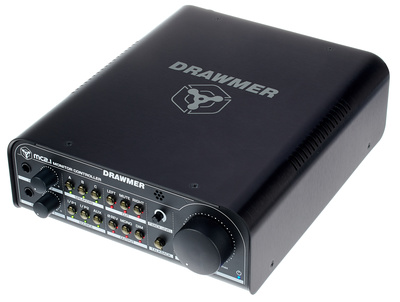
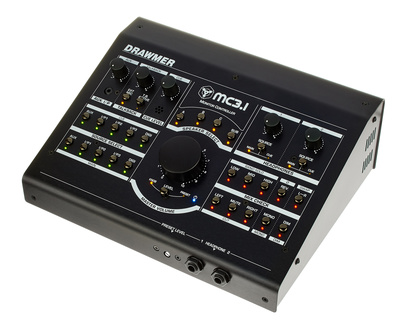
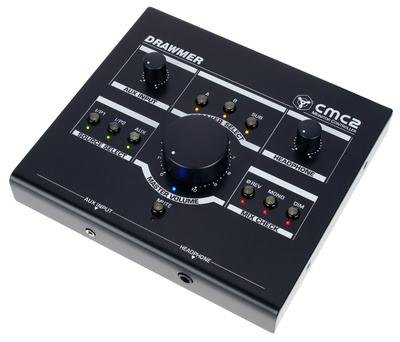
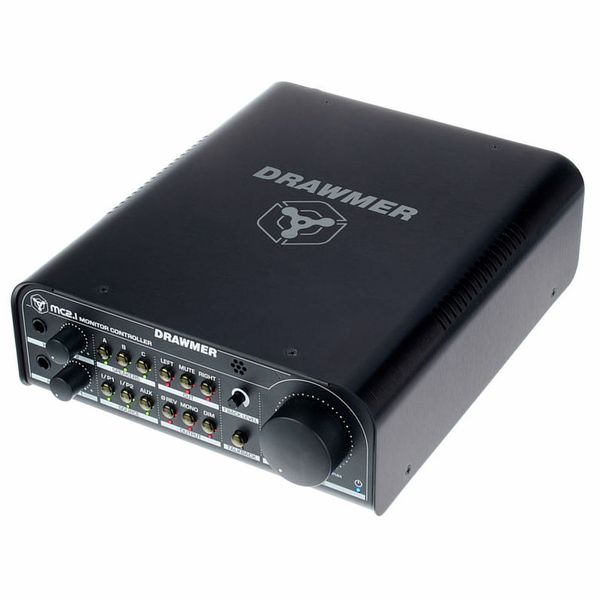
The Best Monitor Controllers: Drawmer MC 2.1
Another manufacturer with a long history, Drawmer is known for creating quality analogue studio gear. At first glance, the MC 2.1 is rather tanky-looking, and its front panel layout may not be the most practical.
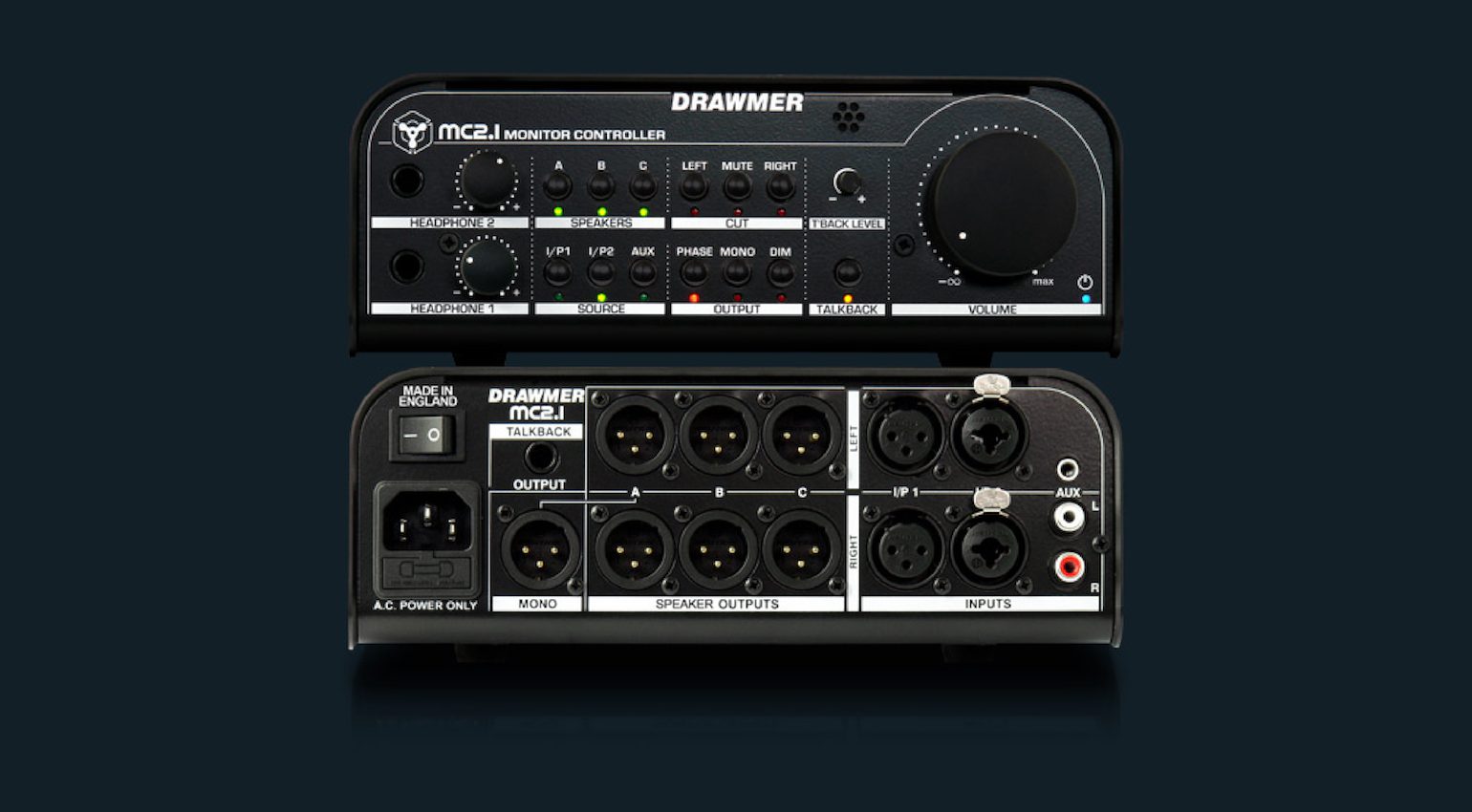
However, it does have a transparent signal path and all the features you’d expect in a pro monitor controller. The MC 2.1 provides one mono and three stereo speaker outputs, with two individually controlled headphone outs.
The built-in talkback mic works over the headphones channels and there is an additional mono talkback output. The unit is also rack-mountable, which makes it easy to incorporate into any scale of audio setup.

The Best Monitor Controllers: SPL 2Control
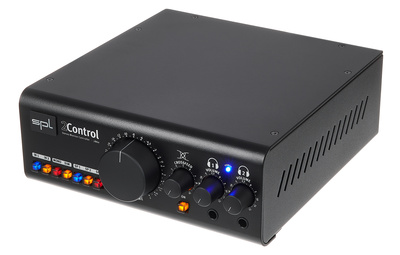
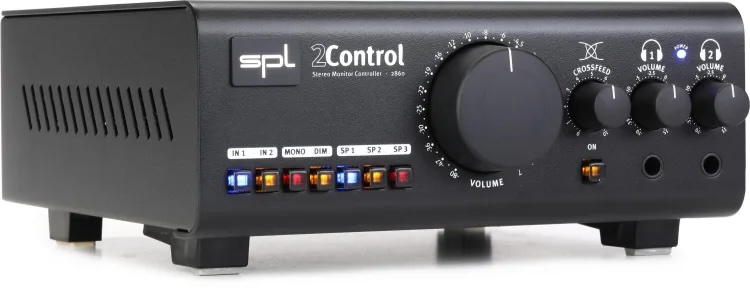
The 2Control may be more expensive than most home studio users would like it to be, but SPL is a proven high-end manufacturer so it comes with the territory. Here, the design philosophy is far more functional and minimalistic.
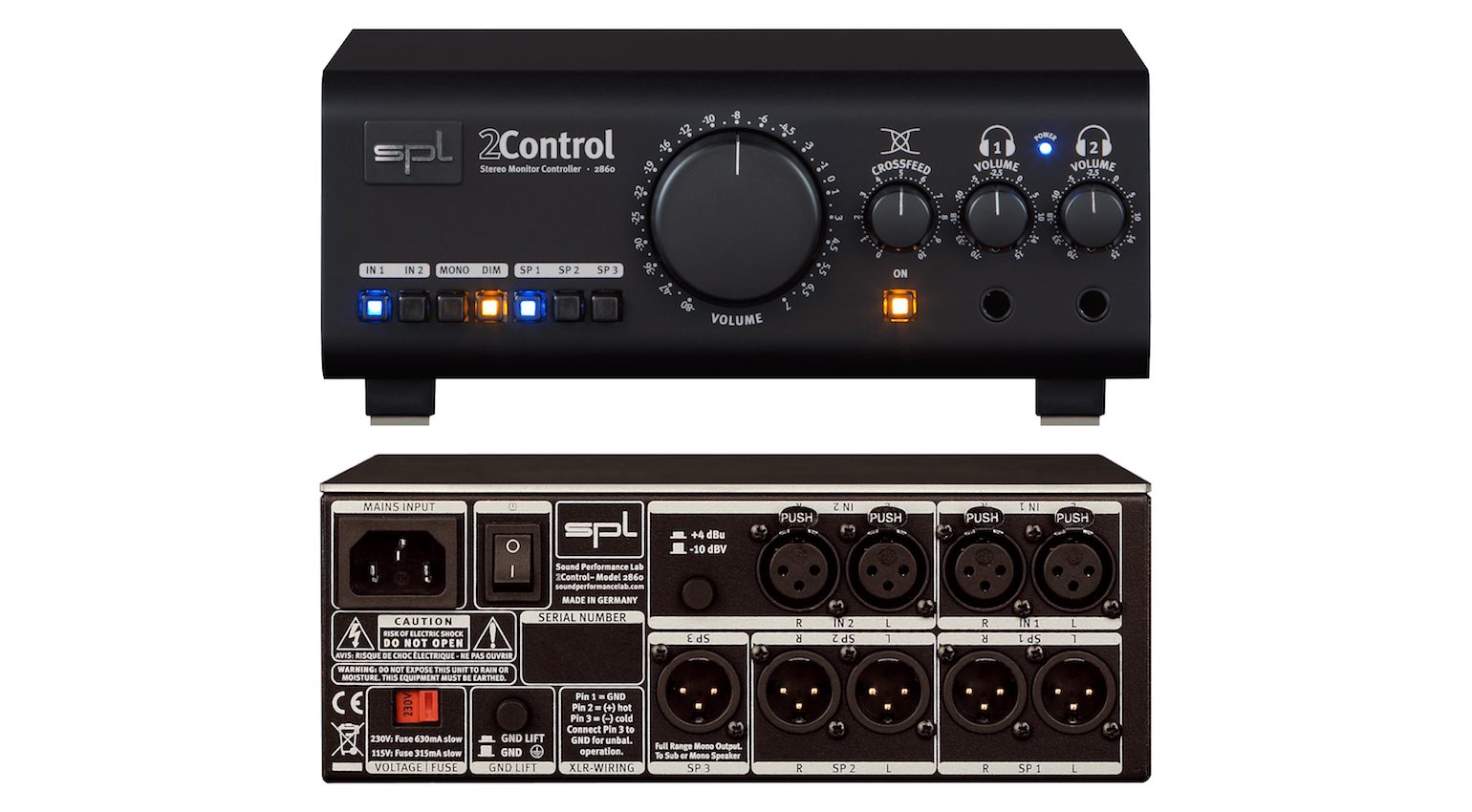
The 2Control gives you exactly the features required for accurately controlling your monitoring levels. This certainly beats bombarding you with features you never actually use. The fact that all the I/O is XLR, save for the two headphone outs, just screams pro audio from the outset.
In addition, you have SPL’s unique crossfeed feature for simulating your monitoring environment when you’re using headphones. There is no talkback circuit, but Input 2 does allow you to switch between -10 and +4 dBU, and there’s a full-range mono out, which is perfect for a Mixcube.*

The Best Monitor Controllers: Dangerous Music Monitor ST
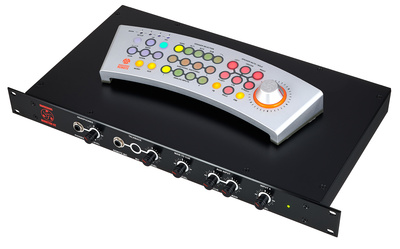
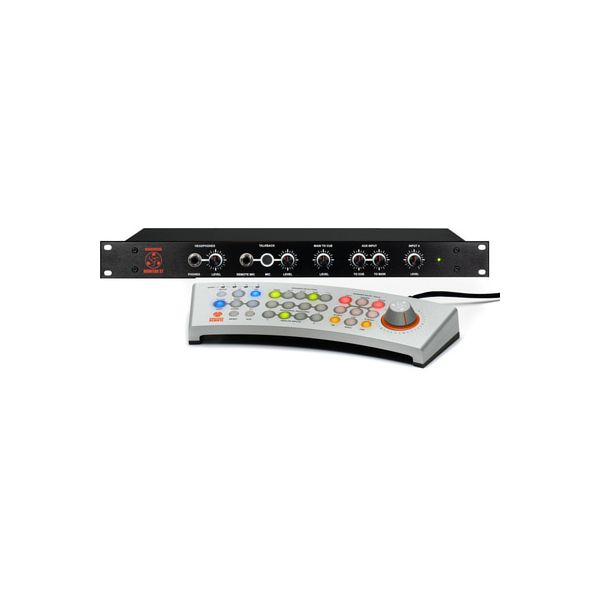
When Dangerous Music put together the Monitor ST, there must have been something in the water. From the time of its release, it instantly became the gold standard of monitor controllers.
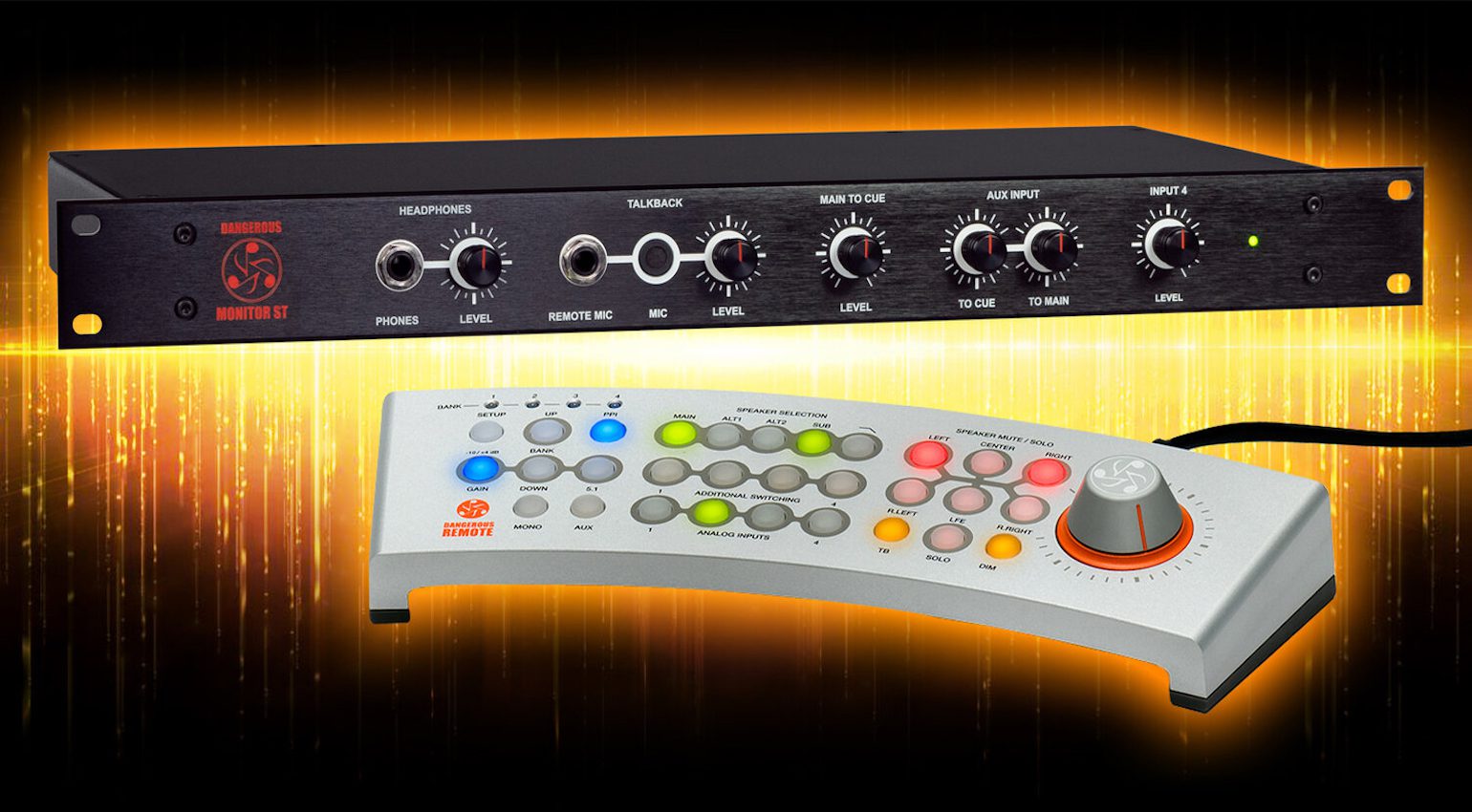
The level of R&D that went into the Monitor ST is extremely thorough, taking in decades of design ideas and creating something truly innovative. The price tag is formidable for an item many would regard as a peripheral studio tool. However, the Monitor ST is made to be the centerpiece of your studio.
Whether you buy it for the incredible analogue circuitry or the extensive routing and connectivity options, you’re unlikely to regret it.

The Best Monitor Controllers: Audient Nero
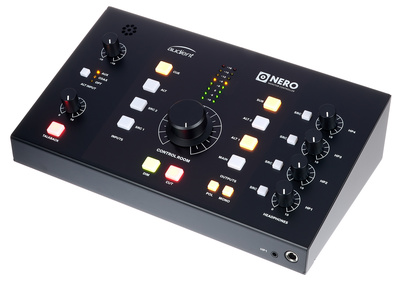
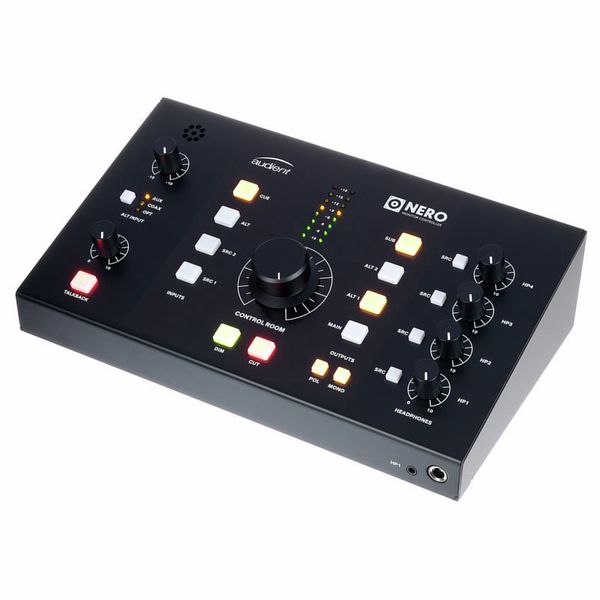
The Audient Nero is a versatile desktop monitor controller with a wide range of connectivity options and customizable features that make it suitable for any recording setup that requires talkback and multiple studio monitor switching. For starters, the all-metal casing means the Nero is built like a tank and will last through the endless hours of use in your studio.
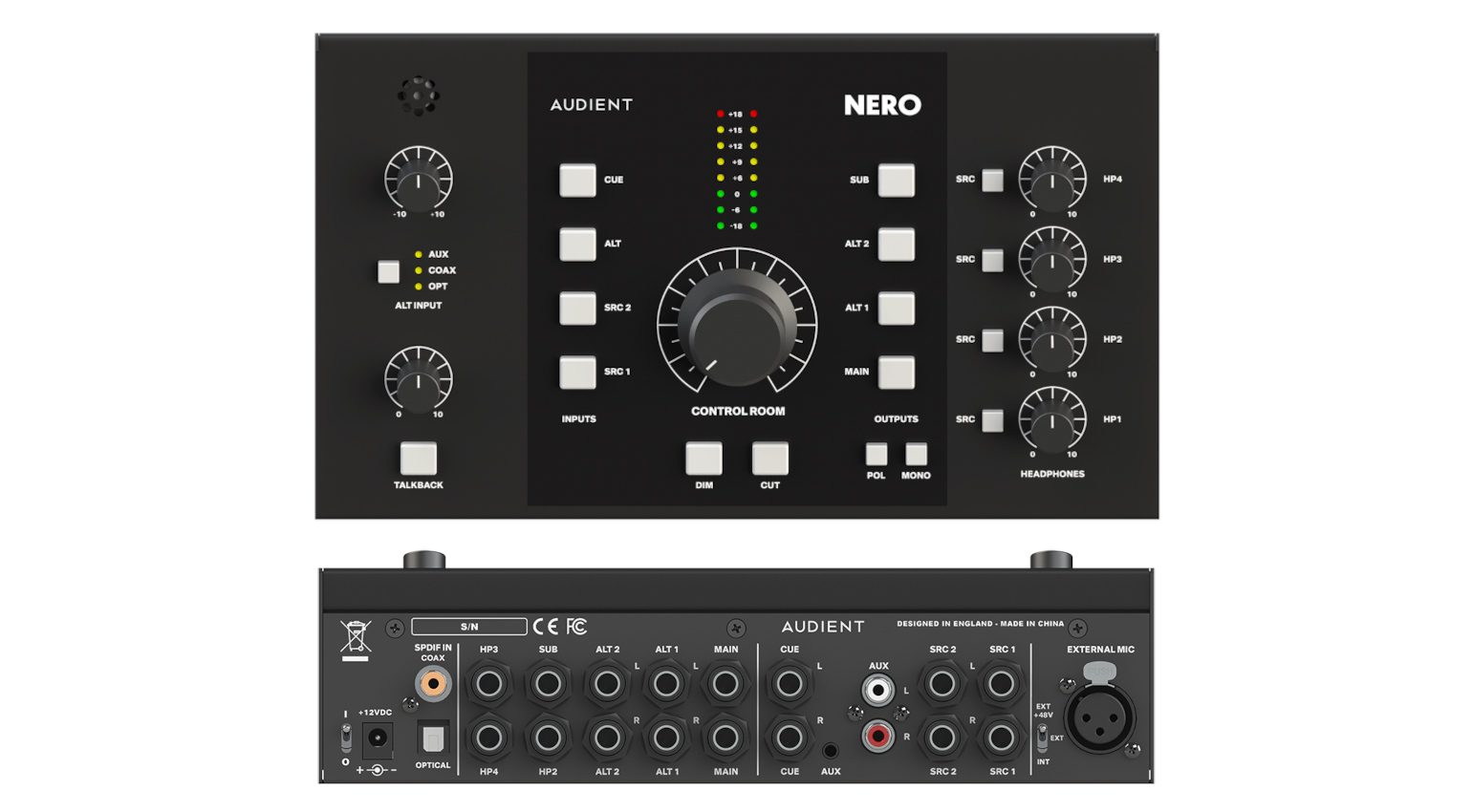
You can connect a wide range of devices simultaneously, with two balanced stereo TRS inputs, a set of stereo RCA inputs, a stereo minijack input, and a dedicated cue mix for creating separate monitor mixes for tracking. Meanwhile, you can also use digital coaxial and optical input sources if you want to monitor your external AD converter or audio interface.
For monitoring, the Nero has outputs for three sets of speakers, an assignable subwoofer, and four sets of headphones with individual level controls. Overall, with its Smart Touchpoints to set up custom workflows, the Nero is a great addition to any recording studio, and the talkback system can use the internal mic or an external one.

The Best Monitor Controllers: Radial
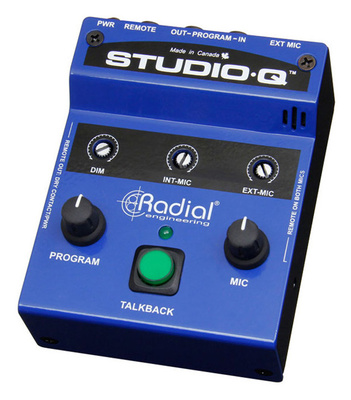
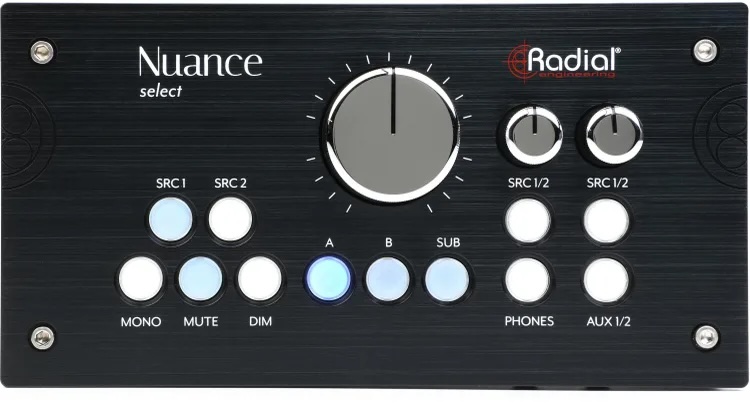
While Radial Engineering is well-known for its live performance equipment and accessories, the renowned Canadian manufacturer also has a range of compact monitor controllers, ideal for home and project studios. At the entry-point to the range is the SAT-2, a simple passive monitor controller with a rugged metal casing that resembles many of the hardy Radial DI boxes we know and love.
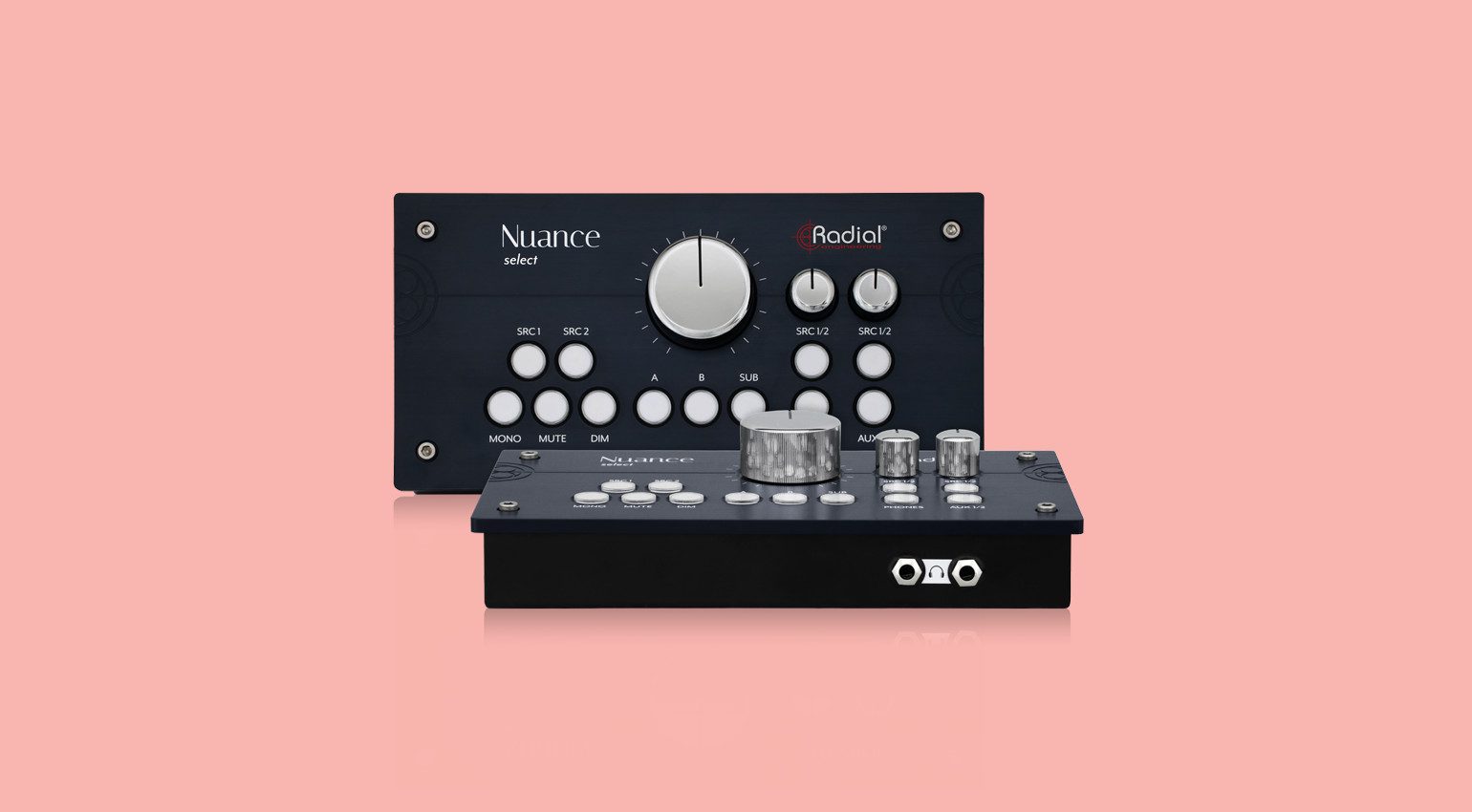
The SAT-2 provides the essentials for monitor control, with TRS and XLR inputs as well as mono and mute buttons and a useful adjustable DIM switch. Meanwhile, the STUDIO-Q can expand any recording setup with talkback functionality in a compact form factor and the option to use its internal mic or an external one via the XLR preamp.
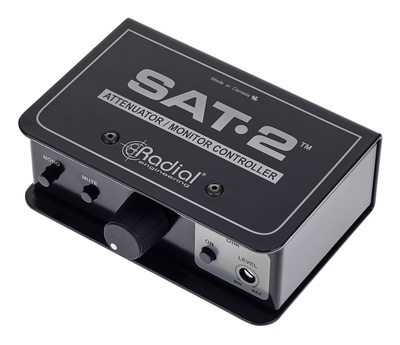
The flagship of the range is the Nuance Select, a Class-A active desktop monitor controller with two stereo source inputs and outputs for two sets of monitors and a sub. The Nuance Select also has a pair of independent headphone outputs, so you can send a separate feed to your vocal booth if necessary.

The Best Monitor Controllers: Lake People MC Series
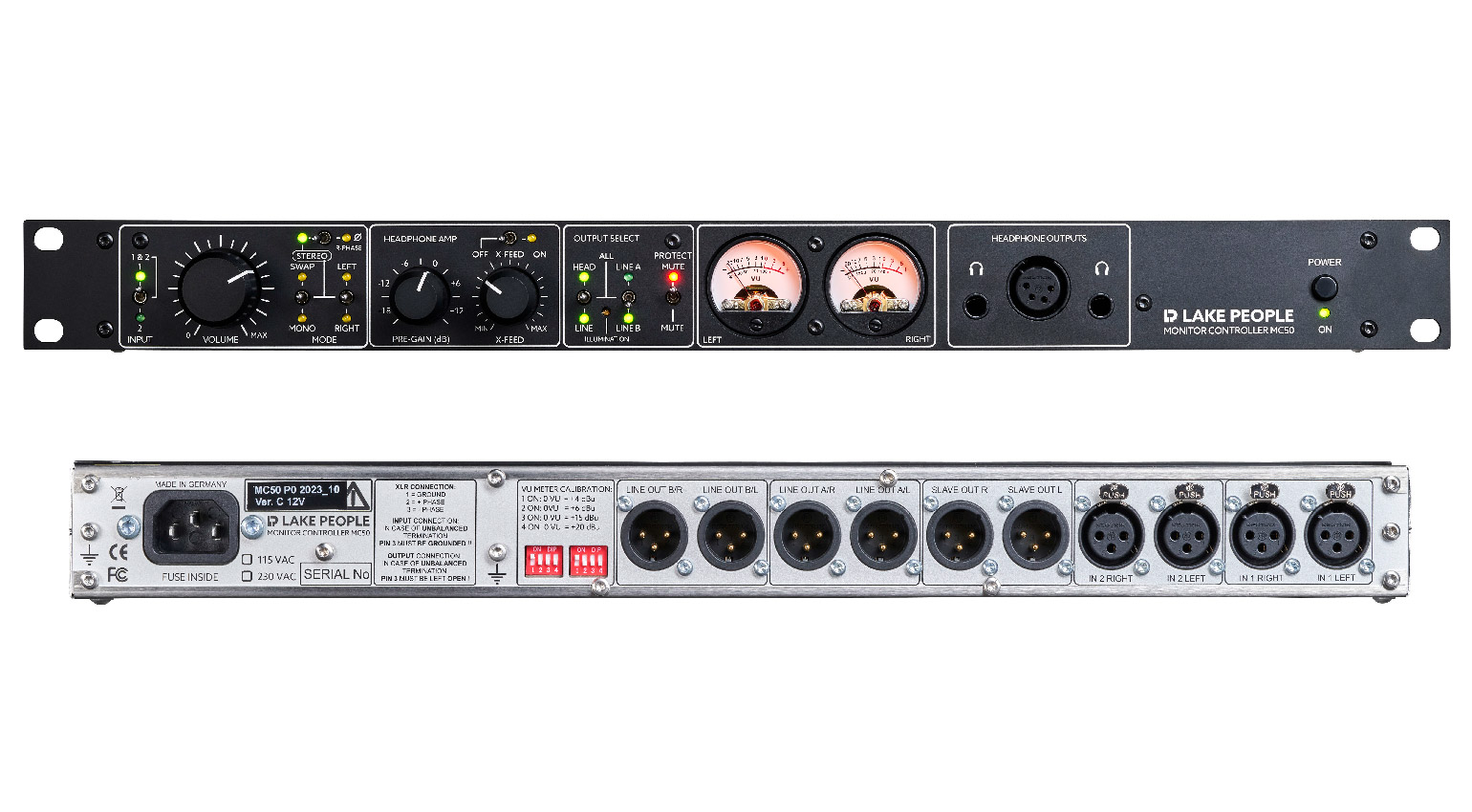
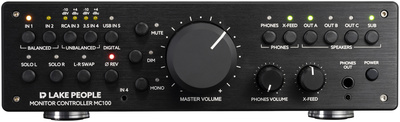
The Lake People MC Series is hand-built by highly skilled bench technicians at the manufacturer’s facility on Lake Constance, Germany, where it gets its name. With a boutique approach to the assembly line, the soldering and precision chassis machining are carefully quality-controlled to ensure longevity. So while you may pay a premium, you are getting a device of the highest quality.
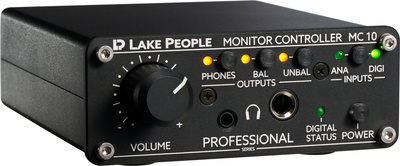
Lake People’s range of monitor controllers starts with the MC10, a compact but versatile desktop unit with up to 384 kHz DA conversion via USB-C, and a stepped 18 mm Alps RK27 potentiometer, which controls the volume. Like all the monitor controllers in this series, the MC10 is also a headphone amplifier that supports headphones with up to 600 ohms impedance rating.
Further up the line, there is the rackmount MC50, with support for two pairs of monitors, and X-FEED control for simulating the stereo image of your monitor setup while using headphones. Meanwhile, the flagship MC100 expands this feature set further, with DA conversion, three sets of monitor outputs, and a dedicated subwoofer output.


The Best Monitor Controllers: API MC531
When money is no object, and you want that classic American console sensibility, the MC531 is a high-end monitor controller with API build quality throughout. The MC531 provides switching between five stereo sources, and the famous 2510 Op Amp is used on every input stage.
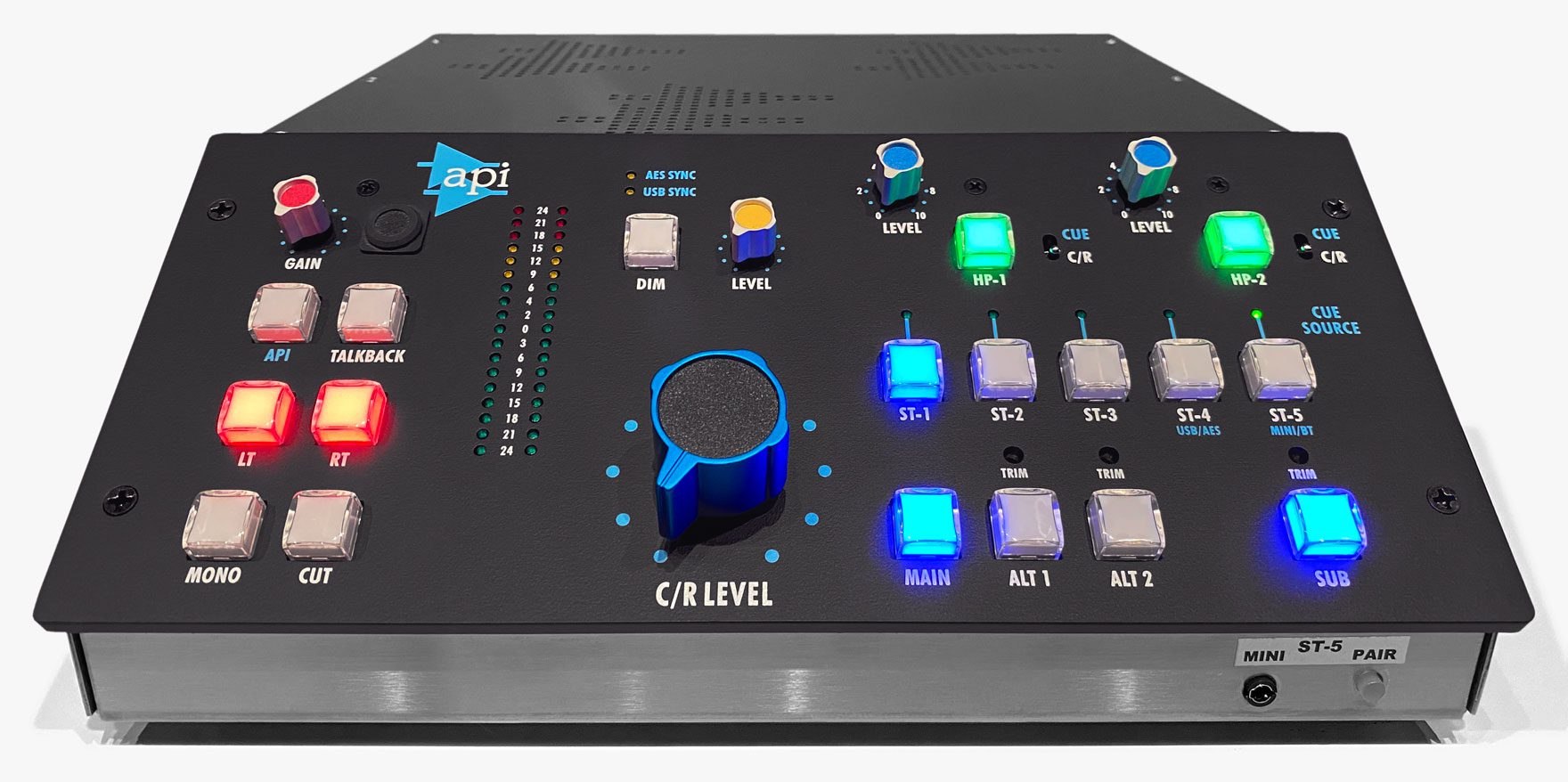
This includes three sets of balanced stereo TRS inputs, a digital input with a choice of AES and USB, and an aux input with stereo minijack and Bluetooth connectivity. The API MC531 allows you to connect three sets of studio monitors with a separate subwoofer feed, and there are two headphone channels that can be assigned to the control room or cue mix.
Besides the onboard LED meter, there is also a dedicated unity balanced send and return path for an external metering system. This will appeal to engineers who want the most accurate monitoring possible. Overall, the MC531 has it all, from classic console looks to talkback functionality and, of course, the coveted API sound.

FAQ
- What does a monitor controller do?
A monitor controller gives you a central control hub on your desktop for switching between multiple sets of monitors, changing sources, and precisely controlling your listening level.
- Is a monitor controller an absolute necessity for a home studio?
Not in every case, but it really comes into play when using multiple pairs of studio monitors or an immersive monitoring system.
- What is the difference between an active and passive monitor controller?
A passive controller works by attenuating a signal sent at unity gain, while an active controller uses powered electronics with additional gain circuits and extra routing and monitoring functionality.
- Can a monitor controller improve sound quality?
A high-quality monitor controller provides precise management of your listening level and monitor path routing without colouring the sound in any way or introducing noise.
- What features should you look for in a monitor controller?
Outputs for multiple sets of studio monitors, precise level control, source selection, headphone preamplifier, mute, mono, and dim switches. Some models also offer talkback and DA conversion.
More about the Best Monitor Controllers:
- Read more about monitor controllers
- Learn more about Recording
- Thomann’s Guide to monitor controllers*
Video:
*Note: This article about the best monitor controllers contains affiliate links that help us fund our site. Don’t worry: the price for you always stays the same! If you buy something through these links, we will receive a small commission. Thank you for your support!
The post The Best Monitor Controllers for Home and Pro Studios appeared first on gearnews.com.