Traditionally, polyphonic synthesizers were priced on the expensive side. Even the DX7 – which was regarded as more affordable at the time – cost close to $2000 when it was launched back in 1983, not to mention analog synths. Times have changed, however, and there are now many budget polysynths that don’t break the bank. We check out the best affordable polyphonic synths from analog to digital.
Best Budget Polysynths
Why Are Analog Polysynths so Expensive?
Until not too long ago, most modern polyphonic synths were digital. When the analog revival picked up momentum in the early 2010s, it began with monophonic synths such as the Arturia MiniBrute, KORG MS-20 mini, and Novation Bass Station II. It took several more years until the first truly affordable analog budget polysynths arrived, with the KORG Minilogue and Behringer DeepMind being among the first.
There’s a reason why manufacturers proceeded with caution. Back in the 1970s and 1980s, analog polysynths were among the most expensive pieces of music gear you could buy. They were costly to develop, costly to build, and costly to maintain. Compared to sleek new digital synths like the Yamaha DX7, they were also prohibitively bulky and heavy. When the DX7 arrived in 1983, several iconic brands that had spent fortunes on developing their polyphonic analog flagship synths stood no chance and quickly went out of business. But what makes analog polysynths so expensive, putting them at a massive disadvantage compared to their digital counterparts?
A digital synth – whether it’s of the FM, wavetable, sample-based, or virtual analog variety – uses a microprocessor to compute the sound in real time. As long as the CPU has sufficient capacity to compute the additional oscillators, filters, envelopes, and such, adding more voices doesn’t require any extra hardware. That’s why digital synths have always been at a huge advantage when it comes to polyphony.
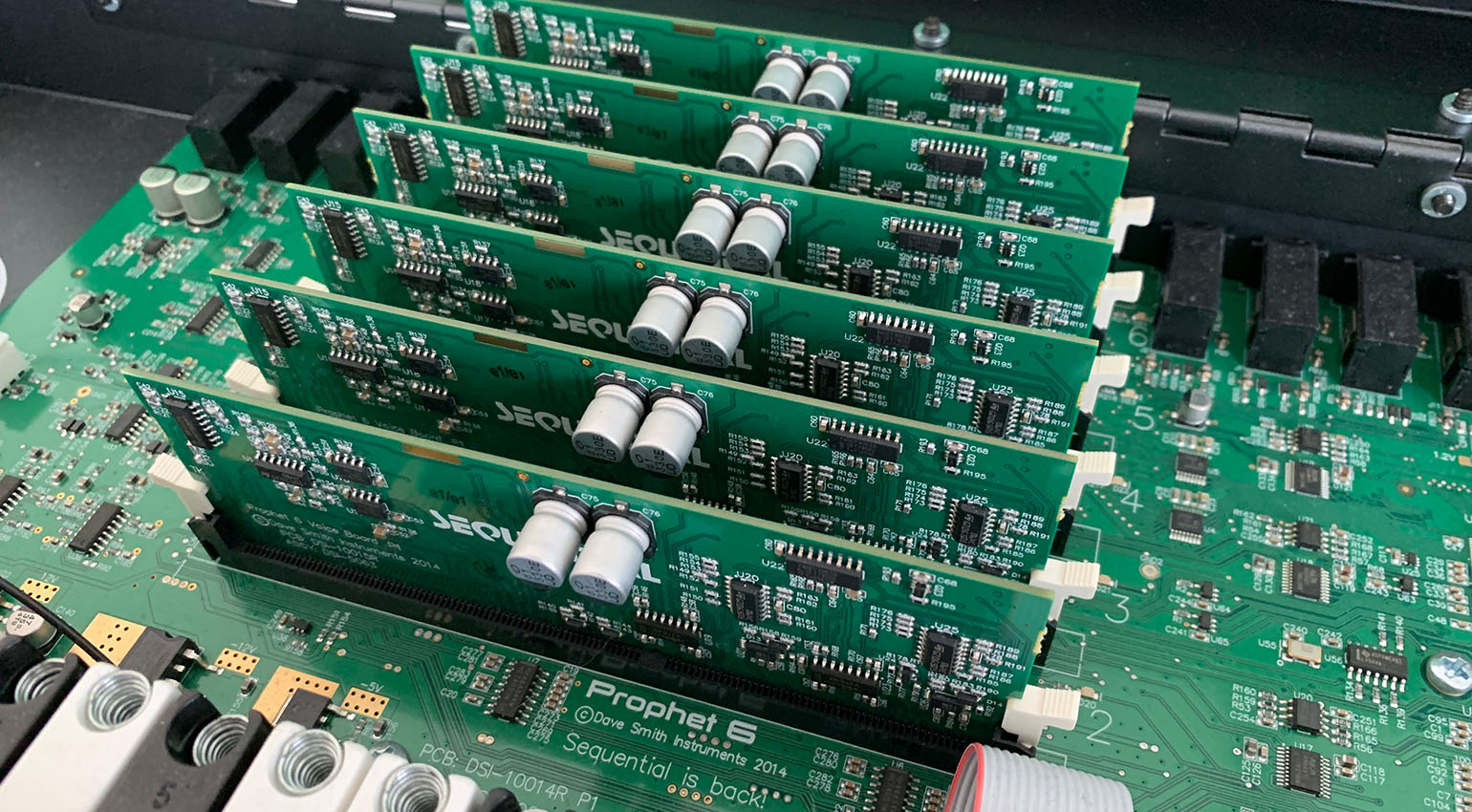
Conversely, a polyphonic analog synth requires dedicated analog circuitry for each individual voice. For example, a six-voice synth such as the Sequential Prophet-6 has six voice cards, each packed with discrete circuitry for two oscillators, two filters, and a VCA. For each additional voice, you’d have to add another voice card with the corresponding circuitry, which quickly drives up the price of the synth. Not to mention the fact that making the individual voices of an analog polysynth sound like a coherent whole requires a lengthy calibration process.
It wasn’t until recently that modern manufacturing and calibration processes made affordable analog polysynths a reality. If someone had told me fifteen years ago that I’d someday be able to list a bunch of analog synths alongside their digital rivals in an article about budget polysynths, I’d probably have called them insane. But here we are, and some of the analog synths on this list are even priced below their digital counterparts. While flagship analog polysynths such as the Sequential Prophet-5/10 Rev4, Moog Muse, Arturia PolyBrute 12, and Oberheim OB-X8 are still among the most expensive synths you can buy, analog and polyphonic doesn’t automatically mean unattainable anymore.
Let’s check out some of the best budget polysynths available today – from traditional analog to unapologetically digital!
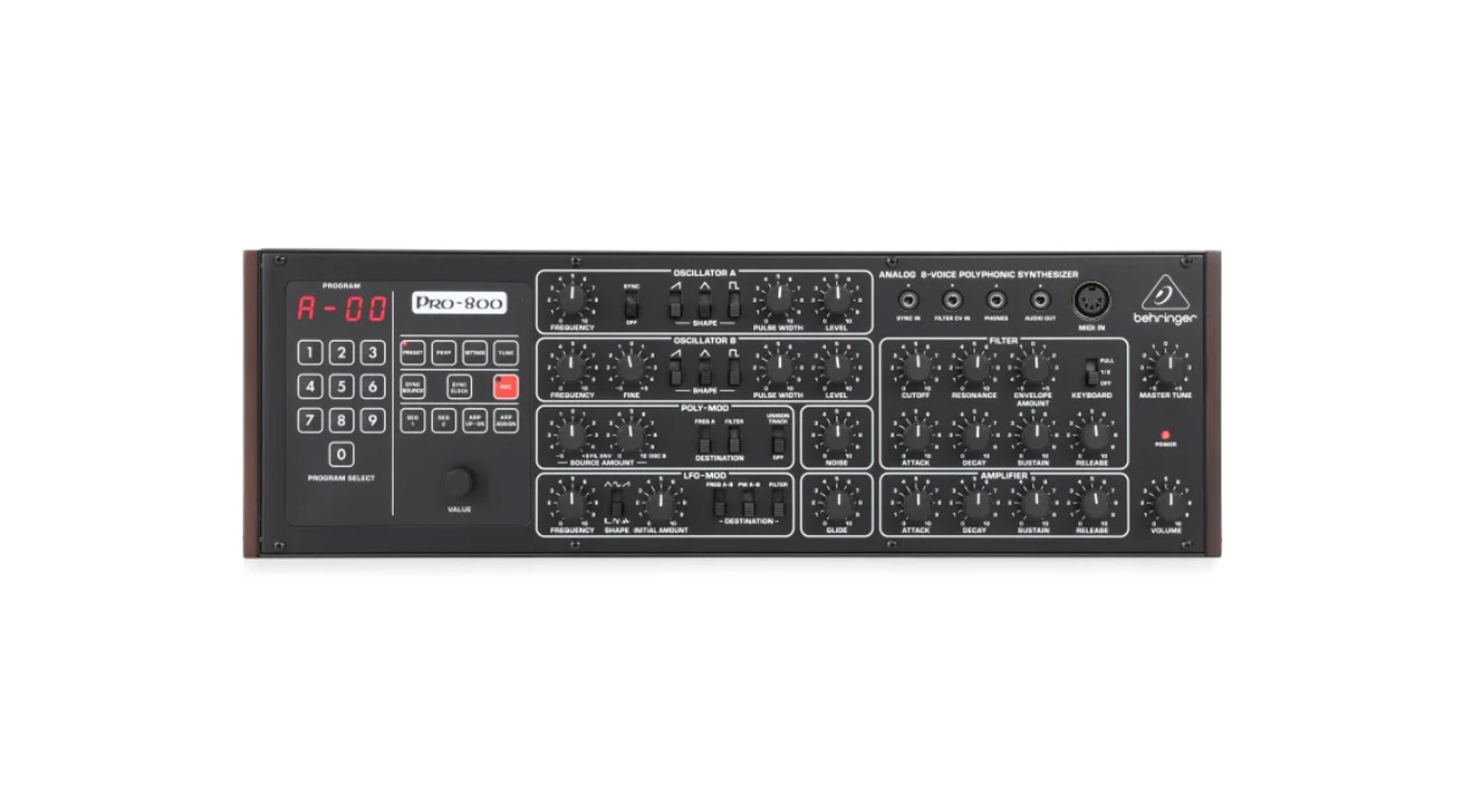
Behringer Pro-800: Best Analog Bang for your Buck
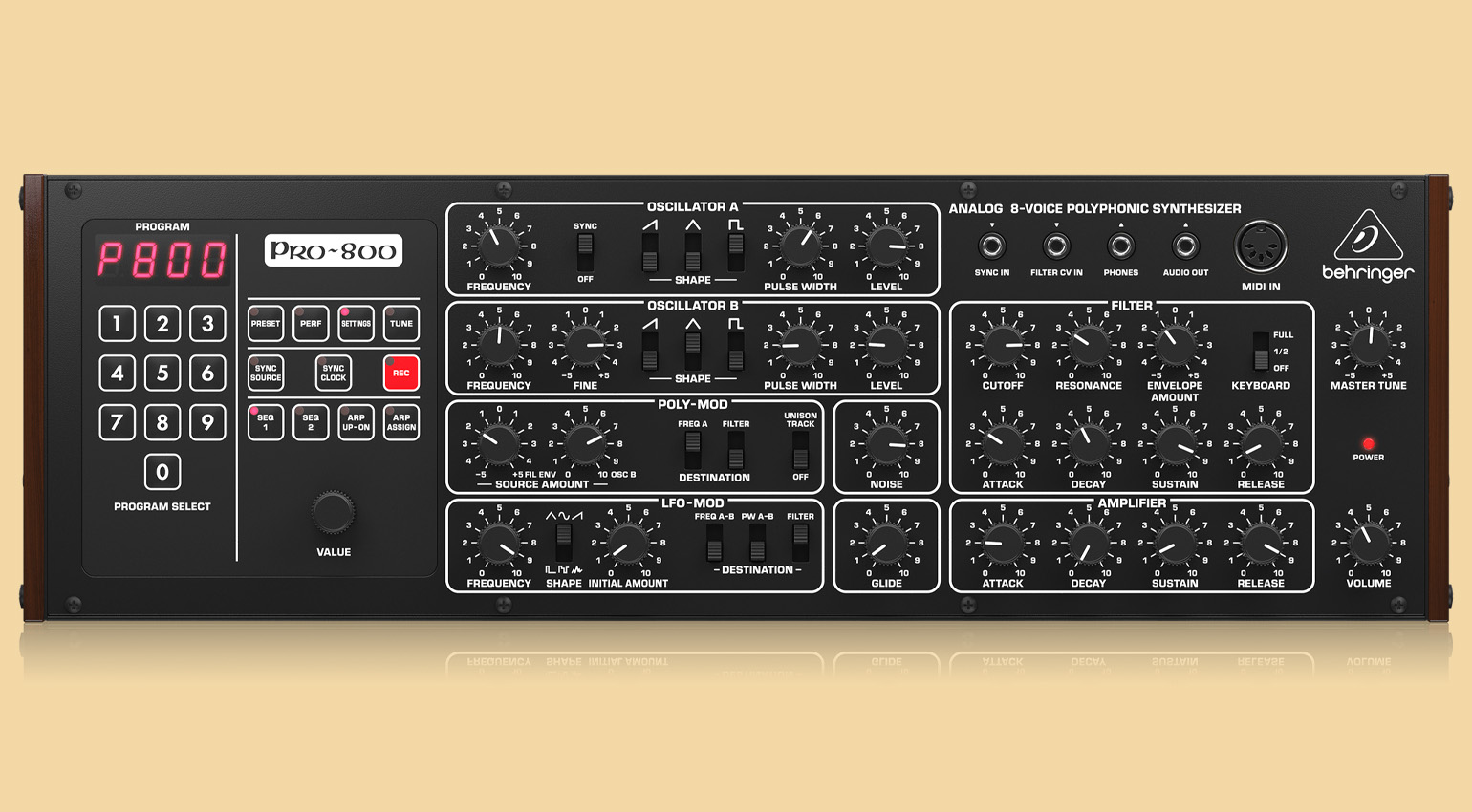
The Pro-800 isn’t the only surprisingly affordable analog polysynth from Behringer; other examples include the aforementioned DeepMind series, the UB-Xa, and the JN-80. But the Pro-800, which is heavily inspired by the Sequential Circuits Prophet-600 from the ‘80s, offers the most mind-boggling dollars-per-voice ratio of them all.
Behringer kept the classic architecture of the Prophet-600, but added two additional voices. Each voice offers dual oscillators, a 24dB low-pass filter, two ADSR envelopes, and an LFO. The classic Prophet-style PolyMod section offers many interesting modulation possibilities, such as using OSC 2 to modulate OSC 1 and/or the filter frequency. With an 8-voice unison mode, the Pro-800 is also capable of huge monophonic basses and leads.
The Behringer Pro-800 is available from our affiliate partners Thomann* and Sweetwater*.



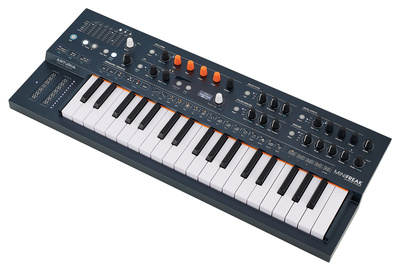
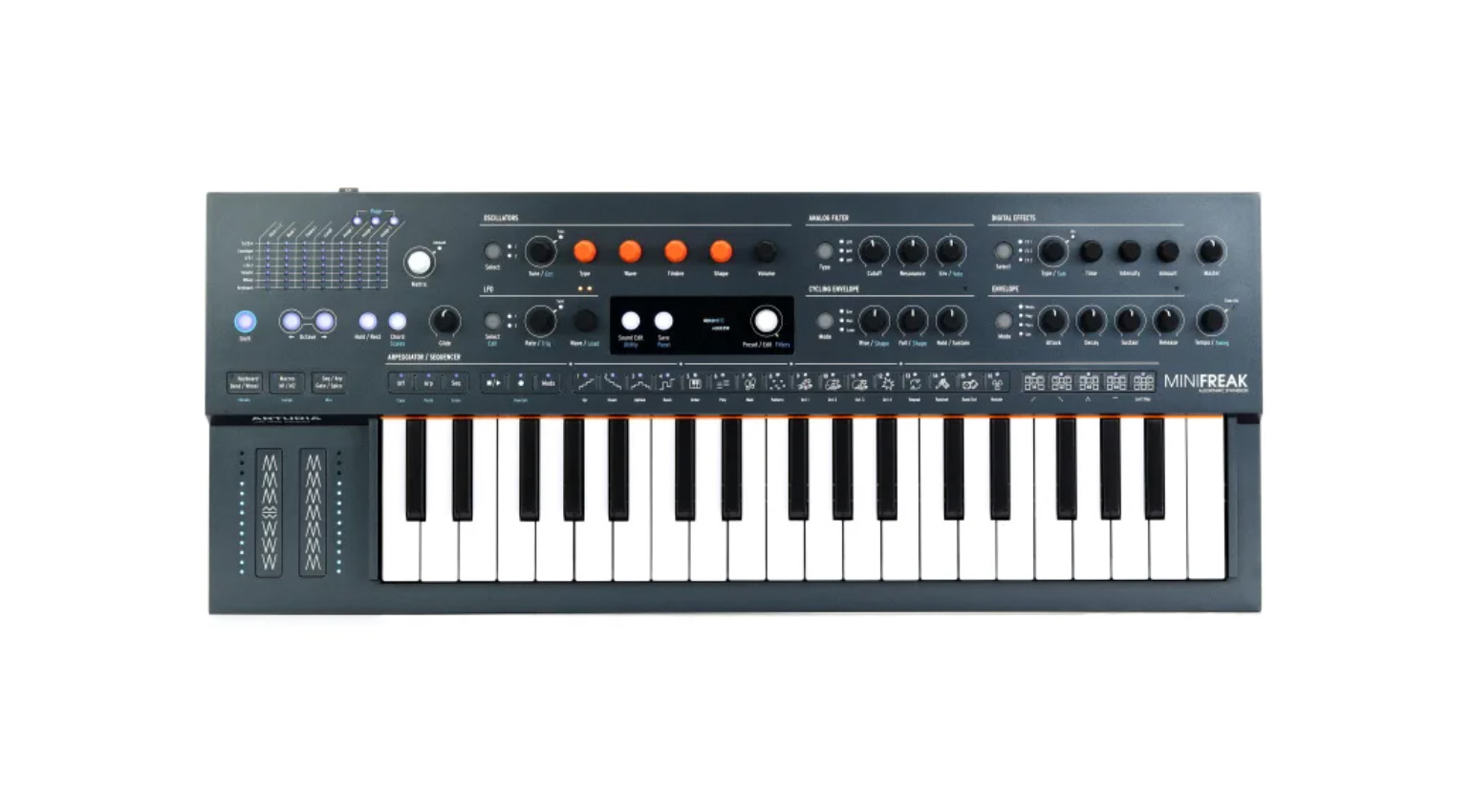
Arturia MiniFreak: Six-Voice Hybrid Synth with Multi-Engine Oscillators

Thanks to its almost limitless sonic potential, Arturia’s delightfully quirky MicroFreak is high up on most lists of the best monosynths. So it comes as no surprise that the six-voice MiniFreak is one of the best budget polysynths you can buy in its price range. The MiniFreak takes everything that makes the MicroFreak great and doubles down, offering two incredibly versatile multi-engine oscillators and an analog multi-mode filter per voice. You can choose between no less than 31 oscillator modes, ranging from virtual analog to FM, wavetables, samples, granular synthesis, and much more.
The MiniFreak also features an extensive and hugely inspiring modulation engine with twin LFOs, cycling envelopes, a mod matrix, and a sequencer/arpeggiator with four modulation lanes. And as all owners of the hardware MiniFreak get the software version MiniFreak V for free, you can seamlessly integrate the synth into your DAW setup. The latest firmware update introduced user sample and wavetable import. One of the most versatile and inspiring synths in its price range!
The Arturia MiniFreak is available from our affiliate partners Thomann* and Sweetwater*.

Waldorf Protein: Classic Wavetable Sounds on a Budget
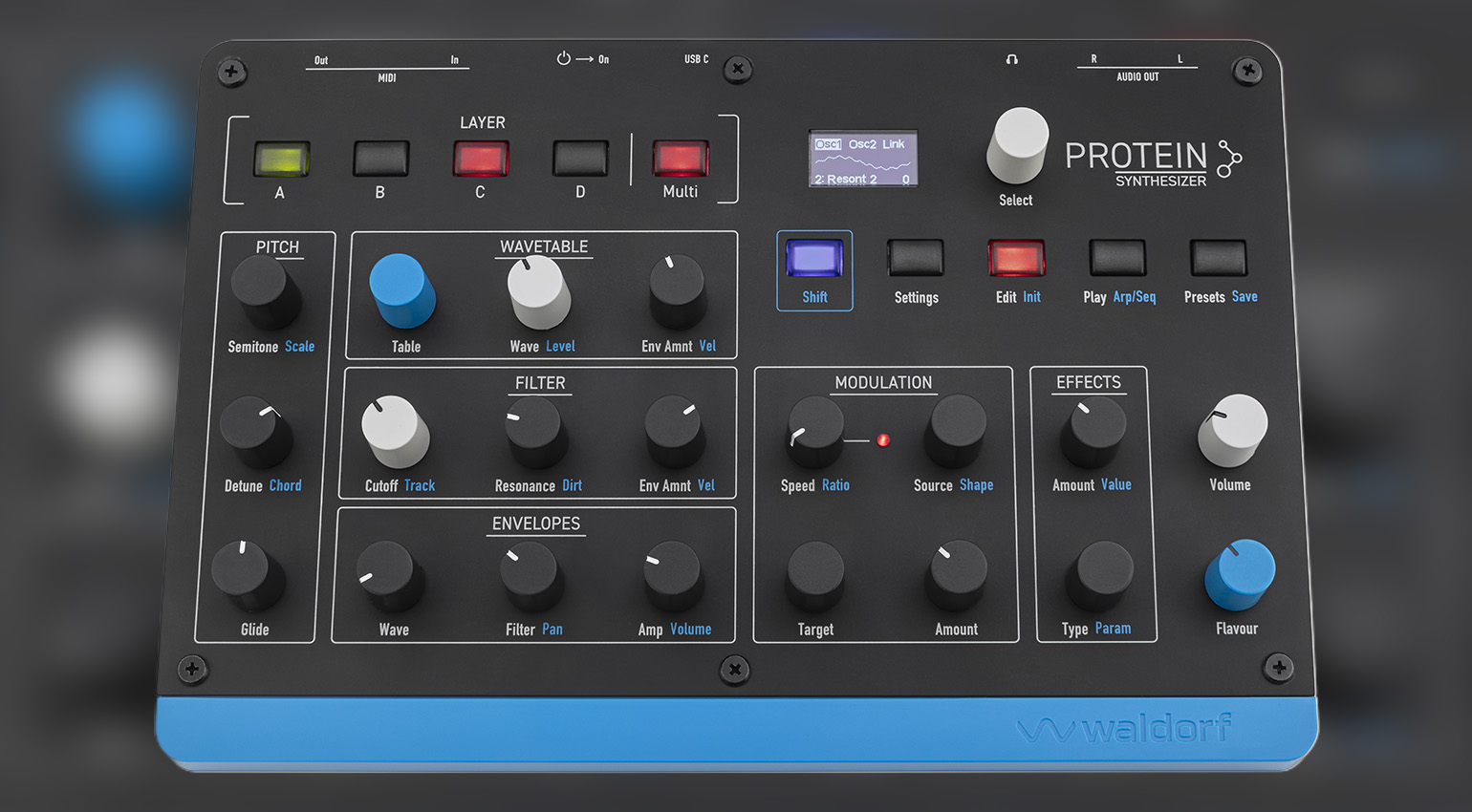
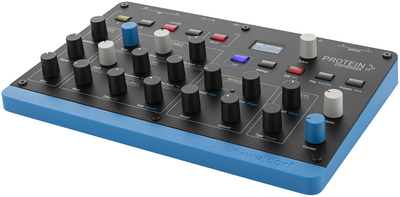
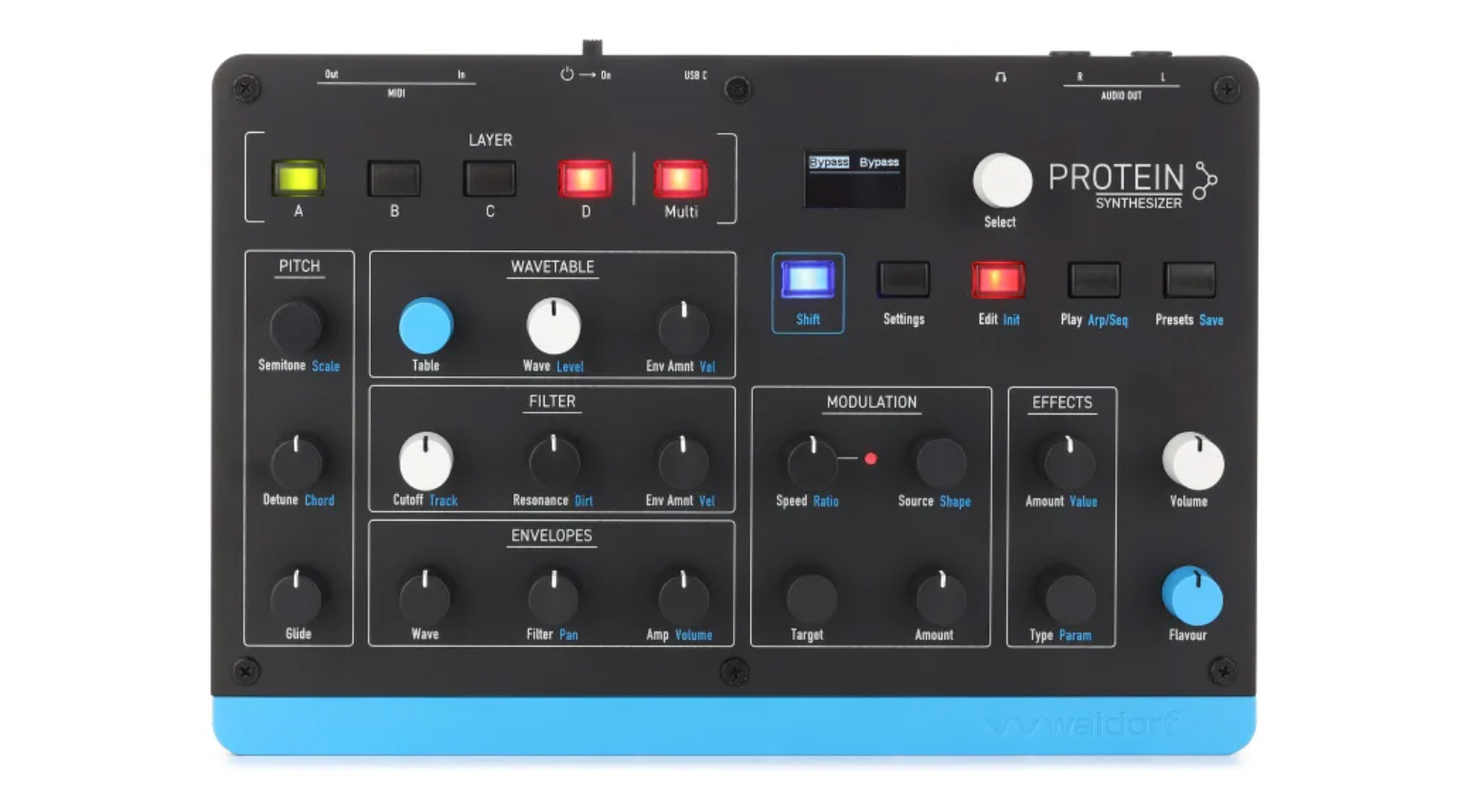
As the company’s most affordable wavetable synth to date, the still-new Waldorf Protein ranks high on the list of best budget polysynths. The eight-voice polyphonic synth is inspired by the classic Microwave 1 that helped shape the sound of ‘90s techno, but with a much more modern user interface and form factor. Each voice offers two wavetable oscillators based on an emulation of Waldorf’s original ASIC chip, as well as an emulation of the classic analog CEM filter that gave the Microwave 1 its incomparably punchy sound.
The Protein is no slouch in the modulation department, either, offering three envelopes, two LFOs, and an 8-slot mod matrix. It also supports polyphonic aftertouch. Waldorf has also thrown in an effects section, an arpeggiator, and a 32-step sequencer. Classic wavetable timbres for the new generation!
You can get the Waldorf Protein from our affiliate partners Thomann* and Sweetwater*.

Dreadbox Nymphes: Six Lush Analog Voices on a Budget
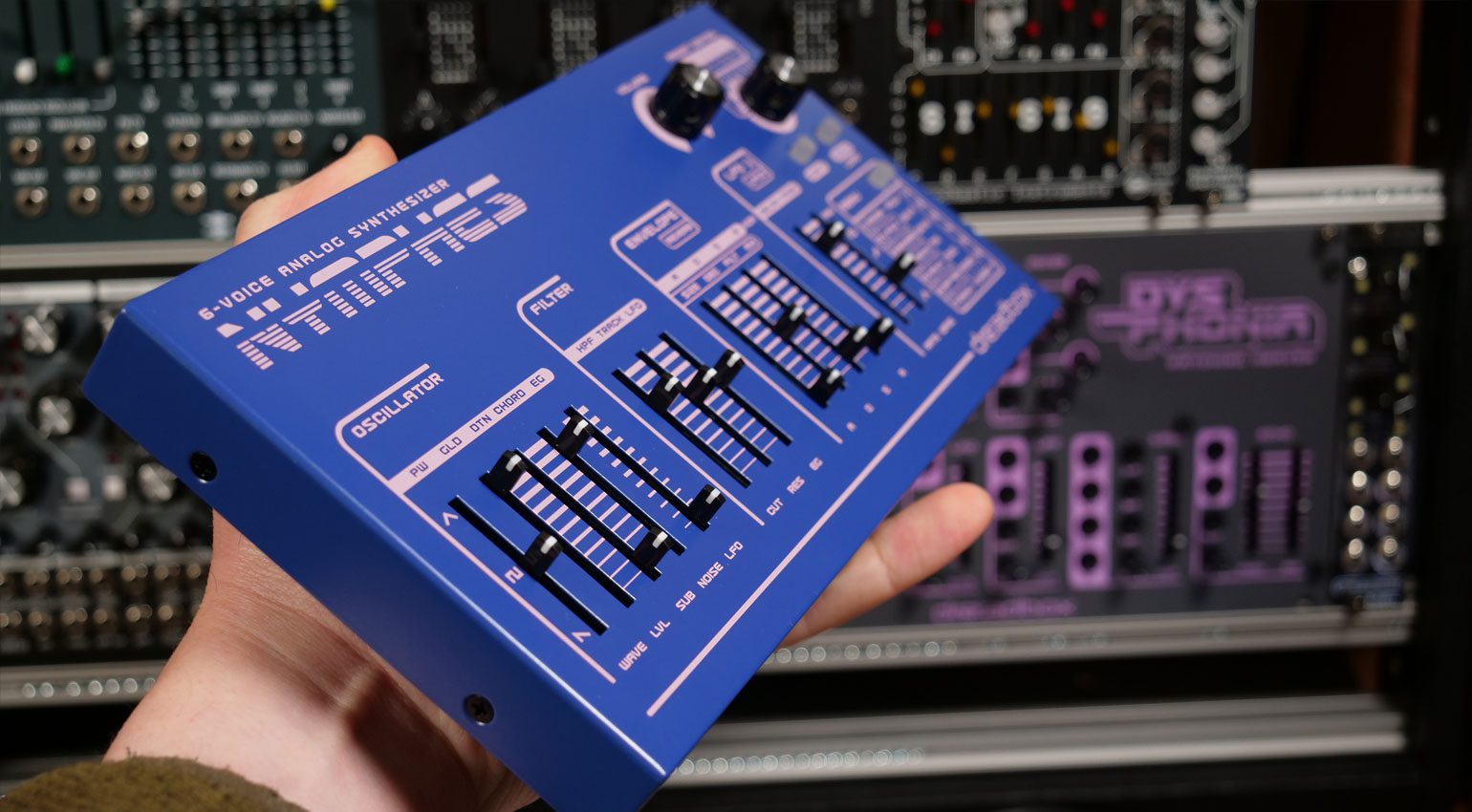
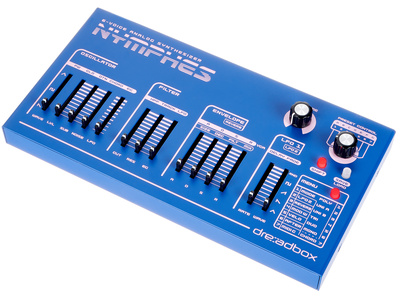
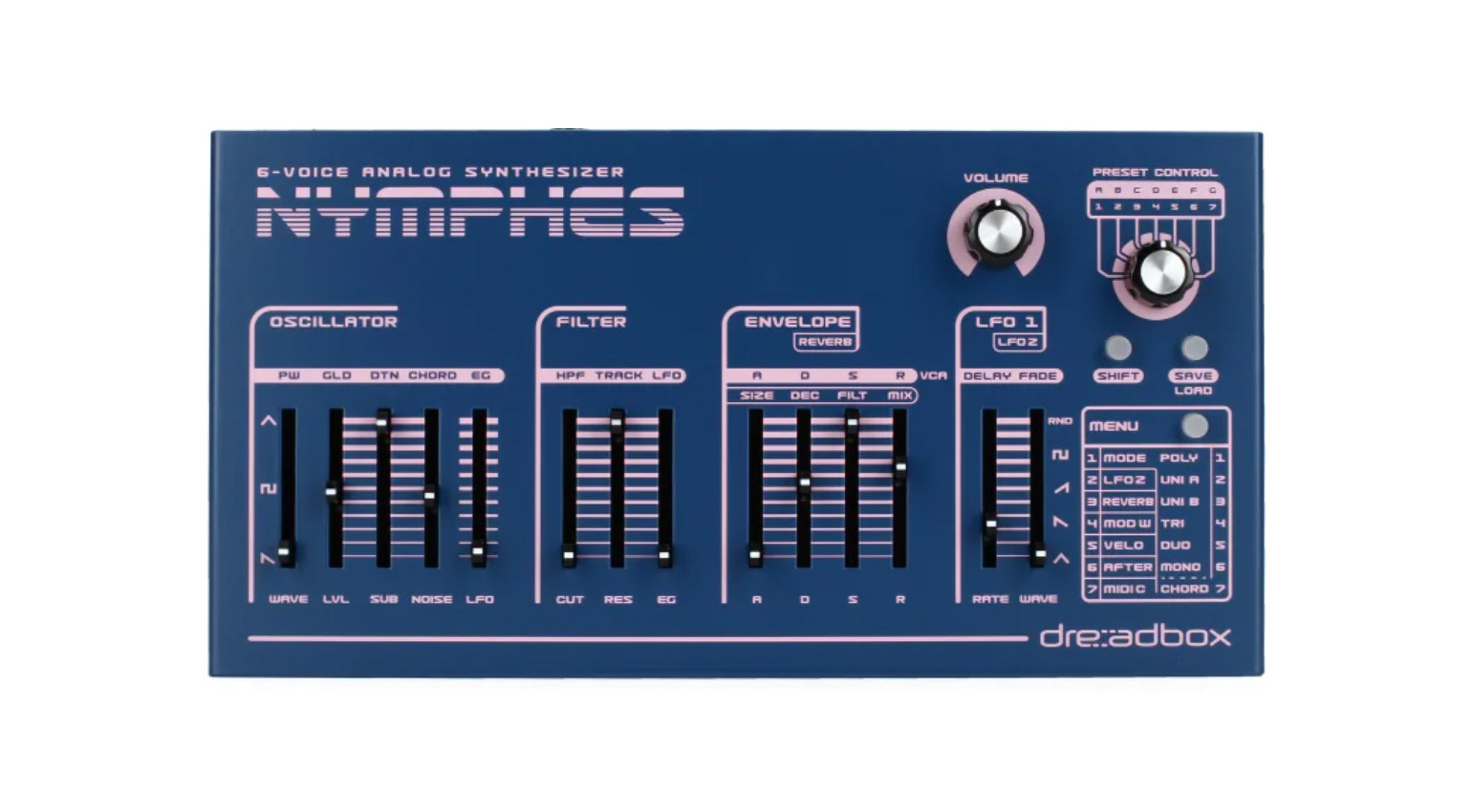
The Dreadbox Nymphes is proof that modern manufacturing techniques have not only made analog polysynths much more affordable, but also much more compact. Even though it’s small enough to fit in your briefcase, the tiny synth offers a full-blown six-voice analog sound engine inspired by the classic Juno architecture, with six voice modes to choose from.
Each voice features a single VCO with continuously variable waveforms, a sub-oscillator, a 24dB low-pass filter, a 6dB high-pass filter, two envelopes, and two LFOs, making the Nymphes capable of producing a wide range of classic analog timbres. The built-in digital reverb is the icing on the cake. With its lush, warm, and powerful sound, the Nymphes is one of my favorite budget polysynths.
The Dreadbox Nymphes is available from our affiliate partners Thomann* and Sweetwater*.

ASM Hydrasynth Explorer: Still one of the Best Digital Budget Polysynths
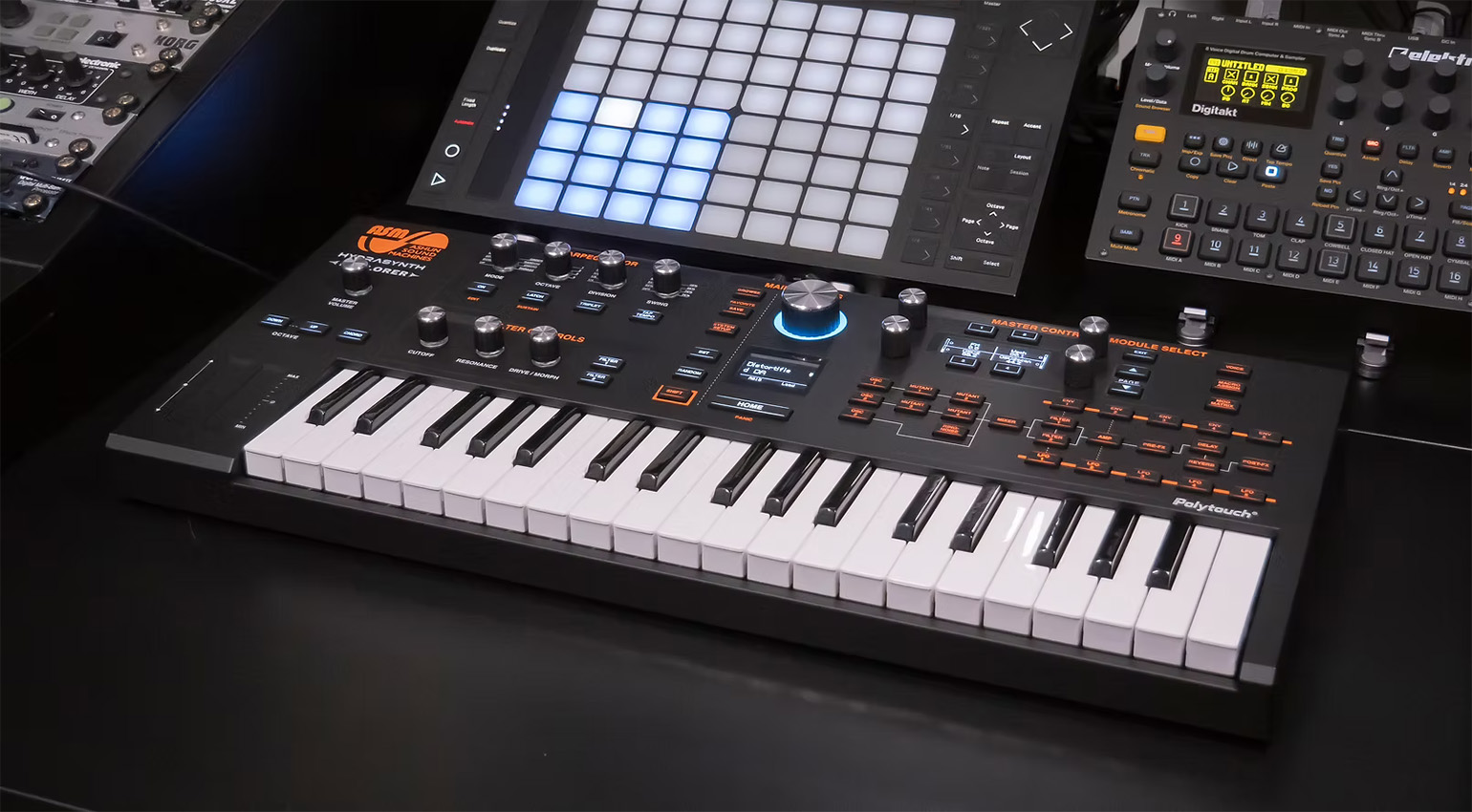
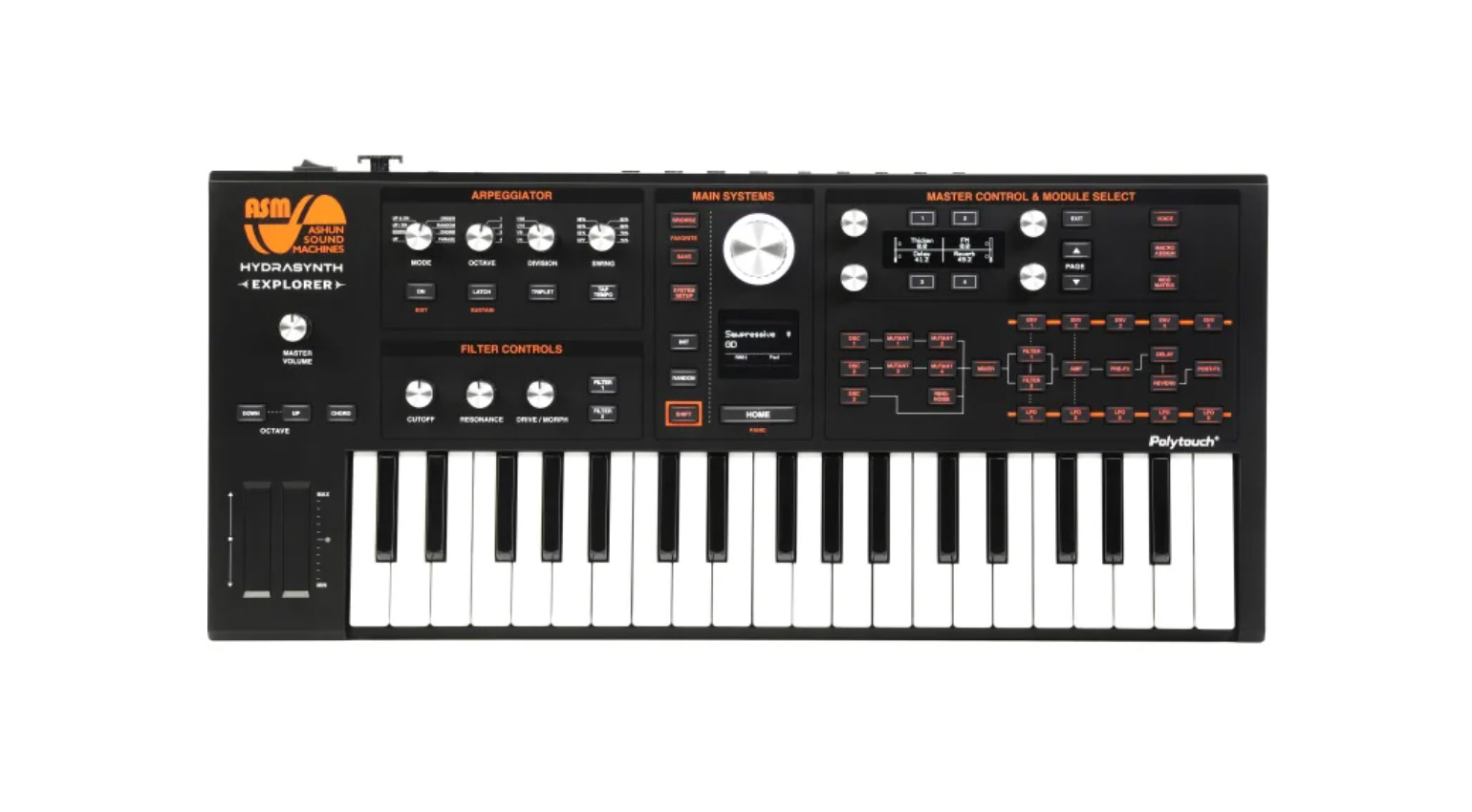
When ASM’s Hydrasynth hit the scene in 2019, it quickly took the synth world by storm. After a decade of analog reissues and retro-inspired synths, the Hydrasynth was delightfully different: unapologetically digital, yet incredibly expressive. Combining a hugely versatile wavemorphing sound engine with extensive waveshaping and modulation capabilities and an expressive poly-aftertouch keybed, the Hydrasynth was a new breed of digital synth that deserved every single one of the many awards it received.
The compact Hydrasynth Explorer makes this era-defining sound engine available in a more compact and budget-friendly format – including the polytouch keybed! Five years after ASM added the Explorer to the Hydrasynth range, it has lost none of its mojo. If you’re into creative sound design and polyphonic expression, it’s still one of the best budget polysynths you can buy.
The Hydrasynth Explorer is available from our affiliate partners Thomann* and Sweetwater*.

More About Synthesizers
- Best Mono Synths Under $500
- Digital Designs: The Best Wavetable Synthesizers
- Best Budget Beatmaking Gear
*Note: This article contains promotional links that help us fund our site. Don’t worry: the price for you always stays the same! If you buy something through these links, we will receive a small commission. Thank you for your support!
The post The 5 Best Budget Polysynths for your Home Studio & Playing Live appeared first on gearnews.com.