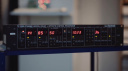
The TC Electronic 2290 Dynamic Digital Delay is a legendary studio and guitar effect from the mid-1980s that became an integral part of the U2 sound.
In this Article:
The 2290 was groundbreaking when it was first launched back in 1985: an advanced, microprocessor-controlled delay unit with impressive specs and capabilities that exceeded classics like the Lexicon PCM 42, AMS DMX 15-80S, and the KORG SDD-3000. With a 100 dB dynamic range, 20-23,000 Hz frequency response, 1 MHz internal sampling rate, and up to 32 seconds of expandable memory, the 2290 had a clean and pristine, ultra-wide sound that immediately caught on among performing musicians and studio engineers.
Unique features like automatic input level-dependent processing gave the 2290 delay an organic sound, while its modulation features allowed it to produce chorus, flanger, tremolo, and doubling effects. To add to its flexibility, the 2290 also had five programmable effect loops for adding other effects units, and it was packed with analog components such as op-amps, dbx VCA chips, switching and multiplexers, and custom filter and sample-and-hold circuitry.
TC Electronic 2290: How The Edge Approached Delay
As a guitarist, The Edge divides opinion in the greatest of all time conversations, but there’s no denying that he harnessed technology to create unique sounds and song arrangements. Rather than seeking to expand the spatial character of a sound alone, The Edge used delay to build hypnotic, percussive patterns that added a new rhythmic dimension to his playing.
The most obvious example of this is, of course, the riff from Where the Streets Have No Name, where a simple six-note ostinato becomes a heavenly cascade of movement and texture that establishes the song’s meter. While some might regard this use of delay as cheating, layering dry guitars simply wouldn’t create the same level of intricacy and detail.
The key when emulating this is to try and merge the effect with the original sound to create a unified and cohesive pattern. A clean or slightly driven tone is a good starting point, and then a dotted eighth note delay time provides the musical repetition you can build from. Naturally, the delays need to retain their clarity too, and the accuracy of the playing is essential.
*The TC Electronic 2290 Delay Plugin is currently on sale at Thomann until 3 November. Get it at Thomann.


TC Electronic 2290: Bono’s Live Vocals
While U2 used a range of different effects for Bono’s studio vocals, his stage performance also began relying heavily on the 2290, with an approach that is quite similar to The Edge’s guitar sound. Rather than adding an ambient component to the vocals in the back of the mix, the 2290’s precisely timed delay steps expand the sound in size and energy without obscuring the phrasing.
This is where the dynamic delay feature comes in, as the 2290 can decrease the level of the wet signal when each vocal line is being delivered and become more pronounced in the silent parts. This allows the effect to shift with the vocal dynamics, becoming an integral part of the performance that doesn’t affect the clarity of the vocals.
Creating a similar effect in your DAW is actually rather simple. Using a delay plugin on an aux send, you can add a compressor to duck the effect when the dry signal is present. All you need to do is route the dry vocal signal to the compressor’s sidechain input and adjust your threshold for the amount, while the attack, release, and ratio change the onset and shape for a sound that fades naturally between the vocal and the delay.
TC Electronic 2290: Creating a 2290-Style Delay
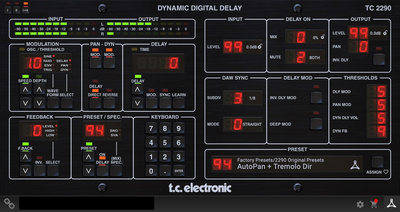
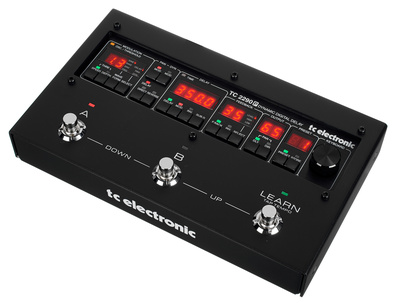
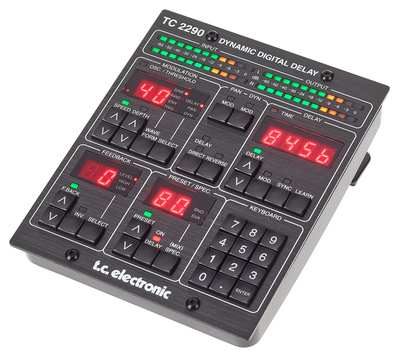
While there are modern recreations in the form of the plugin, desktop controller, and pedal from TC Electronic, you can also produce many of the 2290’s distinctive characteristics with most modern delay plugins.
For a rhythmic guitar delay:
- Delay time: Dotted eighth note
- Feedback: Between 25 and 40%
- Wet/Dry: Blend to suit the part
- Modulation: Gentle
- Stereo Imaging: Wide, but controlled
Start by playing a simple riff with the click running, then activate the delay effect and notice how the delay steps begin to occupy the spaces between each note. If you find that things start getting crowded, just pull back the feedback of the delay or simplify the riff you are playing slightly. The next step is to experiment with the stereo placement of the sound.
You can start with the dry guitar signal in the center or hard-panned to one side, and then pan the delay to another position in the stereo. Once you have one delay working well with the guitar, you can introduce another with a different delay time and pan setting for a more complex and varied pattern.
Finally, with a touch of modulation, the delay steps will have a constant, ever-so-slight change in pitch that makes the repeats sound less clinical and repetitive, especially over longer passages of time within your musical arrangement. The characteristics of the 2290, like its clean sound, modulation, and panning, helped create these unique effects without changing the tone too much or adding distortion.
TC Electronic 2290: Delay Types and Rhythmic Settings
Rather than adding an echo, the 2290 allowed the delay effect to become part of the performance, and the key is selecting a delay time that does something special within the context of the song, just like The Edge did with his playing. As you explore, you’ll find that different note values change the results completely even if the feedback and wet/dry mix controls haven’t been adjusted.
As we touched on earlier, vocals require a slightly different approach. While quarter-note or eighth-note delay times can bolster the groove of a song, longer delay times can add weight and emphasis to certain lyrical phrasing. If you’re trying to recreate a Bono-like vocal sound, try automating your aux send to emphasize the parts you want to stand out.
The amount of feedback is also a key factor, as there is a thin line between too little and too much. With too little feedback, the pattern may feel static, while too much becomes crowded. High and low shelving filters on the delay can also be useful for preventing a build-up of low-end mud and ensuring intelligibility and focus remain.
TC Electronic 2290: What Can We Learn from the U2 Sound
The most important thing to note about using the 2290 is that it plays a major role in the creative songwriting process. When we look at the way The Edge approaches guitar within the context of U2’s music, it shows that delay times are just as crucial as guitar tones. Even the most ear-catching tone doesn’t have quite the same effect if the groove of the delay isn’t locked in with the song.
When it comes to vocals, we can see a similar pattern, as Bono’s vocal performances need to remain the focal point throughout. This comes from the delicate balance between the wet and dry signals, as well as using automation and sidechaining to shape the delay around the vocal phrasing. Once you’ve created a delay pattern, you can always bypass the delay to see how much it’s actually doing in the song.
The reason that 2290 is such a legendary effects processor is not just because it’s a vintage piece from a nostalgia-inducing era. It became an extension of the instrument or console for many performers and engineers, and this relies on human performance rather than letting the gear do the work. This relationship is key with any tool we use in music production if your goal is to make something truly unique.
More about the TC Electronic 2290:
*Note: This article contains affiliate links that help us fund our site. Don’t worry: The price for you always remains the same! If you buy something through these links, we receive a small commission. Thank you for your support!
The post TC Electronic 2290: The U2 Delay appeared first on gearnews.com.