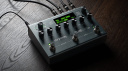
The highly anticipated Strymon TimeLine MX follows on from the BigSky MX released two years ago and brings their flagship delay even more useful features, dual effects and new delay algorithms.
Contents – Strymon TimeLine MX
TimeLine MX
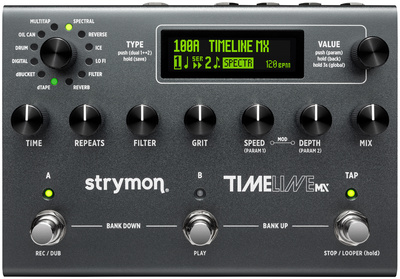
The Strymon TimeLine MX updates the original TimeLine delay pedal, adding a host of new features along with an updated OLED screen. It is now powered by the 800 MHz tri-core ARM processor, which means even more complex delay (and reverb) effects.
Dual Effects
This new 2026 version allows users to run two effects simultaneously, and it now has a built-in reverb. These effects can be run in Series, Parallel, or Split. Allowing for some fun routing options in a stereo configuration, all with MIDI control available.
It also has a 5-minute stereo looper with half-speed/reverse options available via MIDI.
12 Algorithms
Strymon has given the MX model 12 delay and reverb engines, which adds four new ones when compared to the original Timeline pedal.
Multitap Delay
An intuitive eight-tap delay that gives you per-tap control over pan, level, feedback, and filter cutoff, making it perfect for building hypnotic, complex rhythms.
Oil Can & Drum Delays
These meticulous recreations of vintage mechanical echo units deliver dark, murky, syrupy modulations and soft-clip textures.
All-New Reverb
Inspired by the Strymon Flint, this luxurious engine handles everything from tight rooms to massive, ambient washes. It also includes a “Grit” control for saturated pre- or post-tank overdrive, and optional tremolo on the wet signal.
The upgraded classics from the original TimeLine now feature enhanced versions of several fan-favourite modes.
The dTAPE and dBUCKET modes now include an all-new “MX voice” alongside the “Classic TimeLine” voice, which lets you drive the virtual circuits harder for extra warmth and grit.
Next, the DIGITAL mode offers four distinct eras of rack delay, including a pristine modern 24/94 mode, a snappy 1980s Adaptive Delta Modulation (ADM) setting, and a darker 12-bit conversion character.
Finally, the Reverse, Ice, Lo-Fi, and Filter modes return with enhanced tracking, tighter performance sync, and expanded parameters like the exclusive dVINYL vinyl-crackle algorithm.
Connections
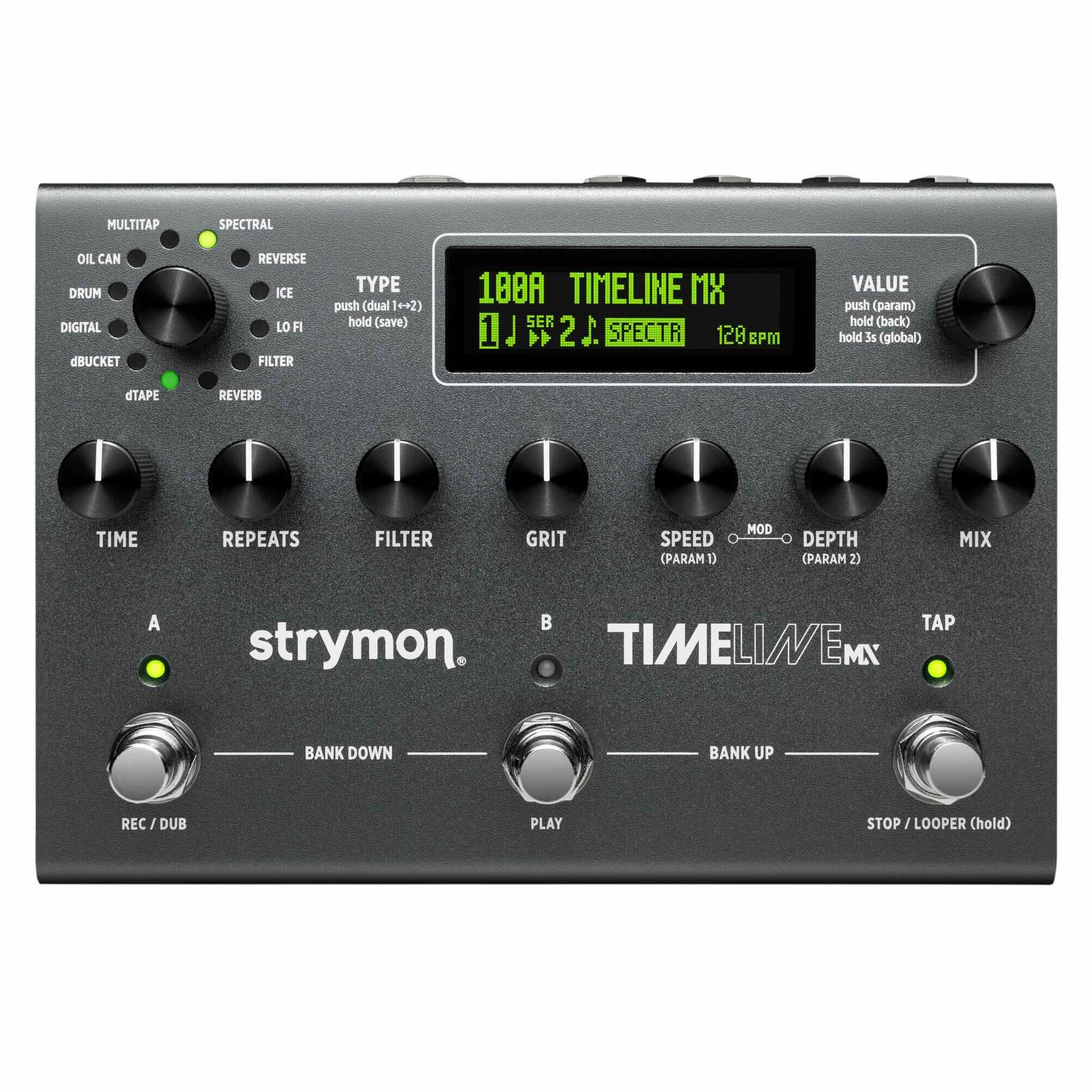
The pedal has TRS stereo connections, allowing you to easily run mono, stereo, wet/dry, or full wet/dry/wet rig configurations.
For even more routing and control, the unit boasts a true hardware effects loop alongside full MIDI capability via USB-C, TRS, or traditional full-sized MIDI DIN sockets. Use the Nixie 2 software interface to edit patches via USB, and life will be a lot easier.
Finally, a premium analog dry path ensures your unconverted dry signal passes through with zero latency.
The circuit can be run either True Bypass (Electromechanical Relay) or Buffered, so it will play well on pedalboard rigs.
Verdict
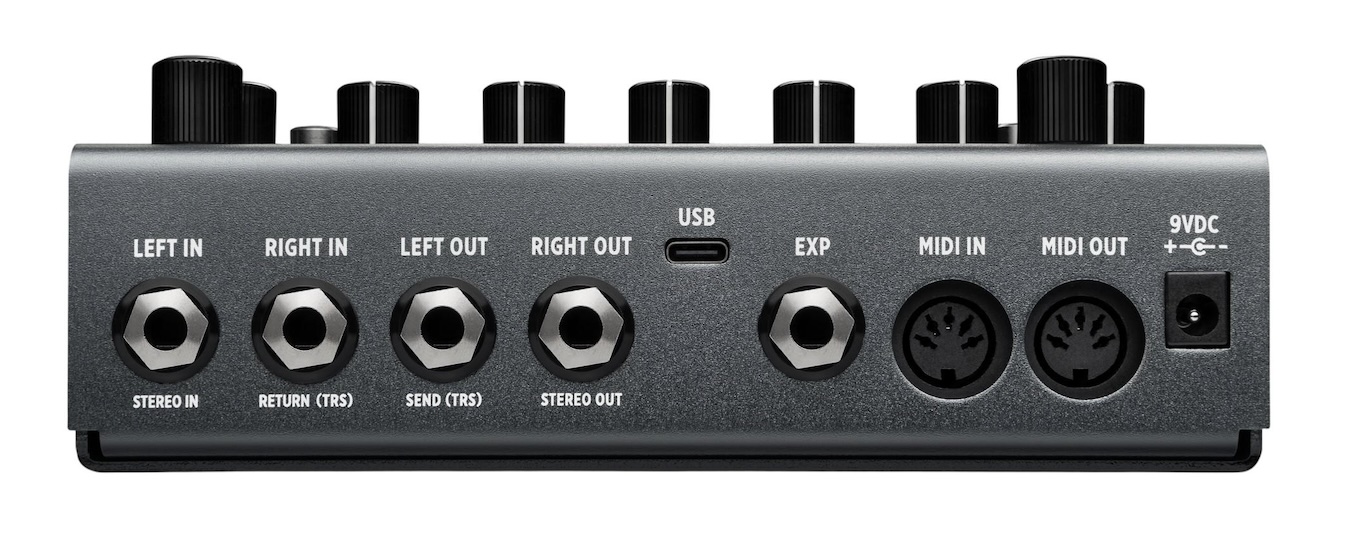
Really, the TimeLine MX is a studio rack delay/reverb effect in a pedal format and has a serious amount of upgrades over the original model. I can see a lot of worship players getting one of these new pedals in 2026.
If you love delay and love programming, then it could be exactly what you need. If you hate menu diving and overly complex control layouts with too many options, then this one may not be for you.
The original TimeLine is 15 years old, so this update is significant and adds a lot of great new useful features and options. It will be perfect for the studio and performing live, as it has some great control features and that much easier-to-read screen!


Price & Availability
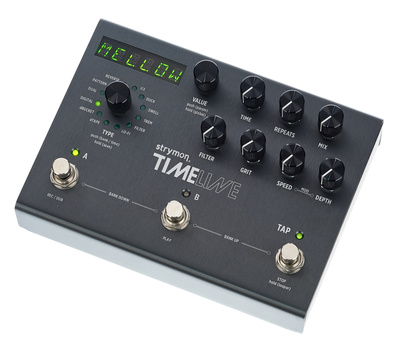
The Strymon TimeLine MX is available now at Thomann, priced at $763/£689/€799.
More Information
The post Strymon TimeLine MX: The Ultimate Delay Pedal? appeared first on gearnews.com.