An old friend returns in the form of SQ8L Revival, plus other non-firmware-related synth updates!
In a week that has seen a real watershed moment in the world of AI-assisted programming and the release of a gazillion firmwares for the M-VAVE FM-1, a glut of classic synth recreations and almost the entirety of Adobe’s product line and Pro Tools recreated and made available for free, it would be easy for this week’s journal to focus entirely on all those things.
However, that would make for a very long journal and would risk ignoring some other notable tidbits of news this week in the world of synths. I am also very sure that we will be covering all of the above for some time to come. So let’s crack on with some other stuff.
Synth Journal
SQ8L Revival
Many years ago, and it really does seem quite far away, we lived in a world where every now and again, some very clever individual would create a plugin version of an old, classic synth and, in the true spirit of the community, put it out there for free, save for maybe a small donation for beer or coffee.
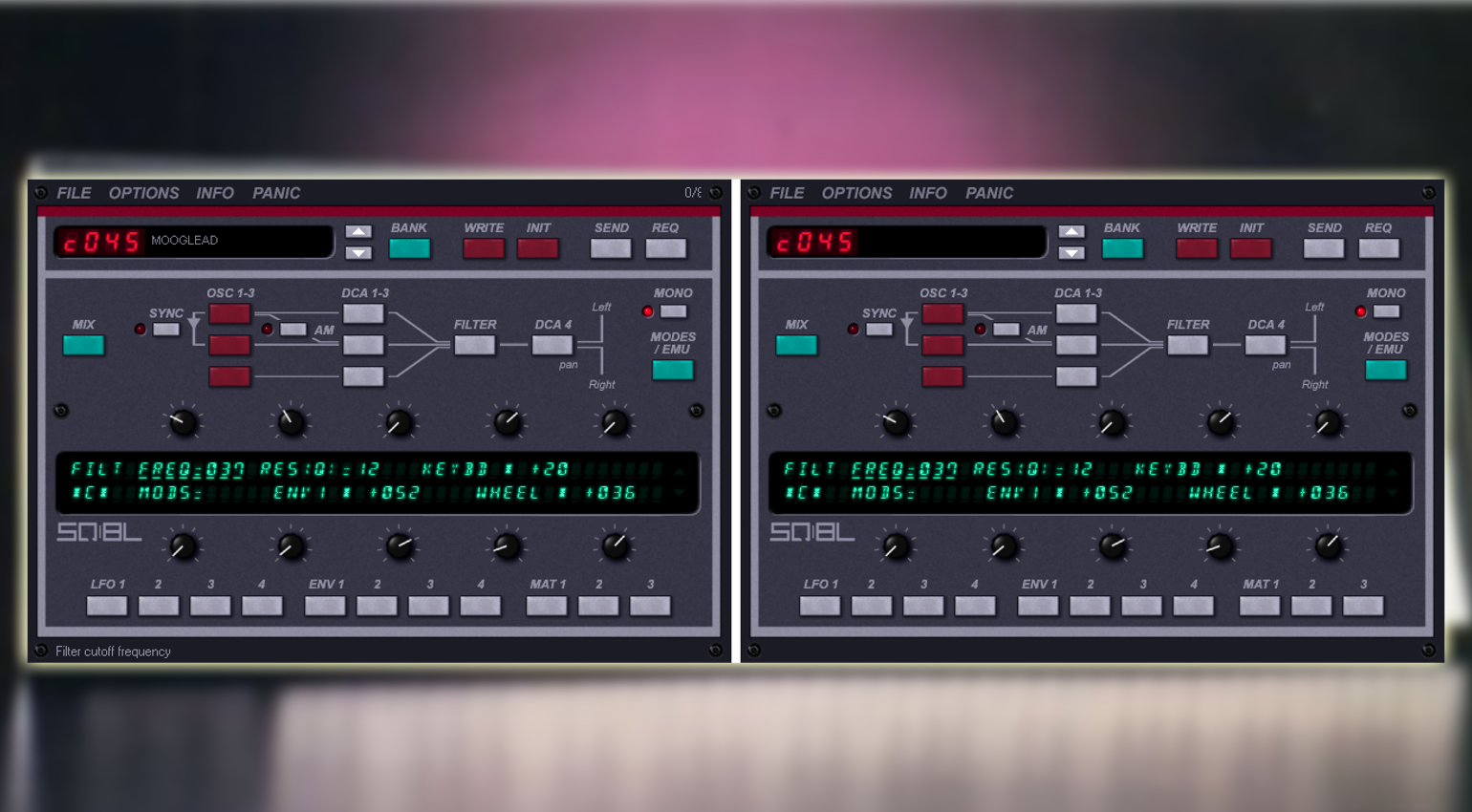
SQ8L was one such instrument, created by Siegfried Kullmann back in 2006. Yes, I know, it was that long ago! Sadly, the SQ8L project stopped being developed a long time ago, for reasons unknown, and SQ8L remained a 32bit plugin with no support for systems outside of Windows and running 64bit internals.
But now, SQ8L has been resurrected and fully supports all the latest platforms, including Linux, and has had a bunch of updates to make it more relevant and useful today. For example, the polyphony of the original SQ8L has been increased from 8 to 64 voices. SQ8L’s editor window can now be scaled, which is great for modern monitors.
Of course, since the original SQ8L came out, there’s been a glut of recreated Ensoniq instruments, not least Arturia’s own SQ-80 V, but having this option will please a great many people and is definitely an essential plugin to have in your arsenal.
The SQ8L plugin is still in beta but worked well on my M1 Mac and is available as a VST, VST3, AU, CLAP and LV2 on Windows, Linux and both Intel and Apple Silicon Macs. Best of all, it is still free. Go check it out over on the SQ8L Revival project’s GitHub page.




Mutable Instruments Beads Goes Open Source
The original Beads module from Mutable Instruments was Emilie Gillet’s parting gift to the world of Eurorack. Beads was a reinvention of what their Cloud module had been, a granular textural synth module that captivated many hearts.
But until the other day, one thing set it apart from all the other Mutable Instruments modules in that Beads had not been available as open-source. All that changed, though, with all the code being made available on the pichenettes GitHub page.
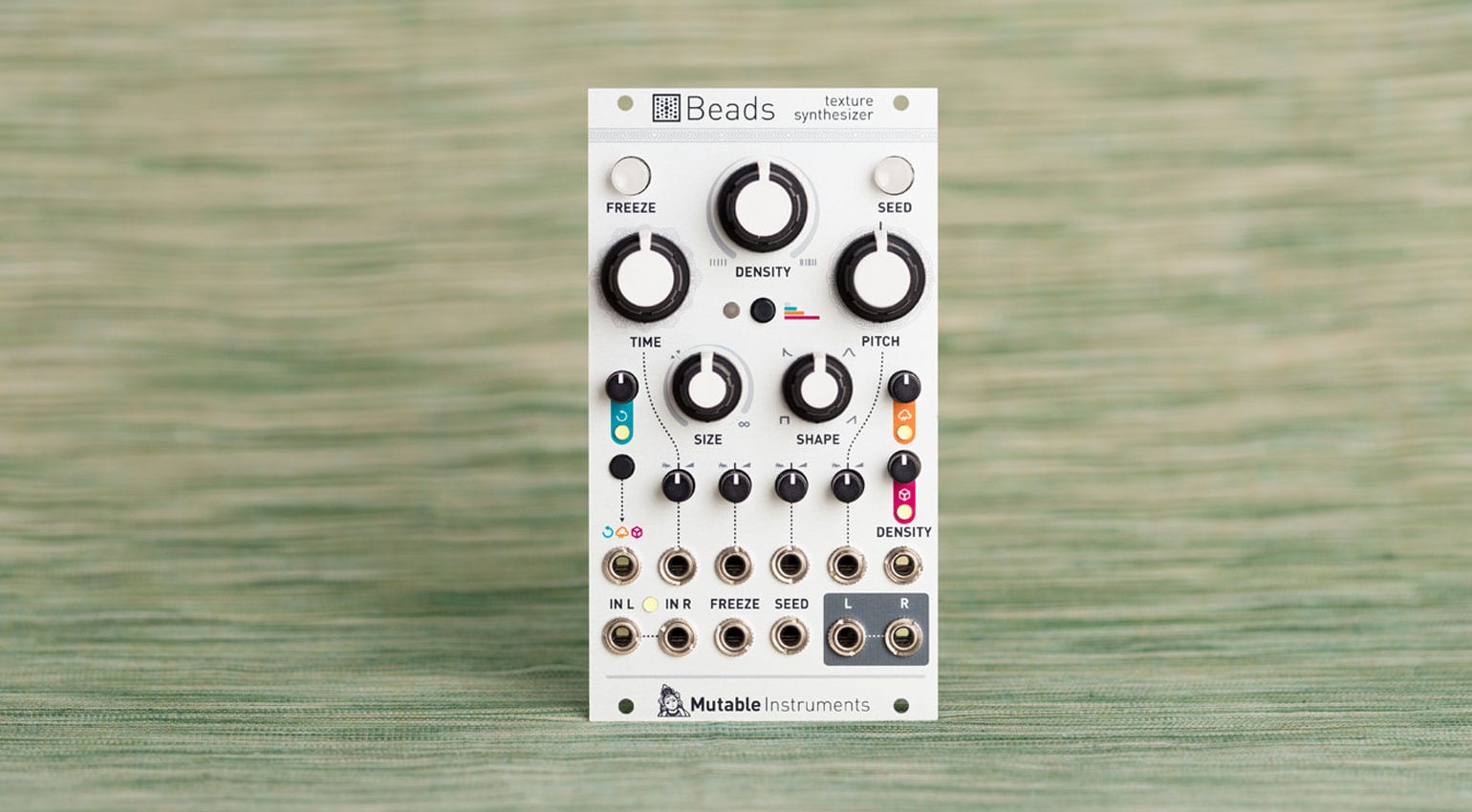
Now, this very special and highly regarded module can live again in the form of whatever clever people decide to do with it. One obvious use of it will be the creation of it as a VCV module, but hopefully we will see it being used to create new stuff, in software or hardware, that takes Beads to new and different places.
And so, with the addition of Beads to the catalogue, the entirety of the Mutable collection is out there and waiting to be used imaginatively and completely in the spirit of how their creator intended. Check the Beads code out, and all the others, on their GitHub page.
Olydian Music Instruments VC-01 Voicecrafter
There’s something quite intriguing about synthesizing the human voice, or at least the attempts made by synthesizers to replicate it. We have been fascinated by it for decades; be it the use of vocoders, samples or formant-shaping synthesis methods, it’s either a huge novelty or deeply emotional.
I haven’t met anyone yet who doesn’t lament the passing of the Delay Lama plugin. It was ridiculous fun and has been emulated here and there over the years. There’s a ton of presets on my Yamaha FS1R that make great use of its Formant Shaping engine.
And now we have the VC-01 Voicecrafter from Olydian Music Instruments, which gives us a decidedly complex and new take on a voice synthesizing unit. It’s a fairly large unit with a large touch panel, below which lie two rows of 909-style buttons in a piano-style arrangement.
We don’t know a huge amount about it right now, but there’s a pretty extensive feature list on their website which claims there are 380 different syllables inside, all of which can be sequenced to make “words”.
It has six voices of polyphony and a consonant-vowel sampling engine, plus the usual complement of synthesis tools such as LFO’s, FX and envelope generators.
There’s also a small screen, plus MIDI DIN and USB. Pre-orders will start in 2027, and there’s no indication of price yet either, but you can sign up for an email list to be notified of updates.
AudioThing Materia Additive Resynthesizer
When Peter Vogel & Kim Ryrie set about creating the Fairlight CMI, sampling wasn’t even on their radar. In fact, the term sampling was yet to be applied to what would become the Fairlight’s key selling point! Instead, they took the work of Tony Furse and used additive synthesis to try to create realistic-sounding synthesized versions of acoustic sounds.
You could draw in harmonic partials using the light pen or by adjusting one or more of 32 faders. Either way, the sounds it produced were interesting, but entirely not what they were after. And that’s when Peter Vogel hit on the idea of recording a sound digitally and playing it back. The rest is history.
Resynthesis was also a thing on the Fairlight, as it was on instruments like the Synclavier and AudioThing’s new plugin, Materia reminds me very much of those early attempts, but this time, they do it way better because, you know, it’s the 21st century and we can do these things now.
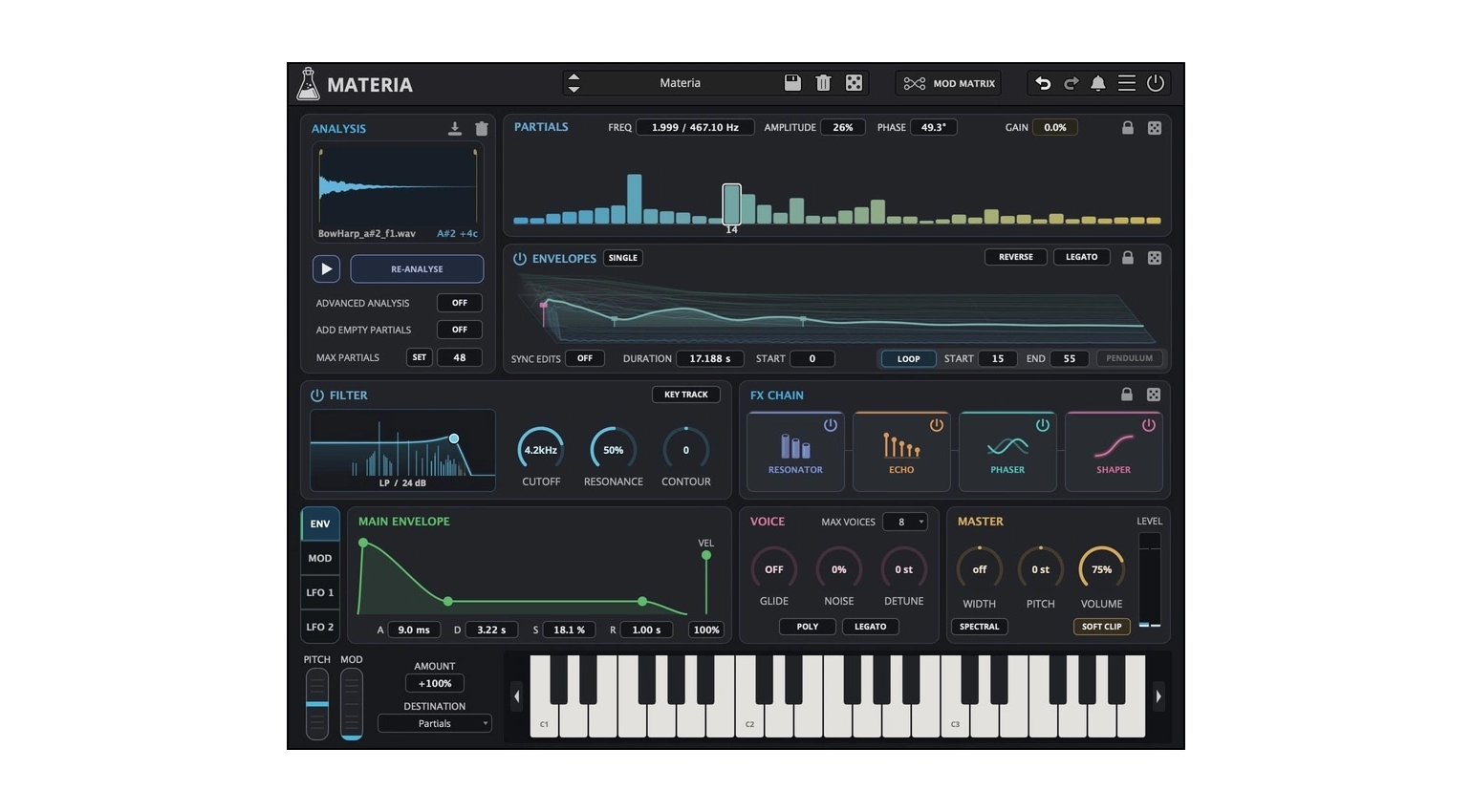
Materia allows you to take a sample and drop it into the plugin, where it is analysed and then broken down into 32 harmonic partials. These are now individually controllable by the user to a massive degree. Each partial’s start and end points, their envelopes and sustains, can all be tweaked. You can also add your own partials where silent partials exist.
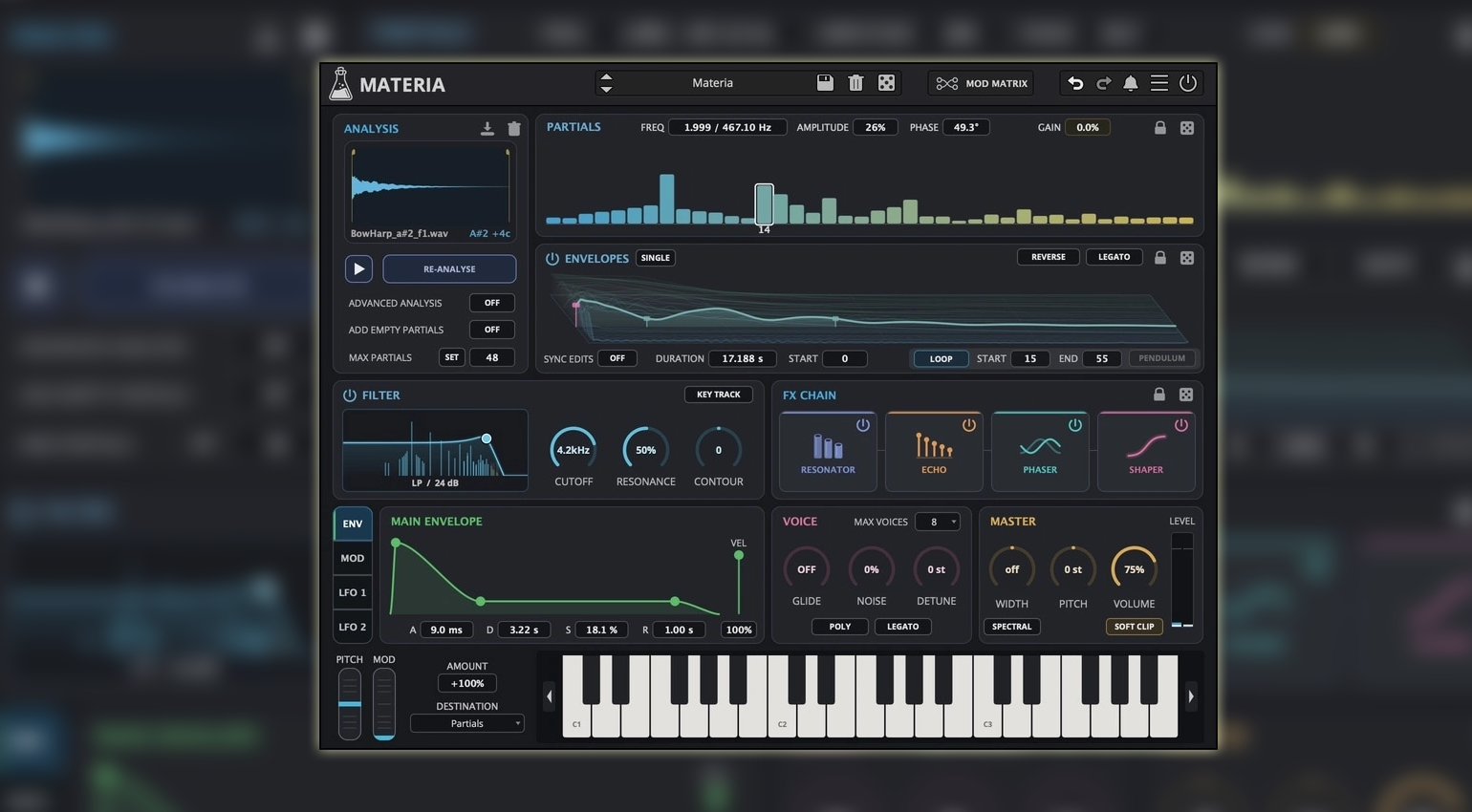
The result is a very complex but sonically pleasing synthesizer that has the power to deliver those distinctly digital tones, but with the ability to import any sample you can imagine, the possibilities are endless, and the video only scratches the surface.
Materia is available now for macOS, Windows and Linux as a VST, VST3, AU, AAX and CLAP where platforms allow. It’s also on sale right now, for just €39!

*Note: This article contains advertising links that help us pay for this site. Don’t worry: the price for you will always be the same! If you buy something through these links, we will receive a small commission. Thank you for your support!
The post SQ8L Revival Brings Back an Old Favourite, more – Synth Journal appeared first on gearnews.com.