
LEWITT is launching its first pair of headphones, and it’s coming out strong. The LW6 is designed to be the world’s first wireless headphone built for professional studio work, including mixing, mastering, monitoring, and recording. It’s a bold claim for a company primarily known for microphones and audio interfaces, equipment that has appeared on Grammy-winning albums such as Bad Bunny’s “Album of the Year” 2026 and Sabrina Carpenter’s top wins from 2025. I got an early review unit for my studio and put the claim to the test.
LEWITT LW6 at a Glance
- RealSound Wireless Technology: transmission in the ultra-wideband frequency range
- Fully uncompressed PCM audio, latency under 6 milliseconds
- Closed-back design with the sonic ambition of an open-back headphone
- 5-band EQ, Virtual Studio Monitors, and more DSP features running directly on the headphones
- Connectivity via RealSound, USB-C, 3.5mm analog, and Bluetooth 5.3
- Up to 21 hours of battery life
- Bundled with the Space Replicator Essential plugin
- Price: €599 / $699
LEWITT LW6 Headphone Review: RealSound Technology, DSP Features, and More
LEWITT Takes the Leap: From Mic Specialist to Headphone Maker
Austrian company LEWITT was founded in 2009 and built its name on studio microphones and audio interfaces. If you’ve ever used a LEWITT microphone, you know its reputation: solid construction, useful features, and reasonable pricing. With the LW6, LEWITT is entering new territory by releasing its first pair of headphones. They’re wireless, too, with a lot more to offer.
The ambition here is not small. LEWITT isn’t positioning the LW6 as just another consumer headphone with a studio aesthetic; it’s marketing them directly as wired or wireless tools for mixing, mastering, monitoring, and recording. This combination has barely existed before. Traditionally, wireless headphones and serious studio work have been at odds thanks to latency, compression, and sonic compromise. The LW6 is designed to close that gap.
RealSound: Wireless Without Compromise
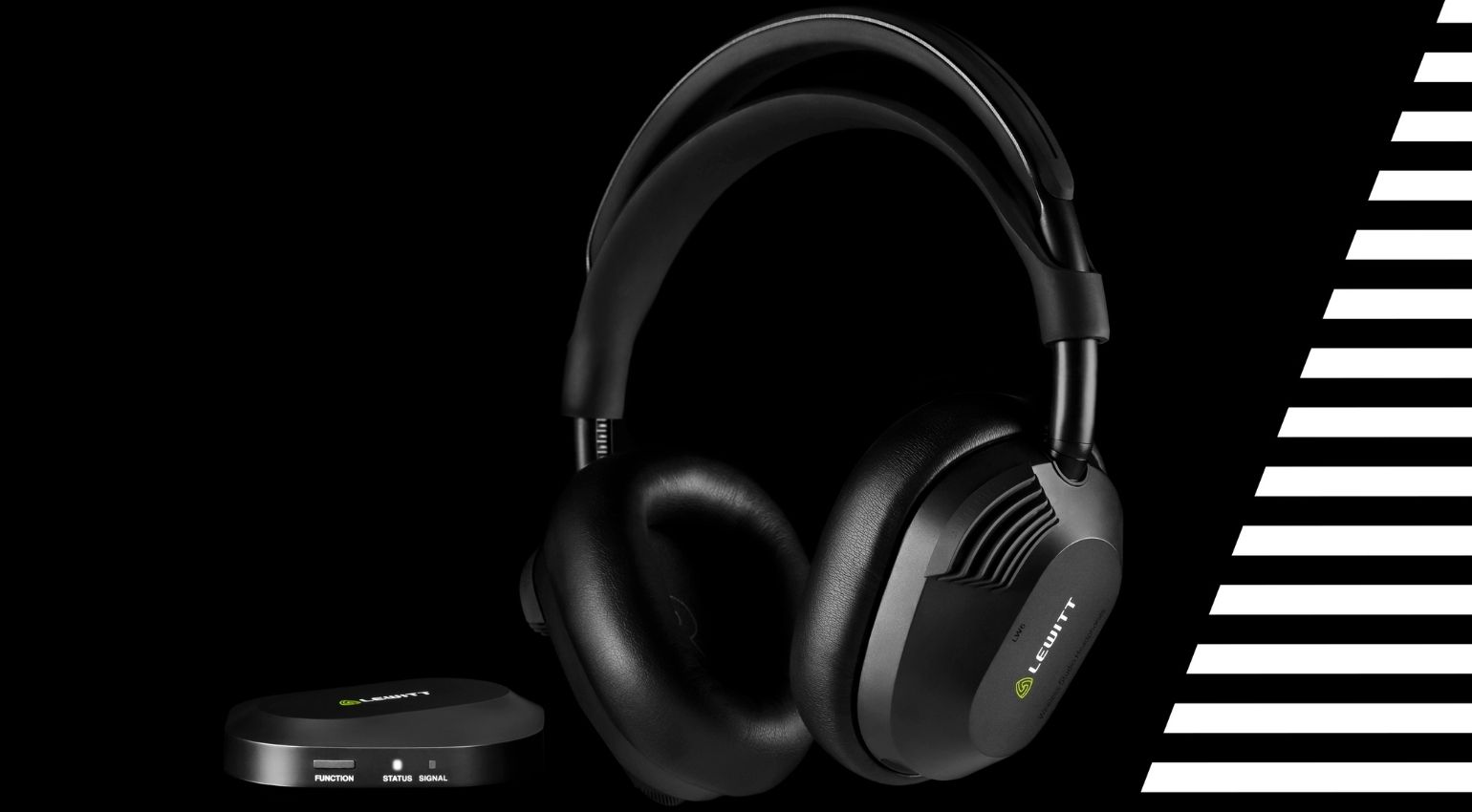
The LW6’s technical core is RealSound, LEWITT’s wireless transmission technology. Unlike standard Bluetooth, RealSound operates in the ultra-wideband frequency range of 6.8 to 10.2 GHz, depending on the region. This frequency band provides significantly more bandwidth than Bluetooth, enabling fully uncompressed PCM audio at a data rate of 1728 kbps. Latency is under 6 milliseconds (5.8 ms, according to the spec sheet). That’s plenty for serious studio work. All of this is possible without the hassle of cables.
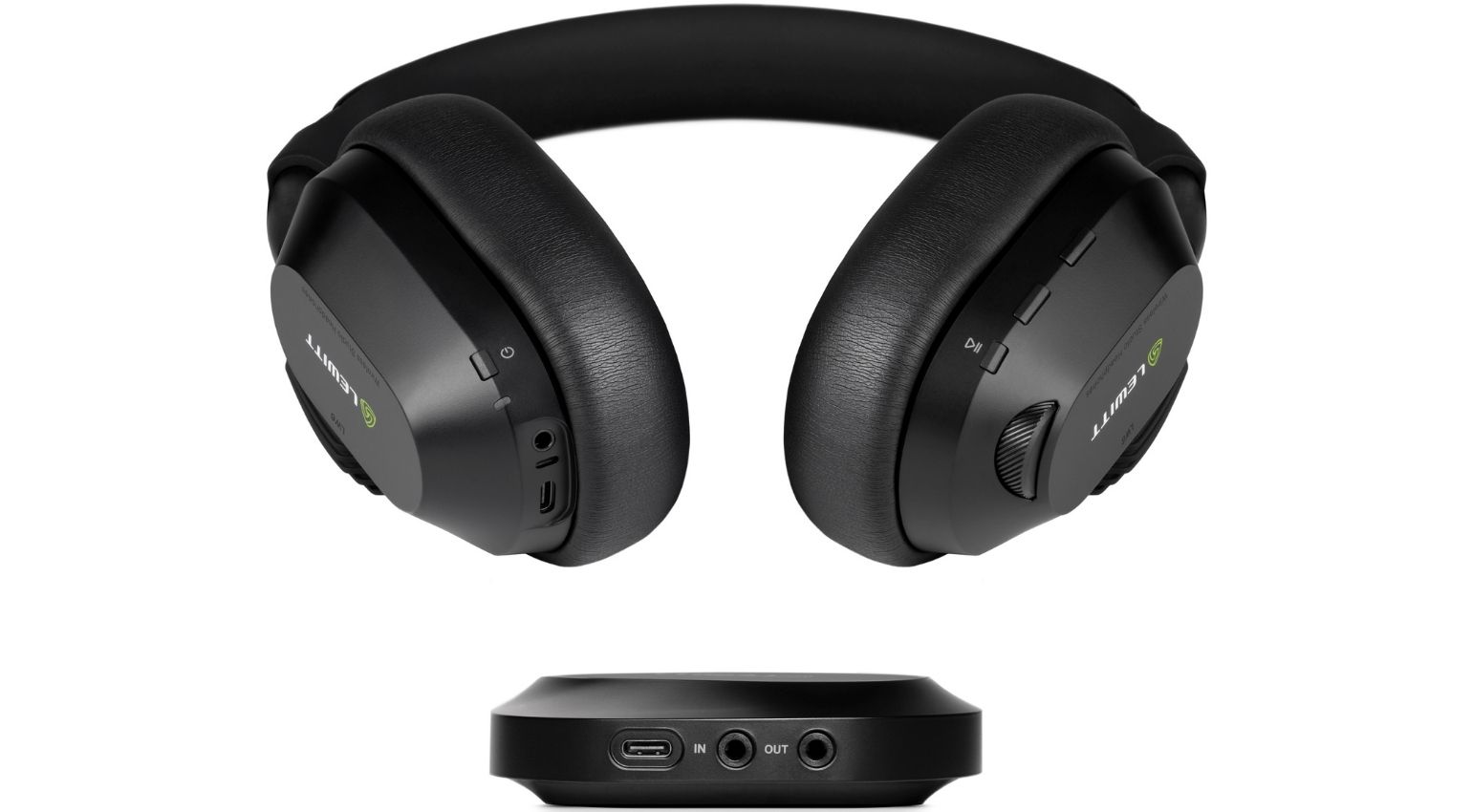
Here’s how it works in practice: A small transmitter called the LW TX plugs into wherever you would normally plug in wired headphones, such as your audio interface or your computer via USB-C. Within a range of roughly 5 meters, the connection runs completely uncompressed with no noticeable delay.
I can confirm that firsthand. The connection to the transmitter locked in instantly and stayed rock solid. I was truly surprised by how low the latency was. I could play percussion parts and short melodic lines in the studio over the wireless connection without feeling like I was fighting a delay. That’s not something you can take for granted with wireless headphones.
Sound Concept: Open-Back Character in a Closed-Back Shell
The LW6 is a closed-back headphone with a 40 mm dynamic driver, a bio-cellulose diaphragm, 32-ohm impedance, and a frequency response ranging from 20 Hz to 20 kHz. While closed-back designs typically provide good isolation, they tend to produce a more compressed, less airy sound compared to open-back studio headphones. LEWITT set out to break that pattern and deliver an open, transparent sound in a closed-back design. Spoiler alert: They succeeded.
The engineering approach behind this achievement is worth a closer look. LEWITT built its own target curve informed by well-known research from Dr. Sean Olive at Harman but claims higher spectral resolution in the top two octaves. Additionally, LEWITT uses the MIRE (Microphone In Real Ear) method, meaning they measure not only on a standard artificial-head rig but also on actual human ears. An internal expert listening panel verified the results.

In my review, I found that the sound is well balanced and works really well for making music. Mixing also holds up well on these. For actual mastering, however, I still prefer real studio monitors or, at least, open-back headphones. That’s not a criticism of the LW6, but rather, it’s just how I like to handle the final polish on a track.
DSP Features: Studio Tools Built Into the Headphones
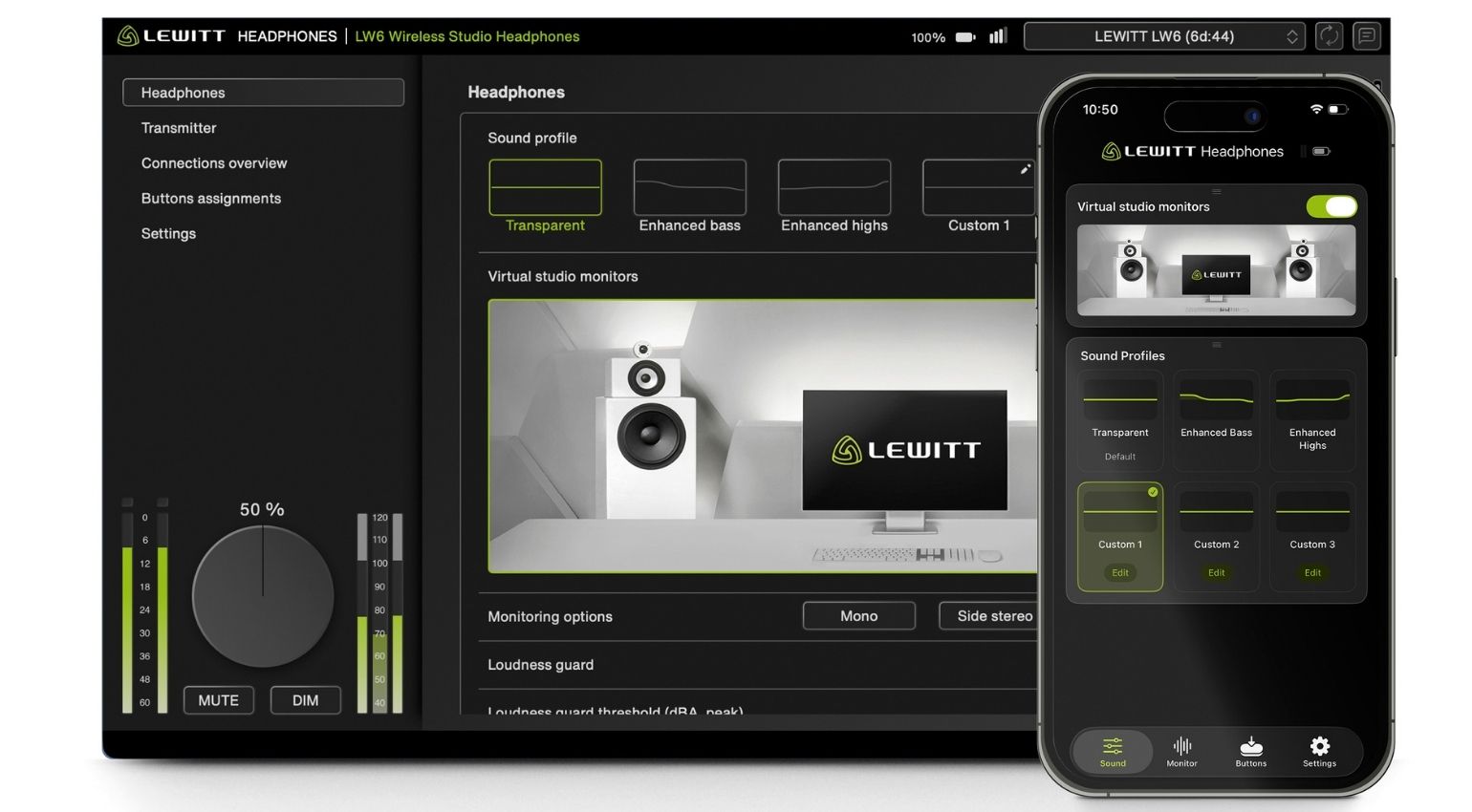
The LW6 stands out from typical consumer headphones because its DSP features run directly on the headphones themselves, independent of any software or connected host device. At the heart of the LW6 is a 5-band equalizer that allows you to create and store your own sound profiles right on the headphones. With the press of a button, you can switch between saved profiles without needing a connection to a computer or phone.
Virtual Studio Monitors simulate an acoustically treated mixing room with well-positioned studio monitors, a feature that normally requires a separate software plugin. The Loudness Guard protects your hearing from dangerous peak levels, allowing you to set a defined threshold. Advanced monitoring brings mono, side-stereo, side-mono, and left-right swap checks directly to the headphones. All are K-weighted, which is important for mastering and broadcast work.
Two custom buttons with single- and double-click assignments provide quick access to up to four freely assignable functions. Well done.
Comfort and Build Quality
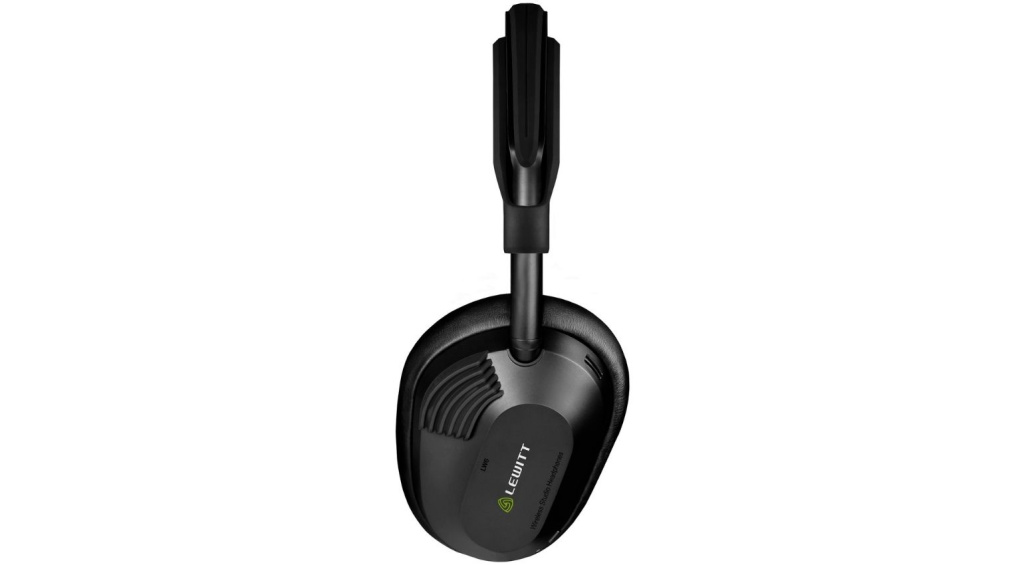
Above all else, a pair of studio headphones should be comfortable enough to wear for hours. The LW6 uses memory foam earpads and a silicone headband. I can plainly say that the LW6 is genuinely comfortable to wear. You barely notice the silicone band, and the memory foam fits comfortably around your head and ears. Even as a glasses wearer, I find it comfortable. Over long sessions, that comfort really pays off.
One open question for me is the long-term durability of the memory foam material. I can’t judge how it will hold up after months or years of heavy use after a short test period.
LEWITT rates the battery life at up to 21 hours in RealSound mode. A handy detail is that just 15 minutes of charging gets you three extra hours of playtime, and a full charge takes 80 minutes. In a pinch, you can also charge the headphones via USB-C while wearing them.
Connectivity: Ready for Any Setup
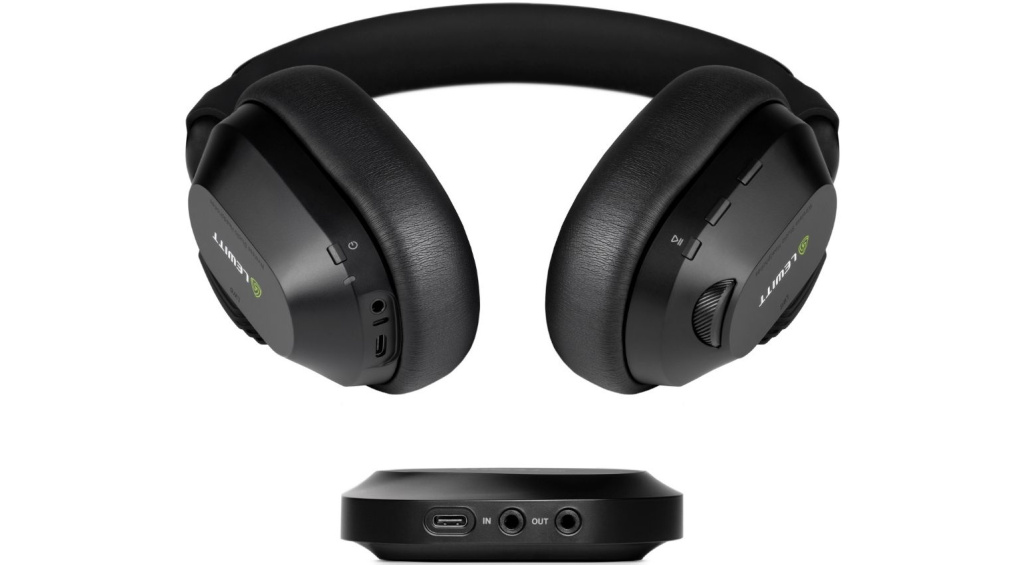
Beyond RealSound, the LW6 also covers the classic connection paths: USB-C for wired operation with ASIO driver support up to 96 kHz/24-bit, a 3.5mm analog input, and Bluetooth 5.3 with SBC and AAC codecs for everyday use on the go. That’s exactly how it should be.
This kind of flexibility is something I genuinely appreciate. I can hook the LW6 up via USB-C to my iPhone or my MacBook, and I’ve still got analog connection options right there too. Perfect for switching between studio work and mobile use without ever worrying about compatibility.
The included LW TX transmitter also has an analog output for daisy-chaining a second headphone, handy for shared monitoring in the studio. No free USB port on your computer, or working in a fully analog setup? No problem, the transmitter has an analog input too, carrying that signal wirelessly to the headphones. They really thought of everything here.
In the Bundle: Space Replicator Essential
The LW6 also comes bundled with LEWITT’s Space Replicator Essential plugin. It lets you simulate real spaces, from high-end mixing studios to clubs to the inside of a car, right on your headphones. For mix translation checks, hearing how a mix holds up across different listening environments, this is a genuinely useful addition that doesn’t require investing in a separate set of speakers.

Pros and Cons
Pros
- RealSound delivers uncompressed audio at very low latency
- Latency low enough for rhythmic playing despite being wireless
- Very high wearing comfort, works well for glasses wearers too
- DSP features run directly on the headphones, no host needed
- Versatile connectivity: RealSound, USB-C, analog, Bluetooth
- Sound is well balanced, great for music production and mixing
- Space Replicator Essential is a very useful bundle addition
Cons
- Long-term durability of the memory foam material still unknown
- The range is capped at around five meters, which is more than enough for most studios
Verdict
LEWITT is venturing into uncharted territory with the LW6, and my initial impression from the studio is extremely positive. RealSound delivers on its promises of uncompressed audio, low latency, and a rock-solid connection. The comfort level is high, the onboard DSP features add real value to daily studio work, and the connectivity covers pretty much every scenario I need. That’s exactly what won me over.
What do you think of LEWITT’s first headphone, would you trust wireless monitoring in your own studio?
FAQ: Common Questions About the LEWITT LW6
What is RealSound Wireless Technology?
RealSound is LEWITT’s proprietary wireless transmission technology that operates in the ultra-wideband frequency range. It transmits uncompressed PCM audio with less than 6 ms of latency, which is significantly faster and more lossless than standard Bluetooth.
Is the LW6 good for mastering?
The LW6 is primarily built for mixing, monitoring, and recording. For pure mastering work, a lot of engineers still lean on real studio monitors or open-back headphones, but that’s more a question of workflow preference than a specific shortcoming of the LW6.
What’s the range on RealSound?
Around 5 meters, and the connection stays stable and uncompressed within that range. Plenty for working in a studio.
Can I use the LW6 wired?
Yes, either via USB-C with ASIO driver support or through the 3.5mm analog input.
Does the LW6 work with my phone?
Yes, over Bluetooth 5.3 or via USB-C, directly to an iPhone for example.
How long does the battery last?
Up to 21 hours in RealSound mode. 15 minutes of charging gets you 3 extra hours of playtime.
What’s in the box?
The LW6 itself, a long USB-C cable, a USB-C to USB-A cable, a carrying case, an audio cable (mini jack to full-size jack), the LW TX transmitter, the configuration software, and the Space Replicator Essential plugin are included.
Price and Availability
The LEWITT LW6 costs €599 / $699 and is available at Thomann* / Sweetwater*.


More Information
*Note: This article contains affiliate links that help us keep Gearnews running. The price for you always stays the same! If you buy something through these links, we receive a small commission. Thanks for your support!
The post LEWITT LW6 – Review: The Best Wireless Studio Headphones of 2026? appeared first on gearnews.com.