
When Behringer released Real McCoy WahWah, it was a hint of what the new direction of their next round of pedal homages would be. Now the company is unveiling the Pedal Flanger, a tribute to the Tycobrahe Pedalflanger. Built like a wah or expression pedal, this pedal sounds completely different, however.
First Impression
Visually, Behringer stayed very close to the original here. And, unlike with some other pedals, they’ve once again really dug deep into the boutique niche. This is the area where Behringer shines the most with its replicas, in my opnion. And the idea of combining a flanger with a wah could lead to completely new sounds!
Behringer Pedal Flanger: A Tribute to the Tycobrahe Pedal Flanger
Compared to the massive 1976 original unit, Behringer’s Pedal Flanger is considerably more compact. Along with the ParaPedal, also from Tycobrahe, the original smurf-blue effects pedal was only on the market for a short time. And it quickly became an insider’s secret.
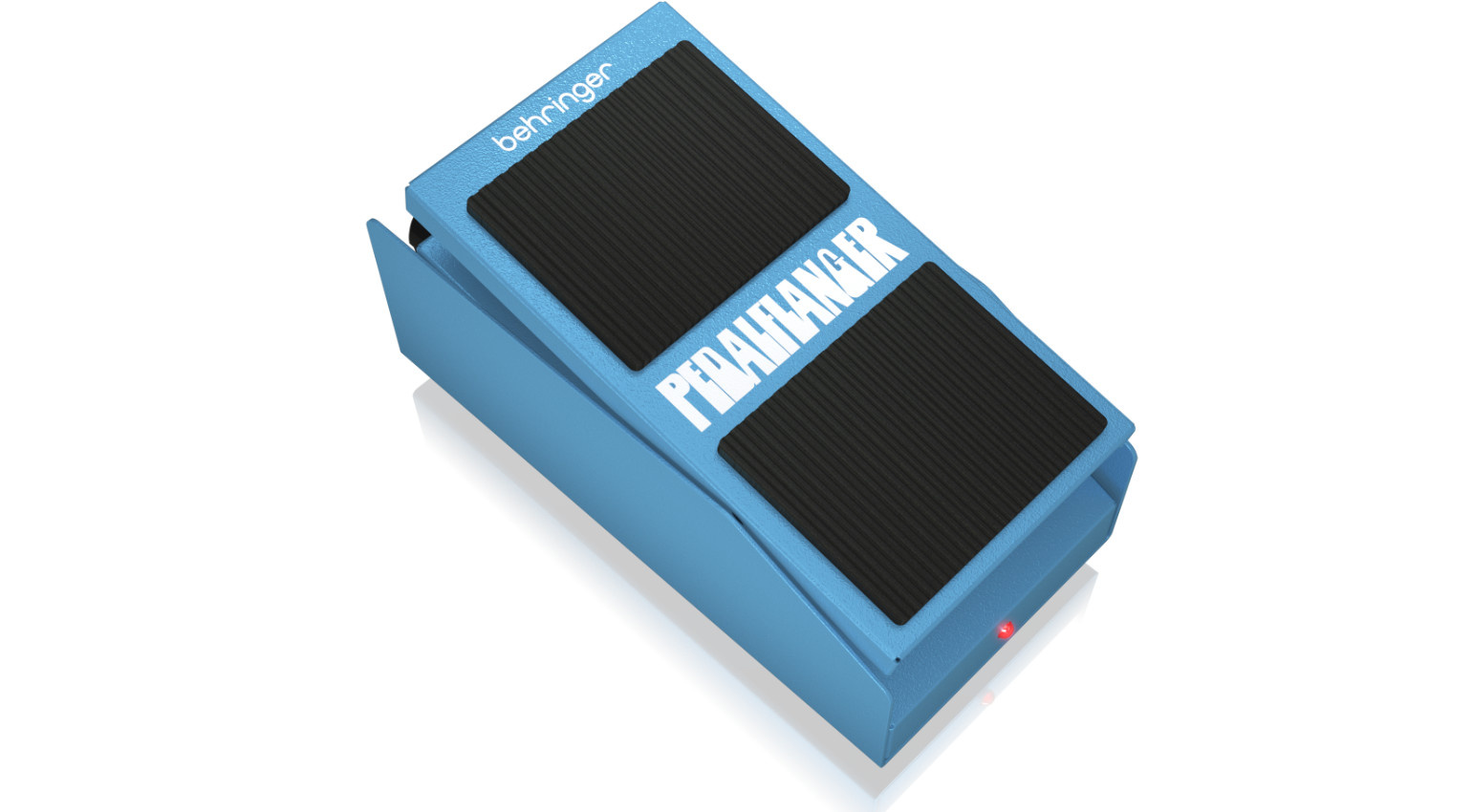
Rumor has it that Black Sabbath’s Geezer Butler used both pedals extensively on the band’s albums in the early ’80s. And as it often happens in the guitar world, hidden gems disappear, resurface on the secondhand market at astronomical prices, and become legends. And then sometimes a manufacturer like Behringer comes along and brings them back from the pedal dead!
What does the Behringer Pedal Flanger sound like?
Based on the design and name, you can probably already imagine it: flanger sounds, but with wah-style control. As we recall, a flanger effect—that sound reminiscent of a plane taking off—is created when a signal is duplicated, and the duplicate is then slightly delayed. An LFO modulates this delay, usually between 0.1 and 15 ms. Comb filter effects all around.
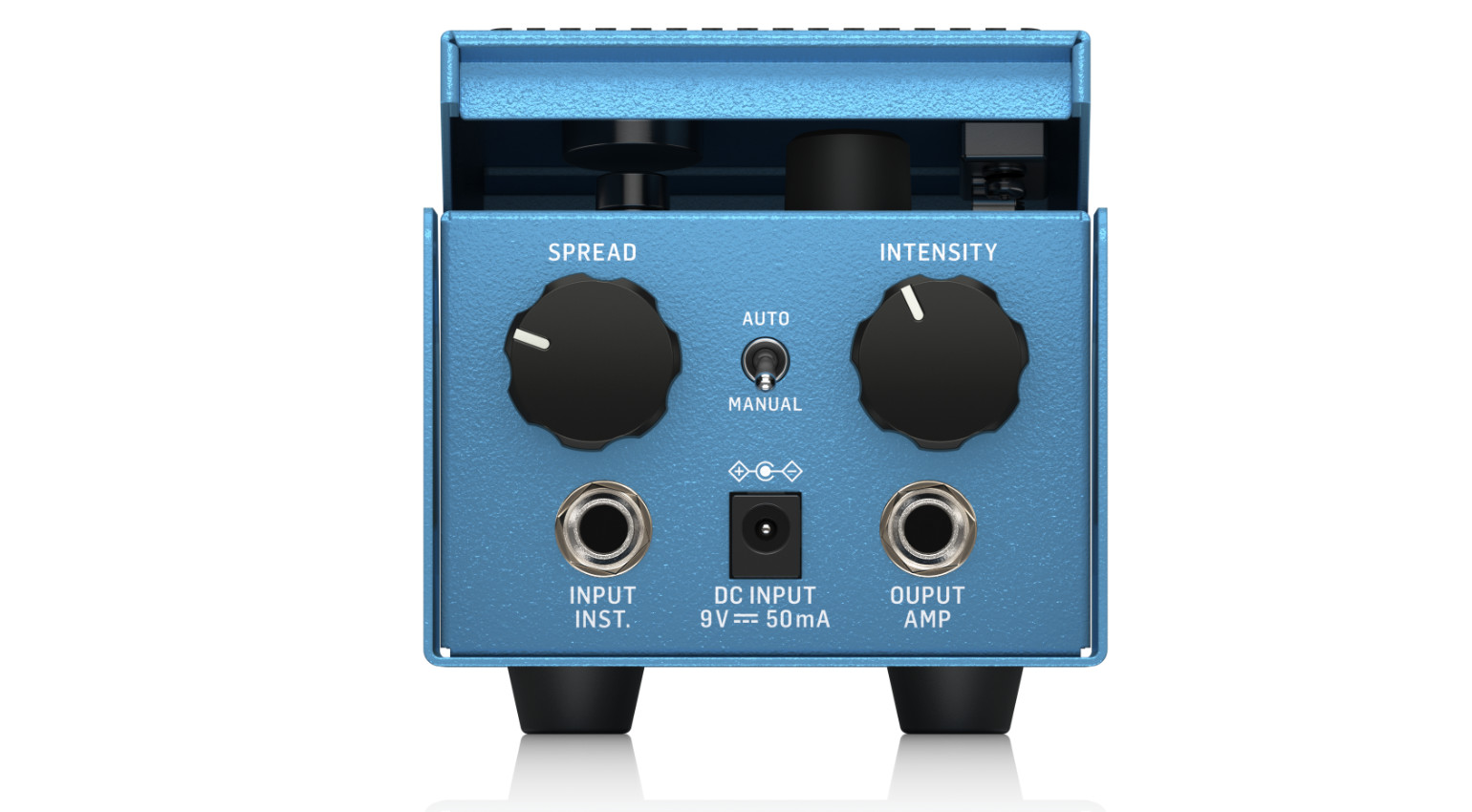
On the Pedal Flanger, you use the “Spread” control to set the length of said delay. And with “Intensity” you determine how intense the flanger effect is. No-brainer. If the switch between the controls is set to “Auto,” tilting the pedal accelerates the LFO, making the effect more swirling and almost chorus-like.
If the switch is set to “Manual,” the signal passes through the built-in filter, and the Pedal Flanger turns into a wah! The bypass switch (true bypass) is located underneath the pedal. If I read the product copy right, this pedal should at least be able to send out a stereo signal for subtle to intense widening effects.
How much does the Behringer Pedal Flanger cost?
For our European readers, the Pedal Flanger is available at Thomann* for 79 euros. The delivery time is still “several months”, so you’ll have to be patient.
For our US audience, the pedal is available for pre-order from Sweetwater* for $96.30.



More on the new pedal from Behringer
*Disclaimer: This post contains affiliate links and/or widgets. When you buy a product via our affiliate partner, we receive a small commission that helps support what we do. Don’t worry, you pay the same price. Thanks for your support!
The post Behringer Pedal Flanger: Is it a Wah? Is it a Flanger? appeared first on gearnews.com.