
We look into the backstories of some of the unlikely heroes in your DAW: audio plugins that became industry standards unintentionally.
In this Article:
So many of the plugins we use these days were designed with an intentional “gap-in-the-market” mindset, offering revolutionary new features in ways that speed up music production and mixing. However, every now and again, we find that certain plugins become daily workhorses and are used in cases that were never imagined by their respective developers.
When a plugin becomes an industry standard in any area of the music production process, it’s a given that it sounds good enough to replace one or more hardware processors. However, the key factor in DAW-based production is workflow, so the plugins that produce results quickly will always be preferred over those with the most advanced features.
Audio Plugins That Became Industry Standards: Waves Ultramaximizer
The L1 Ultramaximizer plugin was first introduced by Waves in 1994 as a Pro Tools TDM plugin. With software-based mastering still in its infancy, the timing was incredibly fortuitous, making the L1 one of the first plugins to combine look-ahead peak limiting and level maximization. It immediately became a secret weapon in the loudness wars and was incredibly useful for retaining consistent audio quality when lowering the bit depth of audio.
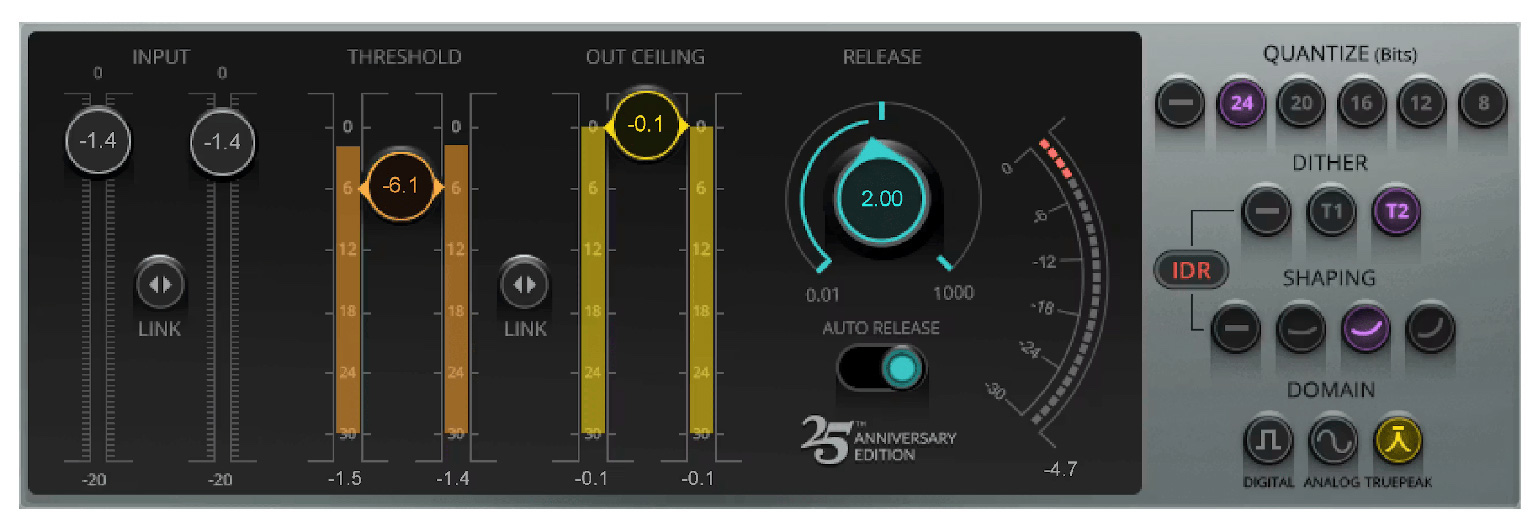
This was due to the Waves IDR (Increased Digital Resolution) dithering and noise-shaping technology being ahead of its time, giving engineers the ideal solution when mastering for CD. The Ultramaximizer also became a standard in television post-production workflows, allowing you to get the maximum loudness factor while adhering to broadcast standards.
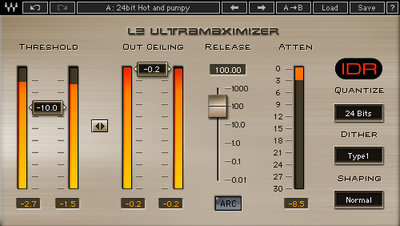
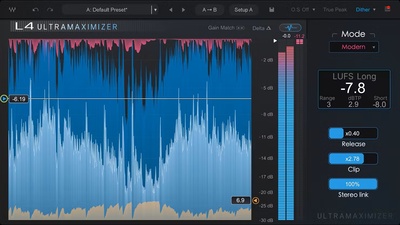
Over the years, the Waves L-Series gradually expanded, with the L2 introducing Automatic Release Control (ARC) and 9th-order noise shaping, which made the gain reduction more transparent and added a considerable punch in the midrange. More recently, the L4 was added to the lineup with upward compression, clipping, LUFS metering, and True Peak limiting. Get it at Thomann.*


Audio Plugins That Became Industry Standards: FabFilter Pro-Q
While FabFilter certainly didn’t invent the first EQ plugin, they did find out how to make it easier to use. Introduced in 2009, Pro-Q endeared itself to DAW-based music production and mixing workflows in a way that few plugins have. What drew engineers and producers in was the highly intuitive GUI that made you feel almost childlike when making EQ adjustments.
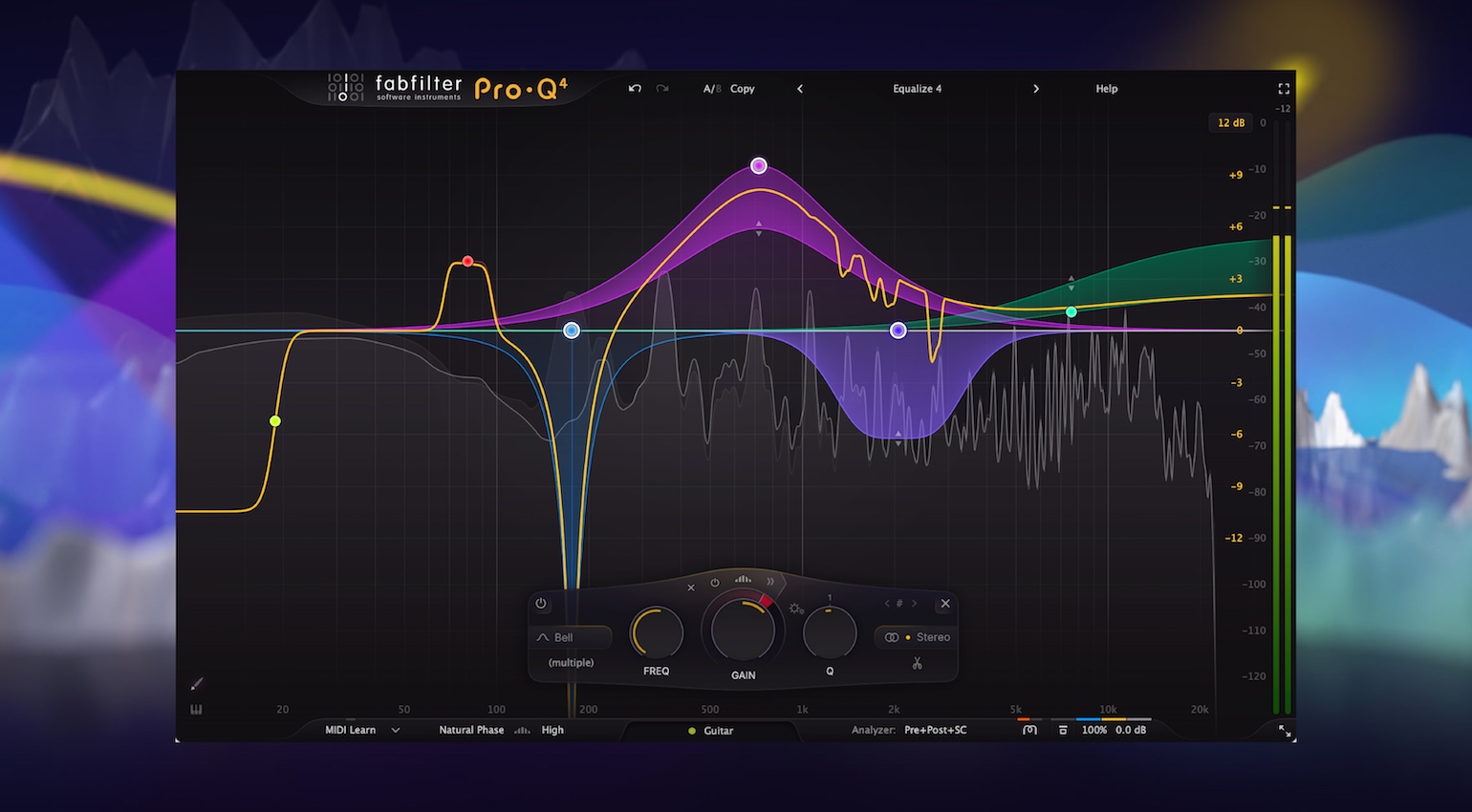
Real-time frequency analyzers were still relatively exciting at the time, and Pro-Q made this central to its interface. Also, years later, in version 2, FabFilter added a piano roll for assisting with accurate harmonic EQ adjustments within the key of your song. It also had a per-band mid-side processing mode, which was ideal for targeting specific areas while leaving the rest untouched.
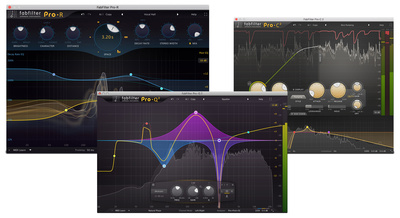
Since the early days, Pro-Q has become the market leader that every other EQ plugin developer has to follow to stay in the game. Now in version 4, Pro-Q features per-band dynamic and spectral processing modes, as well as the rather revolutionary list view that lets you view and adjust every active instance of compatible FabFilter plugins in your DAW project. Get it at Thomann.*

Audio Plugins That Became Industry Standards: Soundtoys Decapitator
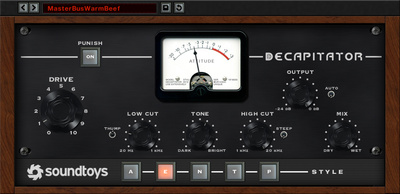
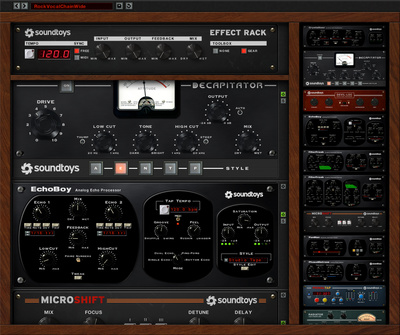
The Soundtoys Decapitator first reared its head in 2009, intended to be a saturation processor that could introduce the lively harmonics we commonly associate with tape machines and vintage mic preamps. Well, suffice to say, the Decapitator caught on, but it wasn’t being used to make things sound “a little more analogue” in the mix.
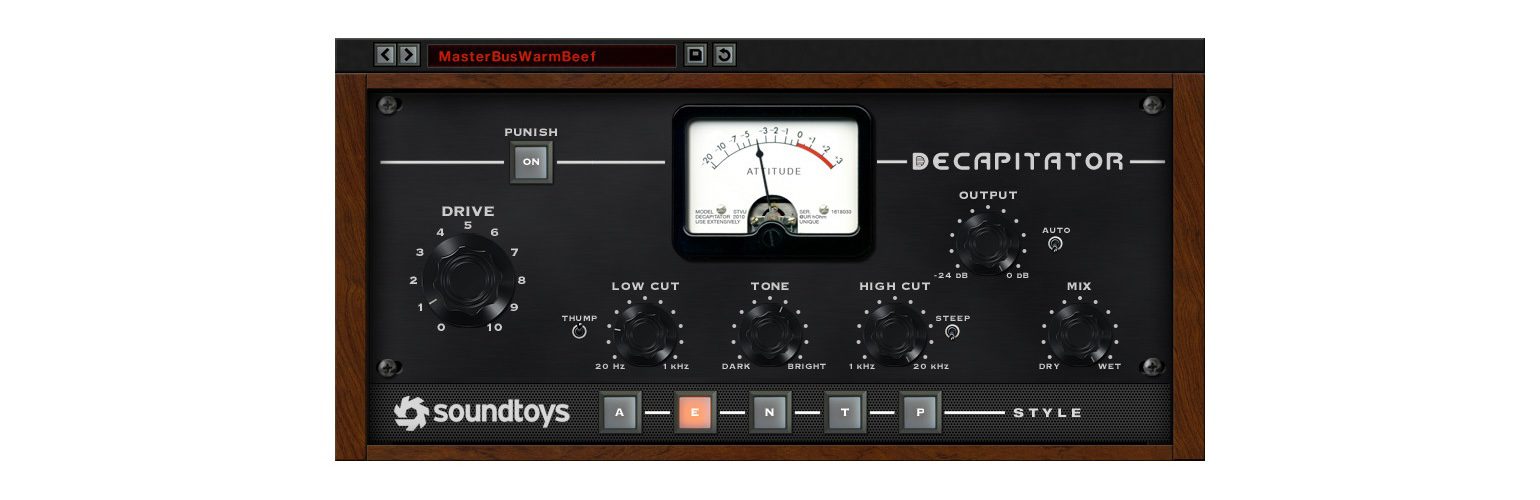
Besides its sonic range, what made it popular was its straightforward interface. Decapitator remains one of the more simplistic Soundtoys plugins, combining a well-curated selection of five saturation algorithms modelled on the Ampex 350 tape drive preamp, the Chandler Limited TG Channel, and the Neve 1057 germanium transistor-based preamp, as well as two modes based on the Thermionic Culture Vulture tube distortion unit.
This gave us a range of different saturation colours to fall in love with, but not too many. Also, features like the Punish button, which gave a 20 dB boost, were intrinsic parts of the workflow, because this simulated a preamp overload. No matter how much you push Decapitator, the auto-gain switch and the wet-dry mix are always there to save the day. Get it at Thomann.*

Audio Plugins That Became Industry Standards: Antares AutoTune
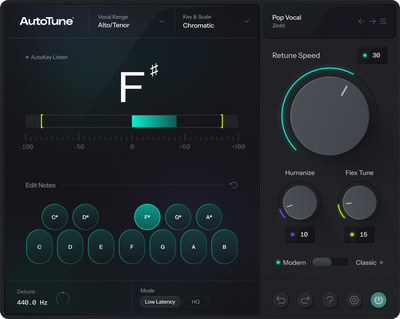
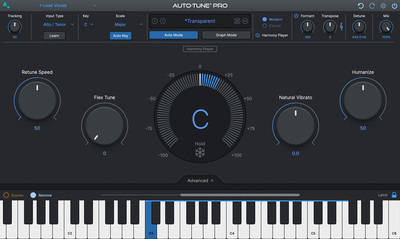
The story behind AutoTune becoming one of the most widely-used vocal effects of all time is a tale of pure chance. Initially, AutoTune inventor Dr. Andy Hildebrand’s algorithms were being used by Exxon to search for oil using sonar data, but one of his colleagues cracked a joke about needing special technology to sing in tune, and this got the gears turning.
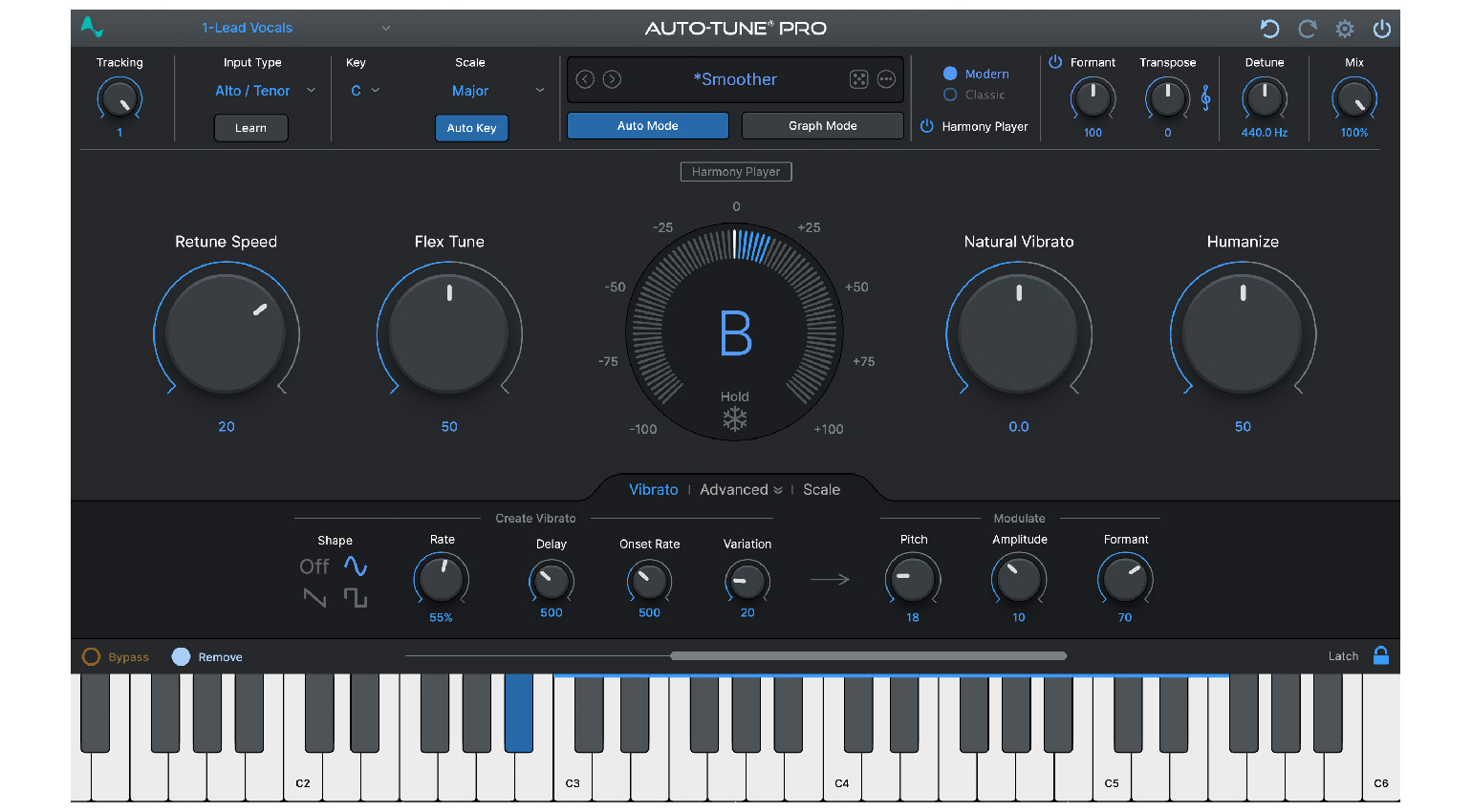
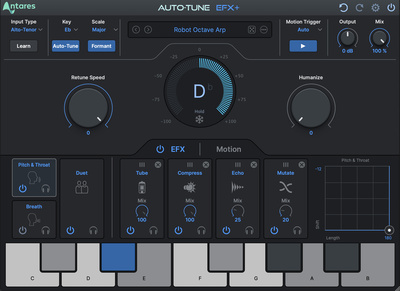
While Antares was founded back in 1989, it took years before we would hear it on commercial recordings. In its early adaptations, it was thought that AutoTune would be a post-production process for subtle vocal correction. However, when AutoTune was released in 1997, the way it manifested in the music production process turned out to be very different and far from subtle.
What producers like Mark Taylor and Brian Rawling found is that when the Retune Speed is set to zero, it transforms the character of the voice completely. This unintentionally led to songs like Cher’s Believe, where the over-the-top vocal processing turns out to be the element that made the song stand out. Since then, the AutoTune sound has been pioneered by artists like T-Pain, Kanye West, and Charli XCX. Get it at Thomann.*

Audio Plugins That Became Industry Standards: Valhalla VintageVerb
Today it’s easily the most popular 3rd-party reverb plugin of all-time, but VintageVerb came from humble beginnings. Valhalla DSP founder Sean Costello simply wanted to build amazing reverb algorithms and make them accessible for musicians, producers, and engineers. If you judged VintageVerb by its basic looks and simple interface, you’d never realise it was a trusted professional tool.
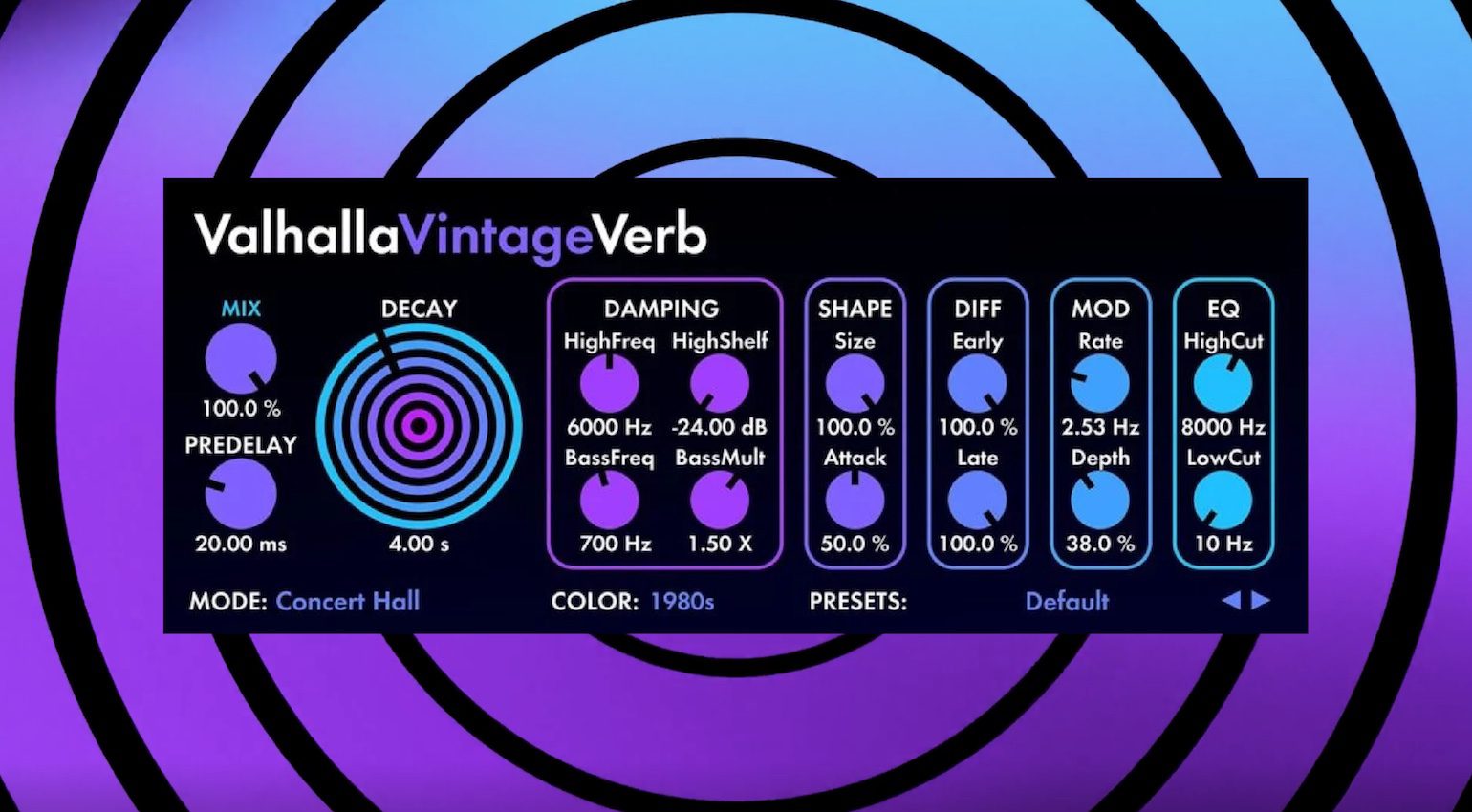
If anything, it shows that creating a plugin that pros love comes down to how good it sounds and whether it’s easy enough to use to produce the same results regularly. In this department, VintageVerb passes with flying colours, and who would argue with a plugin that only costs 50 bucks? First introduced in 2012, VintageVerb started out by offering users eight classic algorithms based on legendary reverbs from the 1970s and 1980s.
As the word spread, VintageVerb began to pop up in the DAW sessions of top engineers, and eventually even on Adele records. After all these years, the price has remained the same, while VintageVerb now offers an astounding range of 22 different algorithms. Even if you have other reverbs, you’ll end up using this one because you can get sounds fast, it’s CPU-efficient, and it sits well in the mix.
More about Audio Plugins That Became Industry Standards:
*Note: This article contains affiliate links that help us fund our site. Don’t worry: the price for you always stays the same! If you buy something through these links, we will receive a small commission. Thank you for your support!
The post Audio Plugins That Became Industry Standards by Accident appeared first on gearnews.com.